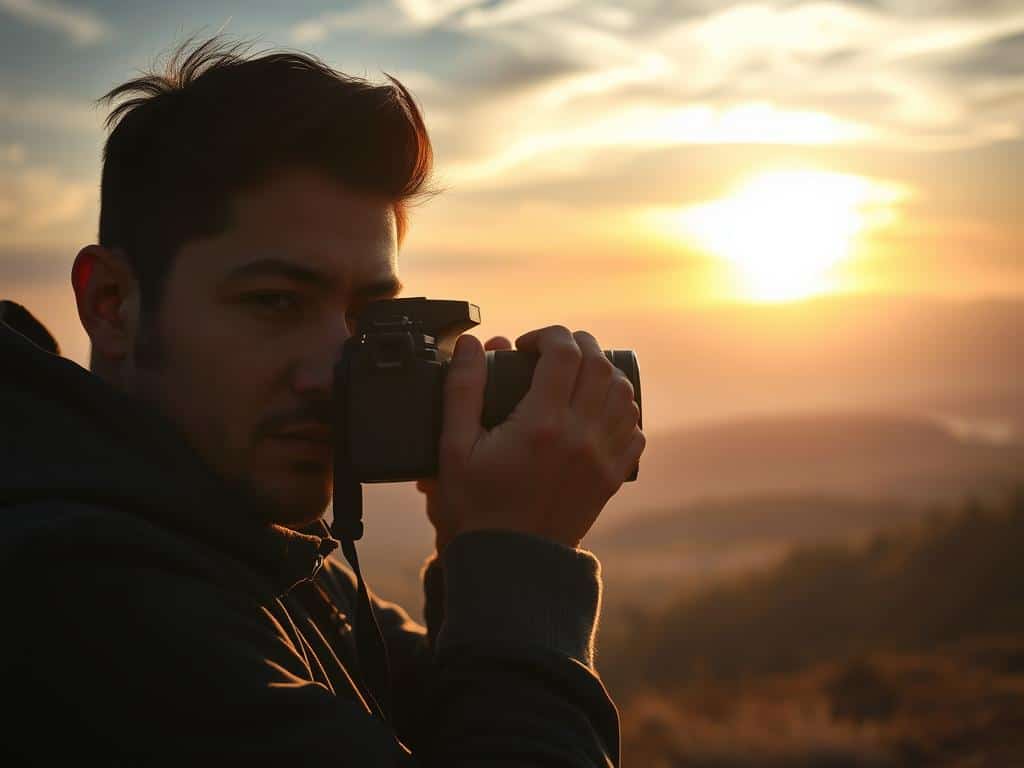
Did you know over 70% of beginner photographers struggle with lighting? It’s not just about having a studio. Mastering photography lighting can make a big difference, even outdoors or in your living room. Today, I’m excited to show you how to get professional results without a studio.
We’ll use natural light and creative techniques. Photography is more accessible than ever. You don’t need to be in big cities like Los Angeles or New York to take stunning photos. With just a basic camera and an eye for lighting, you can improve your outdoor photography a lot.
By focusing on sunlight and using simple yet effective equipment, I’ll teach you the basics of master lighting. Let’s start this journey to capture amazing images wherever you are!
Key Takeaways
- Understanding how to leverage natural light can significantly improve your photography.
- Even basic equipment can produce stunning results when paired with the right lighting techniques.
- Continuous lighting options like LED and softboxes offer great alternatives for home and outdoor setups.
- Experimenting with light sources and modifiers can lead to surprisingly professional-looking images.
- Planning your shoots around the golden hour can enhance the quality of your outdoor photographs.
- Test shots are essential for fine-tuning exposure and composition before capturing the perfect image.
Understanding Natural Light in Photography
Natural light is key in photography, loved by both new and experienced photographers. It can make images look amazing. By knowing how to use sunlight, I can take pictures that stand out. This is true, most of all, during the golden hour.
Leveraging Sunlight for Your Advantage
To get the most from natural light, it’s important to position subjects well. I like to put them near windows or outside for soft light. On sunny days, light can be too strong, so I avoid it during the middle of the day.
The golden hour, just after sunrise and before sunset, gives a warm glow. It makes subjects look great. On cloudy days, the light is soft and even, perfect for certain indoor shots.
Best Times to Shoot with Natural Light
Every time of day has its own lighting. Midday light can be too harsh, causing strong shadows. I prefer twilight, about 20 minutes before sunrise and after sunset, for its unique light.
Using a Sun Tracker app helps me find the golden hour. Reflectors also let me control natural light, making my photos better. With careful planning and knowing the weather, capturing the perfect shot with natural light is fun.
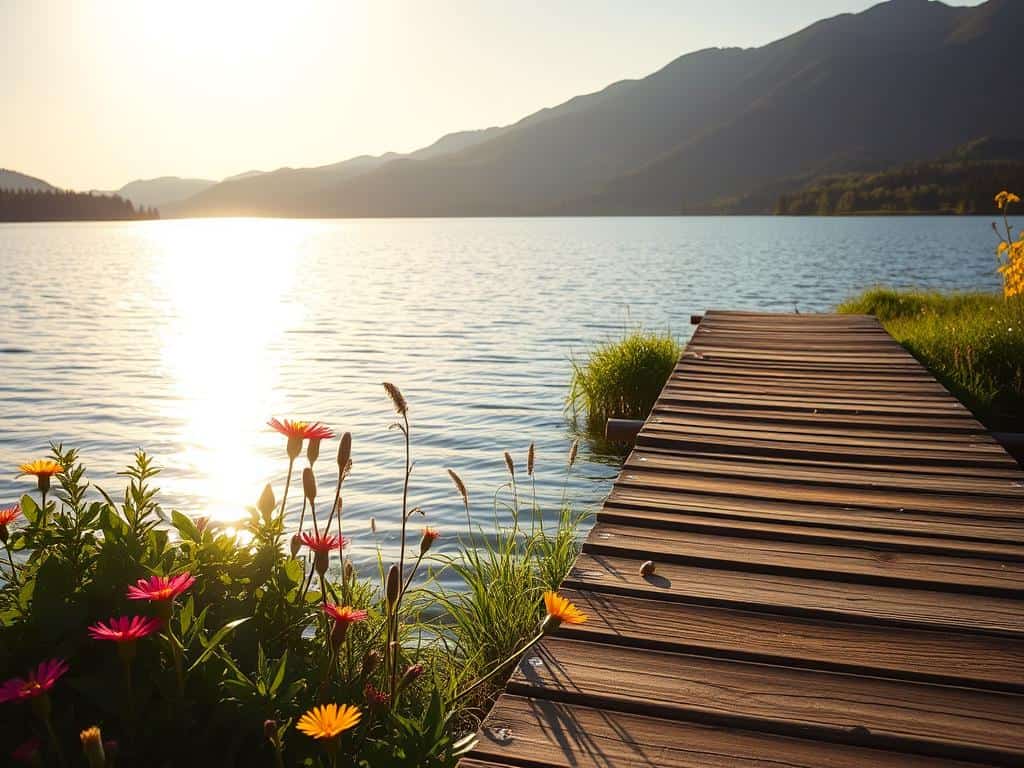
Key Techniques for Mastering Photography Lighting
Understanding both natural and artificial light is key to mastering photography lighting. I use various techniques to improve my images, whether I’m outside or indoors. These methods help me control the final look of my photos.
Using Reflectors and Simple Diffusion Methods
Reflectors are vital for working with natural light. I use them to fill in shadows and highlight details, making my photos more balanced. Simple diffusion techniques, like using curtains or branches, soften harsh sunlight. This creates a gentle light perfect for portraits.
Soft light makes details less harsh and more flattering. It’s great during the golden hour, when the light is warm and soft.
Indoor Lighting Alternatives without a Studio
For indoor shots, I rely on artificial light setups. Softboxes or continuous lights give balanced light and let me see the effects right away. This is key for beginners and video shoots.
Adjusting camera settings like aperture and ISO helps manage light levels. By using techniques like split lighting or loop lighting, I can achieve dramatic or natural looks. Keeping lighting ratios consistent is important for a unified brand image.
Innovative indoor lighting solutions help me create stunning product shots. I focus on textures and avoid distractions. For strong highlights, I use color-correcting gels to ensure even lighting. Mastering these techniques has led to striking results in both portraits and product photography.
Conclusion
In this journey of photography lighting mastery, I’ve shared key strategies to boost your skills without needing a studio. Learning about natural light opens up new creative possibilities. Exploring outdoor settings can lead to amazing photos that go beyond usual techniques.
Using natural light, I can take photos that feel real and deep. This approach lets me capture moments with emotion and clarity.
Adding practical lighting options like continuous lights and simple modifiers brings new ideas to the table. These tools make shooting easier and allow for quick changes. Whether it’s using affordable speedlights or flexible LED panels, I’ve seen how they improve my photos.
Mastering photography lighting changes how I take each photo. By using both natural and artificial light, I create a unique style that shows my artistic side. With these methods, I can make photos that grab attention and leave a strong impression on my viewers.
