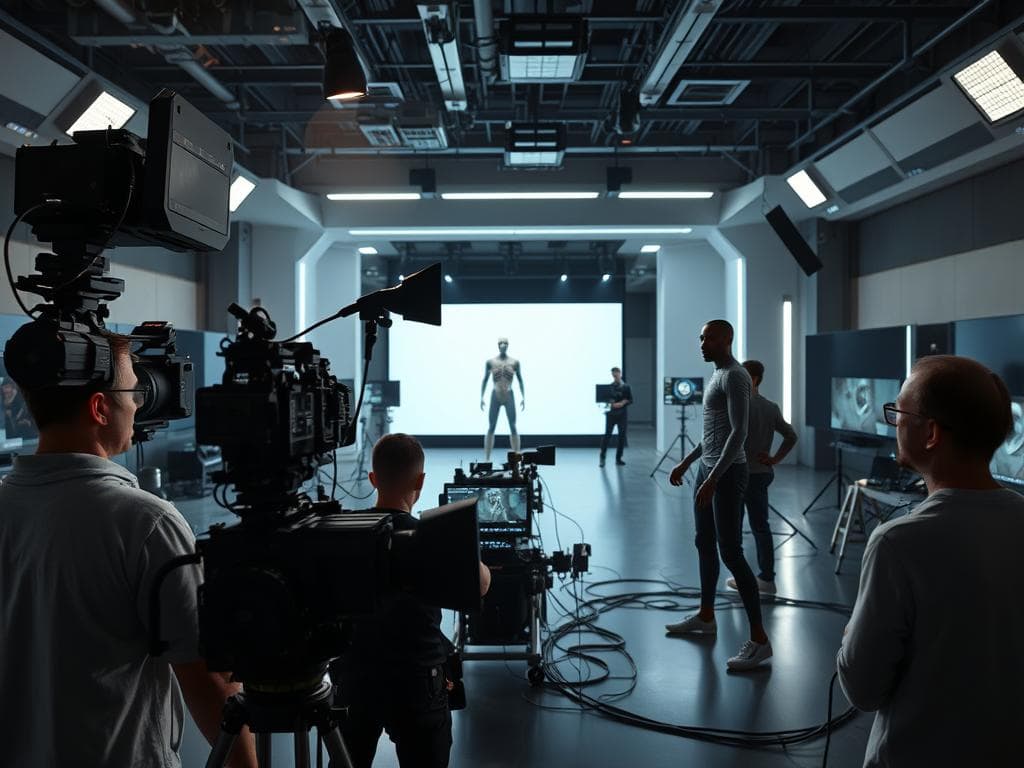
Did you know AI in motion capture, like Remocapp v2.1, makes animations smoother and more real? This big step in film tech is changing how we capture dynamic scenes. It’s opening up new ways for filmmakers to be creative and work more efficiently.
Before, motion capture was hard and needed a lot of setup. Now, smart cameras with AI make it easier to get great footage without spending a lot. This is a big win for filmmakers on a budget.
These smart cameras can analyze motion in real-time and adjust automatically. This isn’t just good for movies. It also helps in sports, gaming, and virtual reality. As motion capture gets easier, more people can use it, even those with small budgets.
Let’s explore how AI Motion Tracking is changing filmmaking and other fields.
Key Takeaways
- AI Motion Tracking enhances motion capture for smoother animations.
- Real-time analysis improves efficiency and reduces the need for manual corrections.
- Suitless motion capture systems lower costs, making technology accessible.
- This technology is utilized in sports, healthcare, and education for diverse applications.
- Democratization of motion capture tools opens opportunities for independent creators.
The Evolution of Motion Tracking Technology
Motion tracking technology has seen huge changes over time. At first, it was hard and slow, needing lots of work. Now, it’s easier and more accessible thanks to new tech.
From Bulky Equipment to Lightweight Innovations
In the 1970s, motion capture used big, heavy suits. These suits made it hard to move naturally. The tech needed a lot of setup and was hard to use.
In the 1980s and 90s, things got a bit better with reflective markers. But, depth-sensing cameras have really changed things. Now, tools like Microsoft’s Kinect make it easy to track motion without markers.
Integration with AI Technology
Artificial intelligence has made a big difference in motion capture. AI systems can track motion quickly and accurately. This lets filmmakers focus on their creativity, not just the tech.
For example, Remocapp uses just webcams for motion capture. It shows how easy high-quality tracking can be. Companies like Vicon are using machine learning to make tracking even better and cheaper.
AI Motion Tracking: Enhancing Filmmaking Efficiency
AI motion tracking is changing the filmmaking world. It lets filmmakers adjust to changing scenes quickly, making production smoother. Tools with smart cameras help analyze movement, making the work easier and improving creative projects.
Real-Time Motion Analysis
AI’s real-time motion analysis cuts down editing time a lot. Tasks that took hours or days now take just minutes. It looks at scripts, finds key spots and characters, and plans shoots based on actor schedules and weather.
This makes filming faster and lets creators focus more on the story.
Automated Focus and Precision
Automated focus systems in cameras make filming more precise. Old ways needed manual adjustments, slowing things down. AI keeps an eye on lighting and actors, adjusting focus as scenes change.
This is super useful in action scenes, making sure everything is captured perfectly without interrupting the crew.
Applications in Various Industries
AI motion tracking isn’t just for movies. It’s used in sports and healthcare too. In sports, it helps analyze athletes’ movements to improve their game. In healthcare, it aids in physical therapy.
As AI tools get better, they open up new possibilities in many areas, showing how powerful and versatile they are.
Conclusion
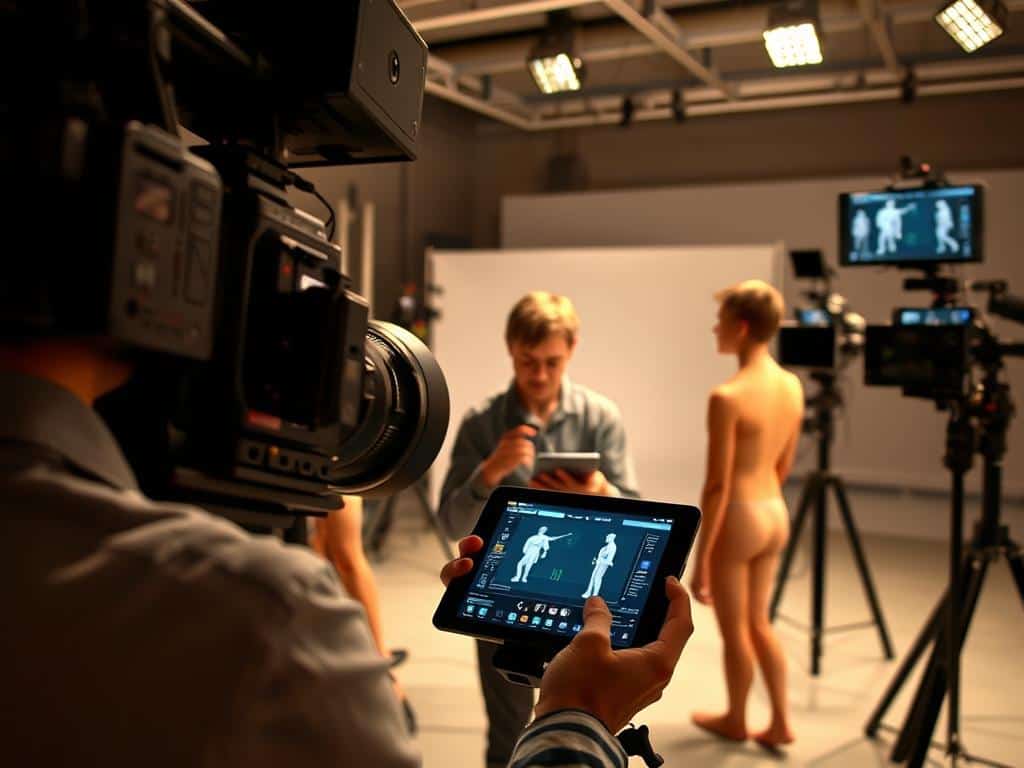
Looking back, it’s clear that AI Motion Tracking is changing filmmaking fast. Animation and filmmaking are seeing big changes thanks to AI. For example, Pixar has seen a 30% boost in animation speed with AI. Blue Sky Studios cut their production time by 40% too.
This shows how AI helps artists by automating routine tasks. It lets them spend more time on creativity.
Today’s motion capture tech has better sensors and faster rendering. These improvements make animations more realistic and efficient. They also make the production process smoother.
AI is also making animations more lifelike, improving viewer experiences. It’s exciting to see AI’s role in real-time animation and virtual reality. AI can analyze human movements with great accuracy, setting new quality standards in storytelling.
By using AI motion tracking, filmmakers are not just getting better at their job. They’re also making top-notch tech more accessible to all creators. Tools like Remocapp make motion capture affordable for small studios and independent creators.
This is an exciting time for the industry. The mix of creativity and technology is opening up new possibilities. It promises a future filled with immersive and groundbreaking storytelling.
