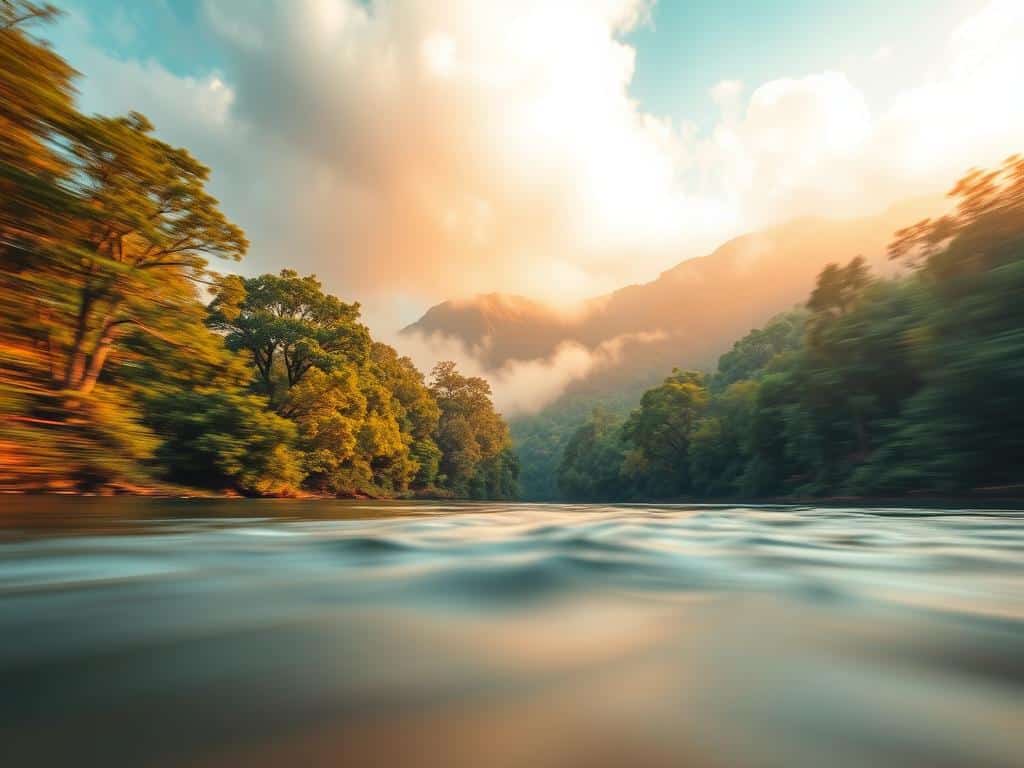
Did you know Motion Blur Photography can make your photos stand out? It contrasts static subjects with moving ones, creating stunning images. This technique turns everyday scenes into breathtaking art, where speed and calmness come together.
Imagine the busy streets where people’s movements create a beautiful scene. Or the peaceful coastlines where waves seem to dance. Motion blur can make these moments unforgettable. In this guide, I’ll show you how to use this technique to create dreamy images. We’ll explore how to mix creativity with technical skills.
Key Takeaways
- Motion blur enhances visual interest by contrasting static subjects with dynamic elements.
- Slow shutter speeds ranging from 1/30 to several seconds capture unique effects.
- Urban and coastal photography offer great opportunities for using motion blur techniques.
- Utilizing proper camera settings is essential for achieving desired artistic outcomes.
- Equipment like a tripod can significantly improve the clarity of motion blur shots.
- Understanding movement techniques can further enhance creative photography.
Understanding Motion Blur Photography Techniques
Motion blur photography is a fun way to show movement in a single photo. It’s used in many types of photography to add depth and energy. To get the most out of motion blur, it’s important to know what it is, how it works, and the role of slow shutter speed.
What is Motion Blur?
Motion blur makes moving parts in a photo look blurry, showing speed. The Motion Blur definition is about capturing time in images. It turns a simple photo into a dynamic piece of art, full of life.
Why Use Motion Blur in Photography?
Motion blur does more than just look good. It can make a photo feel more emotional and tell a story. It shows action and energy, making viewers feel something. It’s great for sports and dance photos, capturing the moment’s excitement.
Importance of Slow Shutter Speed
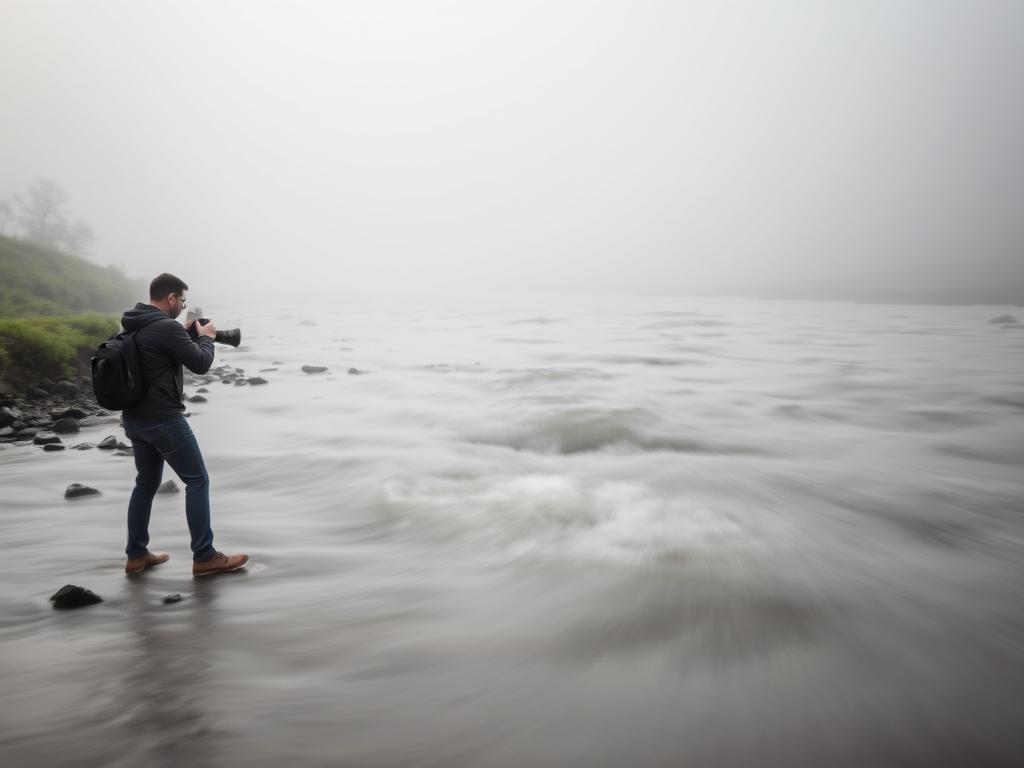
Slow shutter speed is key for motion blur. It lets the camera catch light as things move, creating a blur effect. I find that shutter speeds between 1/10th and 1/50th of a second work well, but you need to control it to avoid overexposure.
For slower subjects like water, you might need a second or more. But for fast subjects, you can get away with 1/200th of a second. Knowing these details is important for capturing motion in photos.
Mastering Camera Settings for Stunning Motion Blurs
When I start taking motion blur photos, I learn that the right camera settings are key. Aperture and ISO are important for making dynamic photos. A smaller aperture, like f/7 to f/11, lets less light in. This helps me use slower shutter speeds without overexposing the photo.
Keeping the ISO low, at 100 or 200, helps keep the image quality high. This is important for creating impactful motion blur and keeping the main subject clear.
Aperture and ISO Adjustments
Choosing the right shutter speed is also critical for motion blur. I find that shutter speeds between 1/10 and 1/30 seconds work best. Slower speeds make blurs more dramatic, which is great for capturing fast movements.
Understanding how fast my subject is moving helps me use light creatively. This results in photos that show action and energy.
Choosing the Right Shutter Speed
Trying out different camera movements can make my motion blur shots better. Techniques like panning keep the subject sharp while blurring the background. This makes the motion more obvious.
I also play with different types of blur, like linear or radial blur. This adds more to the story in my photos. Exploring these techniques makes my photography more creative. It lets me show energy and emotion in every photo.
Experimenting with Movement Techniques
