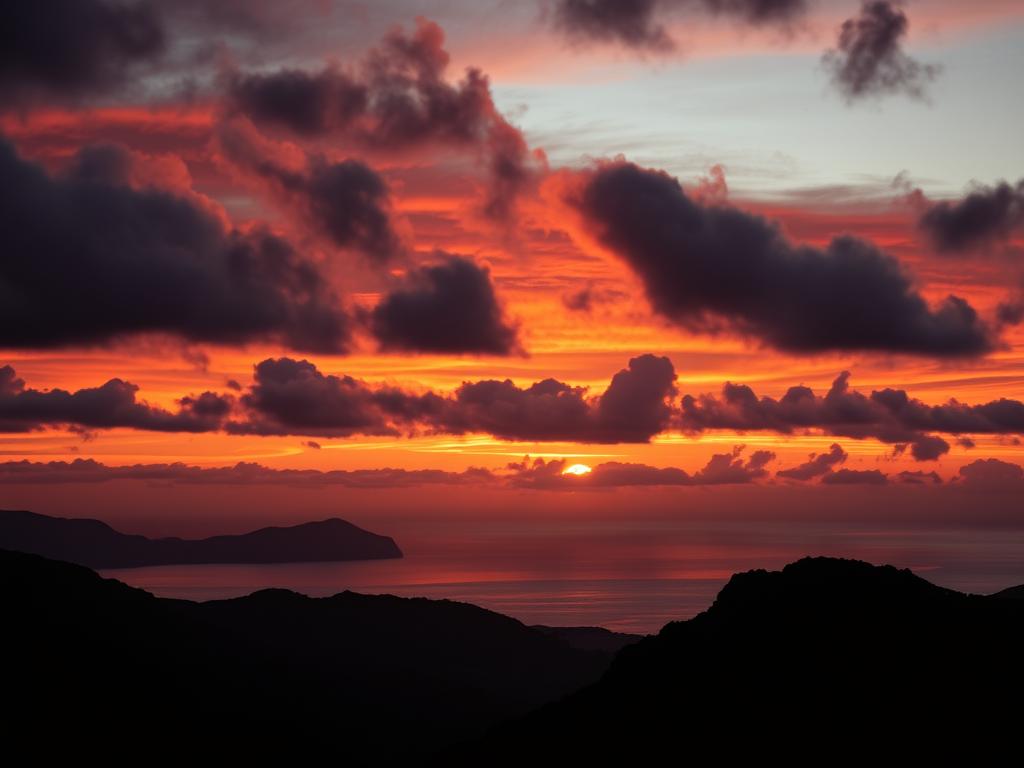
Did you know the golden hour is the most magical time for photographers? It happens about 1-2 hours before sunset. This moment offers a chance to capture stunning landscape photos with warm tones and vibrant colors.
The light during this time makes the sky and landscapes glow. It creates breathtaking effects that are unforgettable.
In this guide, I’ll share tips for amazing sunset photography. We’ll cover the science of colors, the best weather, and techniques to touch viewers’ hearts. Get ready to improve your sunset photos!
Key Takeaways
- The golden hour is a prime time for capturing warm tones and stunning landscape photography.
- Understanding camera settings is key for the best sunset photos.
- Weather greatly affects the beauty of your sunset shots.
- Filters can improve image quality and color in sunset photos.
- Trying different compositions can make your sunset photos stand out.
- Practicing with various settings helps find the perfect technique for golden hour shots.
Understanding Sunset Photography and the Golden Hour
The golden hour is a magical time for photographers. It happens about an hour before sunset and after sunrise. During this time, the light is soft and flattering, making images stunning.
This lighting is serene and perfect for capturing beautiful visuals. It’s great for silhouette photography. The sun’s low angle creates depth and warmth in each shot.
What is the Golden Hour?
The golden hour has warm tones and long shadows. It creates a beautiful atmosphere. Photographers plan their shoots for this time to get the best light.
The soft light reduces harsh contrasts. This is important when the sun is high. Knowing when the golden hour is in my area helps me capture amazing sunset colors.
The Science Behind Sunset Colors
The sky shows amazing sunset colors because of light scattering. As the sun sets, reds and oranges become more visible. This creates a surreal palette that makes any photo stand out.
This phenomenon turns ordinary landscapes into striking images. Understanding the science behind these colors helps me know when to shoot.
Weather Conditions That Enhance Sunset Photography
Certain weather conditions make sunset colors more vibrant. Partly cloudy skies or weather after a rainstorm can make colors richer. This results in more intense images.
The mix of clouds and sunlight can create stunning compositions. On overcast days, I can take beautiful portraits without harsh midday light.
Essential Techniques for Capturing Stunning Sunset Photography
To master sunset photography, I focus on key techniques. These include precise camera settings, effective composition, and the right filters. Together, they bring out the golden hour’s beauty.
Camera Settings for Optimal Exposure
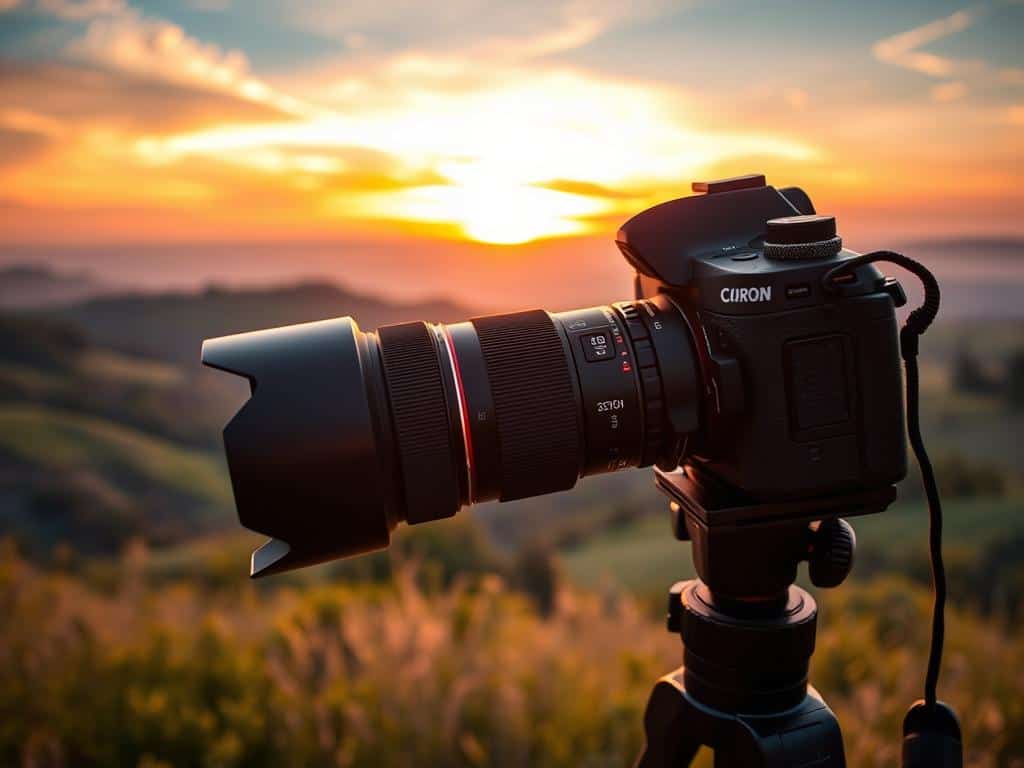
Proper camera settings are vital for great shots. I use full-frame mirrorless cameras for their wide dynamic range. This lets me capture both dark and bright parts in one photo.
I set my aperture to f/8 to f/16 for depth and sharpness. Keeping the ISO low, around 100 to 200, reduces noise. A 200mm or longer lens helps me focus on the sun’s details.
Composition Tips for Enhancing Your Sunset Images
Good composition is key for striking images. I use the rule of thirds to balance my shots. This means placing key elements one-third into the frame.
Trying different exposures adds creativity. I capture various colors and effects during sunset. Leading lines and silhouettes add depth and interest, drawing viewers in.
Utilizing Tools and Filters
Using tools and filters boosts my work’s impact. Graduated neutral density filters balance light between sky and ground. A sturdy tripod is needed for long exposures to keep images sharp.
Auto Exposure Lock helps keep exposure steady, even with bright sunsets. Tools like Photopills help plan shots by showing sun positions. This ensures I’m ready to capture the moment.
Conclusion
Capturing stunning sunset photos is more than just pressing the shutter. It’s about understanding light and planning for the perfect moment. The golden hour brings out brilliant colors, letting photographers show their creativity.
Looking back, I’ve learned a lot from this journey. The eruption of Mount Krakatoa showed us the beauty of sunsets. Each one is a unique masterpiece, changing colors every few minutes. It takes at least half an hour to capture its full beauty.
Photography has taught me a lot, from exposure settings to using the right equipment. It’s not just about taking pictures. It’s about capturing the beauty of the world around us. By mastering sunset photography, I share nature’s magic with others.
