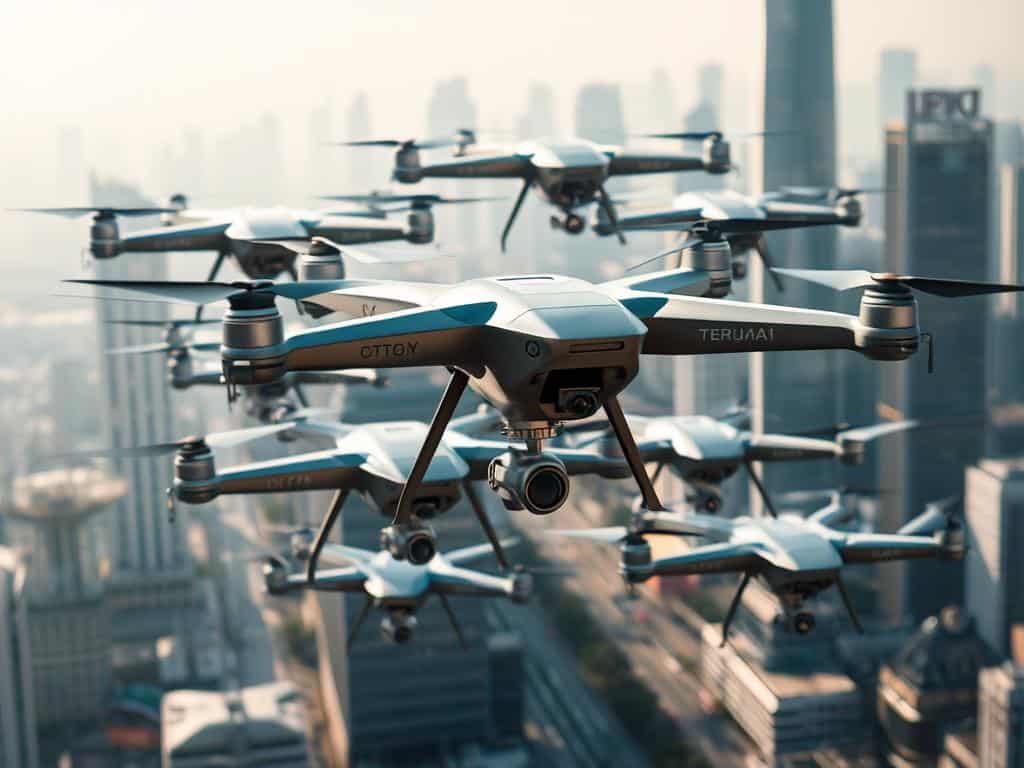
Did you know that autonomous drones could add over $100 billion to the global economy by 2025? This huge number shows how AI is changing many fields, from farming to delivery services. These drones are starting to act like human pilots, using smart aerial AI to move around.
The rise of self-flying tech is more than just a trend. It’s a big step towards making things more efficient and safe. I’m excited to share how these smart drones work, their uses in both the military and civilian worlds, and the big responsibilities that come with them. Let’s explore the future of flying robots and how they will change our lives.
Key Takeaways
- Autonomous drones are expected to significantly boost the global economy.
- AI drones operate with capabilities akin to human pilots.
- Aerial AI is transforming multiple industries, making things more efficient.
- Understanding self-flying tech is key for future progress.
- Military uses are pushing drone tech forward for everyone.
- There are big ethical questions about using autonomous drones.
The Rise of Autonomous Drones
Autonomous drones are changing the world of aviation. They can now work on their own, thanks to new tech. This makes them better for both the military and everyday use.
Companies like Shield AI are at the forefront. They’ve created the Hivemind AI for complex tasks. This tech improves military drones and opens up new uses for drones in the market.
Technological Advancements in Drone Capabilities
New tech has made drones more powerful. They can now handle tough tasks on their own. This is thanks to AI and machine learning.
These advancements help military drones work better in tough situations. They also make drones more useful for everyone, not just the military.
Influence of Military Applications on Consumer Drones
Military drones and consumer drones are connected. Military tech often ends up in civilian drones. For example, Stark’s OWE-V drone uses tech meant for the military.
This shows how fast drone tech can change. Events like the Ukraine conflict speed up these changes. But it also raises questions about ethics and the use of these drones.
How Autonomous Drones Operate Like Human Pilots
The growth of drone autonomy is based on complex systems that mimic human thinking. I find the blend of AI pilot technology and self-operating drones very interesting. These drones use smart algorithms and neural networks to understand their surroundings, just like a skilled pilot does.
This change is thanks to the Hivemind system. It lets multiple drones share info and work together to achieve their goals.
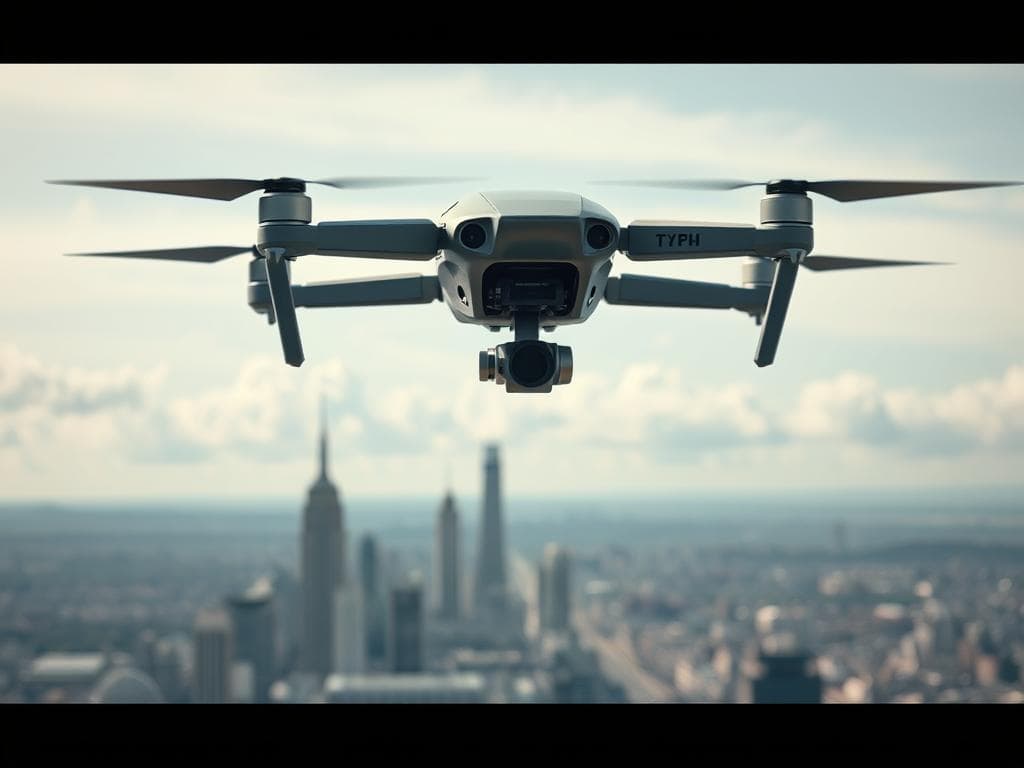
Drone success comes from using deep learning. This tech lets drones move through tough environments without just GPS. They make choices based on what they see and feel, just like humans do.
Thinking about these advancements makes me wonder about the future of human pilots. With drones getting smarter, old jobs are changing. But new chances for better work and flexibility are opening up in many fields.
Autonomous Drones in Real-World Applications
Autonomous drones have changed many fields, like the military and public safety. They use new tech from top companies. This makes things work better and more efficiently.
Military and Defense Uses
In military applications of drones, big steps have been made. Drones can now do spy missions in dangerous places without a person controlling them. Companies like Shield AI and Stark have made drones that can go through tough areas and hit targets right on.
This new way of fighting means soldiers can get important info without risking their lives. Drones with smart sensors send back info in real time. This is changing how wars are fought.
Public Safety and Emergency Response
The drone use in public safety is also a big deal. Emergency drones are super helpful for first responders in tough times. They give aerial views and help know what’s happening on the ground.
They help get to places faster and make rescues better. Drones can quickly check out disaster areas. This helps make smart choices and manage incidents well. Plus, using drones saves money and keeps responders safer.
Many times, drones have helped find missing people or see how bad damage is after disasters.
Conclusion
Looking at the future of autonomous drones, it’s clear they will change many fields, like defense and public safety. The growth in drone tech, thanks to AI, shows how AI drones can improve surveillance and work better. But, we must think about the big changes drones bring.
There are big challenges and ethical questions about using drones in war and everyday life. We need to talk more about how to use these systems right. It’s key to make sure we get the good parts without the bad.
We’re on the edge of a new era with drones. They could change how we do things and keep us safe. By focusing on ethics, we can make a future where drones help us a lot.
