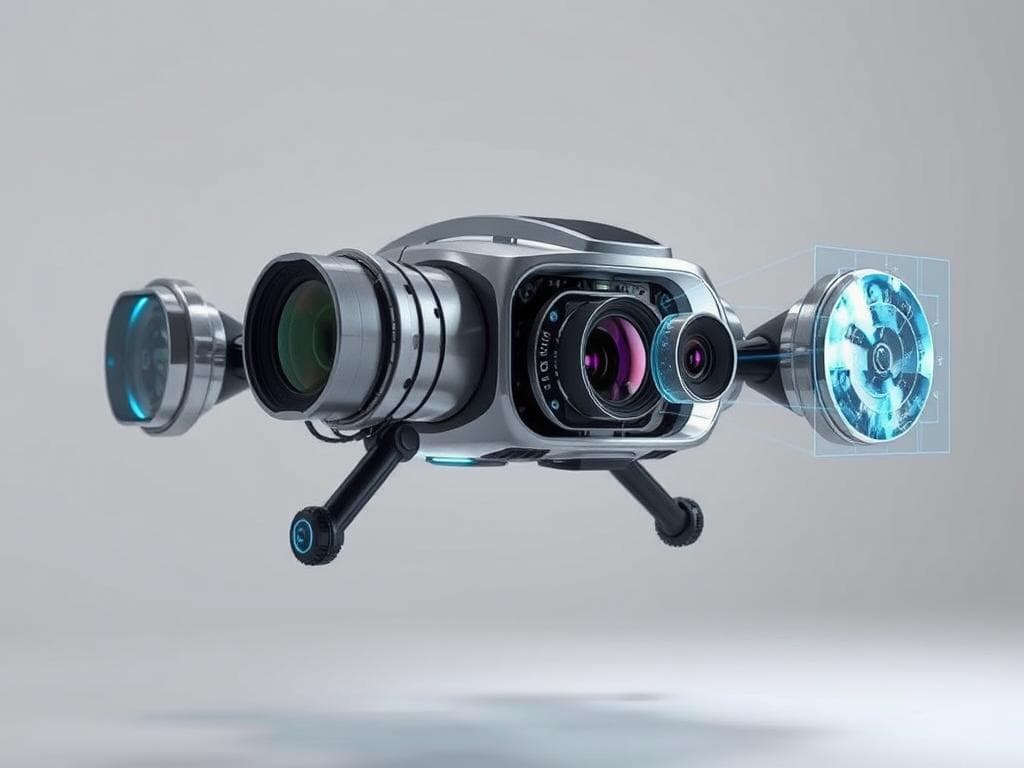
Did you know the Augmented Reality (AR) market is set to grow by 50.7% each year from 2023 to 2030? This rapid growth shows a big change in technology. It’s changing how we interact and is making photography more interactive.
As I look into how AR cameras are becoming part of our lives, I see a new way of seeing the world. These devices blend the real and digital worlds, adding a new layer to photography. Big tech names like Apple, Google, and Facebook are putting a lot of money into these advancements.
They’re working on better image recognition and AR features. This is taking visual storytelling to new heights. Let’s explore how these AR cameras are changing photography into something more than just capturing moments.
Key Takeaways
- The AR market is rapidly expanding, expected to grow at a CAGR of 50.7% by 2030.
- Major tech companies are investing in AR technology for enhanced photography experiences.
- Augmented reality is transforming traditional photography into immersive storytelling.
- AR cameras can merge physical and digital elements seamlessly.
- New advancements promise to enhance image recognition capabilities in AR photography.
Revolutionizing Photography with Augmented Reality Cameras
Photography is changing fast, thanks to augmented reality. This tech lets us add digital stuff to our view of the world. It makes photos better and stories more engaging. With AR, photographers can try new things, like adding virtual backgrounds or changing lights.
Understanding Augmented Reality in Photography
Augmented reality mixes digital stuff with real images. The global AR market is set to hit $198 billion by 2025. This is big news for photography, including fashion.
A survey showed 61% of people like brands that use AR. This shows people want to interact with their photos in new ways. AR can do just that.
The Impact of AI and Smart Filters on AR Photography
Artificial intelligence makes photography easier. AI and smart filters in AR apps help cameras work better. They can spot subjects and adjust lights for you.
This means beginners can take great photos easily. Smart filters in AR apps make photos better right away. They fit the scene perfectly.
70% of fashion retailers think AR will be key in their marketing soon. It’s clear they’re moving towards using these technologies.
Key Features and Innovations of AR Cameras
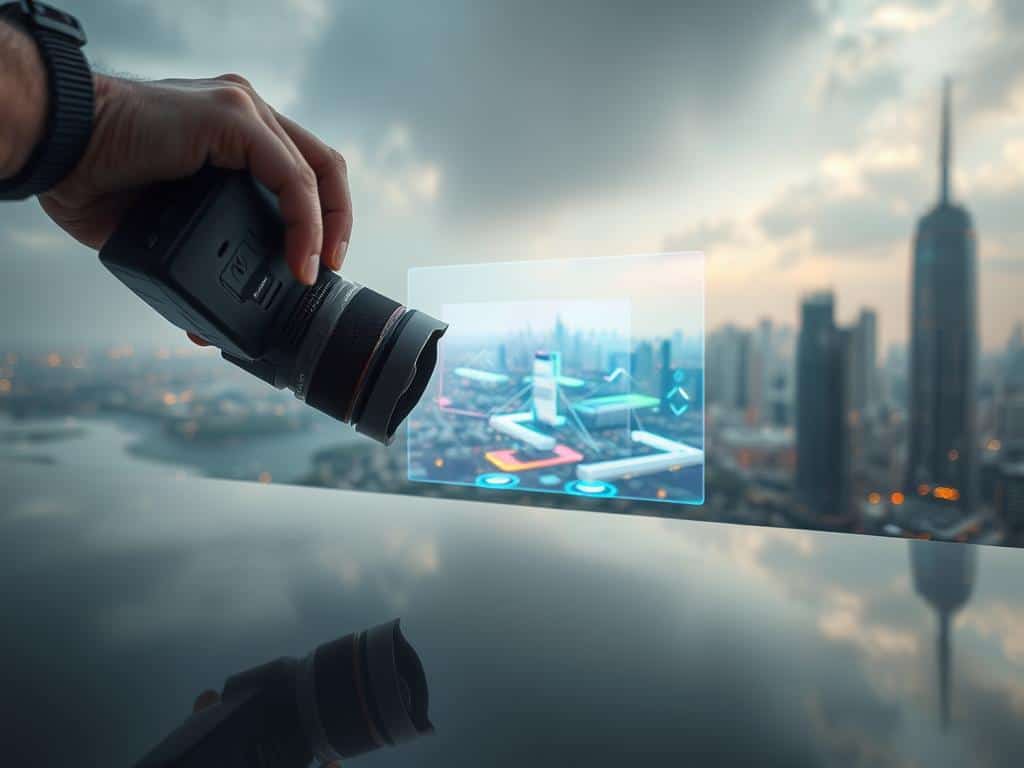
Exploring AR cameras, I find gesture-based interactivity truly exciting. It lets users change camera settings with simple gestures. For example, the Maraca Camera lets me control it by shaking or tilting it. This makes photography more fun and interactive.
Gesture-Based Interactivity in Modern Cameras
This feature opens up new creative ways to take photos. It makes using the camera more natural and fun. I can zoom in or out, switch modes, or adjust settings easily without complicated menus.
With AR cameras, taking photos becomes more engaging. It encourages me to try new things and be creative with every shot.
Future of 3D and Holographic Photography
The future of 3D and holographic photography is very exciting. Soon, we’ll be able to capture scenes in amazing detail. Imagine being able to walk around your photos, feeling like you’re right there.
This technology, combined with AR, will make our photos even more interactive and memorable. Holographic imaging will take it a step further, making images feel real and touchable. As this tech grows, my photography will open up new ways to tell stories.
Conclusion
The world of photography is changing fast, thanks to augmented reality (AR) technology. As we look towards 2025, AR is set to change how we make, share, and see photos. It’s moving beyond old ways, bringing new life to interactive visual stories.
AR brings us closer to immersive experiences with new tools like gesture controls and 3D imaging. It’s not just about fun; it’s also opening up new ways to be creative in fields like education and healthcare. The AR market is growing fast, showing a bright future for AR in our stories.
Watching AR evolve is thrilling, and I’m excited for what’s next. It’s more than a trend; it’s a big change in how we tell stories with pictures. AR is making photography more engaging and meaningful for everyone.
