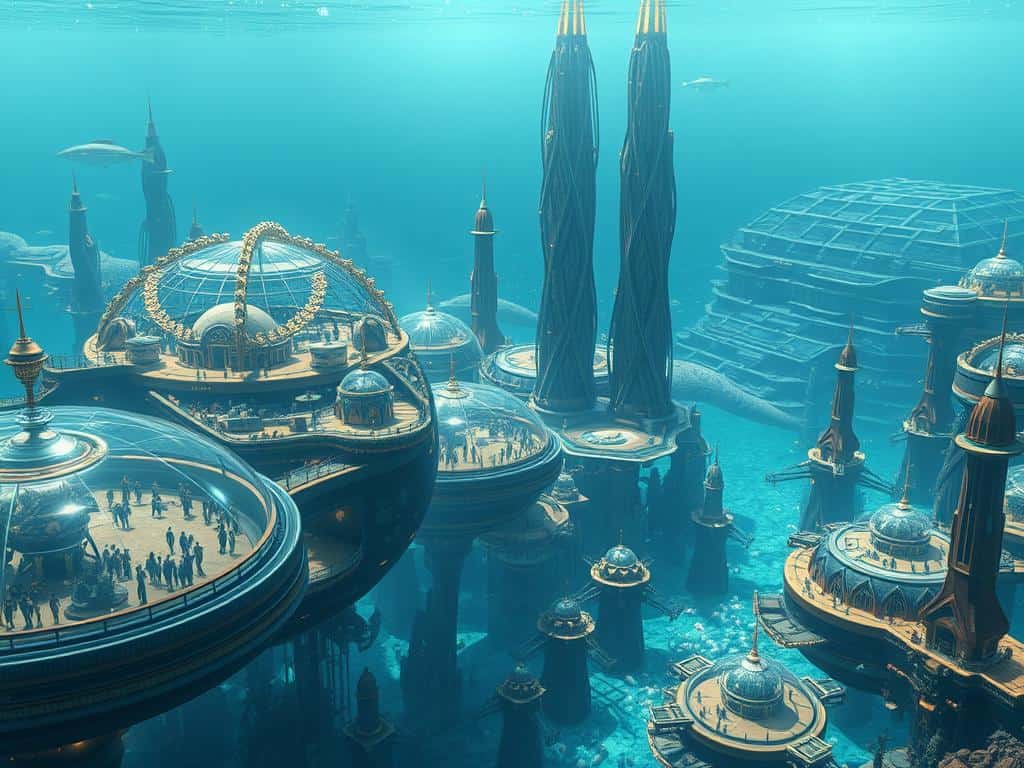
Did you know that oceans cover about 71% of our planet? Yet, humans have just started exploring living underwater. The idea of underwater cities might seem like a dream, but it’s becoming a reality.
Only three underwater habitats exist, all in the Florida Keys. These include the Jules Undersea Lodge and the Aquarius Reef Base. They are the first steps towards futuristic ocean cities.
Visionaries like Ian Koblick believe these cities could house up to 100 people. They could use new technologies for a sustainable future. Could living underwater become our new reality?
Key Takeaways
- Currently, only three underwater habitats from a former dozen are operational, located in the Florida Keys.
- Future underwater cities like the Water Discus Hotel and others aim to blend luxury with deep-sea living.
- Technological advancements may soon allow habitats to become self-sufficient and powered by renewable energy sources.
- These habitats may help alleviate pressures of overpopulation by providing alternative living environments.
- Living underwater poses unique challenges, including environmental factors and psychological impacts.
- Current designs suggest a shift towards modular structures to maximize capacity and adaptability.
The Concept of Underwater Cities
Living underwater has fascinated people for decades. It started with pioneers like Jacques Cousteau in the 1960s. His Conshelf series showed early attempts at underwater homes.
By the early 2000s, we thought underwater cities would thrive. But, making them is hard and expensive.
Historical Context of Underwater Living
Underwater living isn’t just science fiction. Places like Baiae and Thonis-Heracleion show humans have lived underwater before. These examples highlight our long history with the ocean.
Technology has improved, but our dreams of underwater cities in 2020 didn’t come true. Yet, the idea keeps us excited.
Current Developments in Aquatic Technology
New tech has made underwater habitats interesting again. Projects like the Ocean Spiral City aim to create homes for thousands. They also want to use the ocean’s resources better.
Building these homes is expensive and hard. But, new robots and materials are helping. They’re solving problems like how to build strong underwater structures.
Deep-Sea Colonies as a Solution to Overpopulation
Deep-sea colonies could help with our planet’s growing needs. With over 70% of Earth covered in water, the possibilities are huge. They could give us food and new discoveries.
Only 3% of the ocean has been explored. With better tech, living underwater could become a reality. It would be a big step for humanity.
Challenges of Living in Underwater Cities
The idea of living in underwater cities is exciting. But, it comes with many challenges. We need to understand the environmental issues and safety steps to make it work.
Environmental Factors and Safety Measures
Living underwater has its own set of problems. High pressure and dangers from sea creatures are just a few. We must take strong safety steps to keep people safe.
Good life support systems are key. They keep air quality and temperature right. New materials can handle the pressure and corrosion from saltwater.
Advanced filters and wastewater systems are also important. They help keep the ocean clean and protect marine life. This way, we can build underwater homes that are good for the planet.
Health Implications of Long-Term Submersion
Health is a big concern in underwater living. Long-term living underwater can change our bodies and minds. About 30% of people might feel isolated or trapped.
So, we need to study how to adapt and support people. Creating health plans for both body and mind is essential. This will help make underwater living safe and better for everyone.
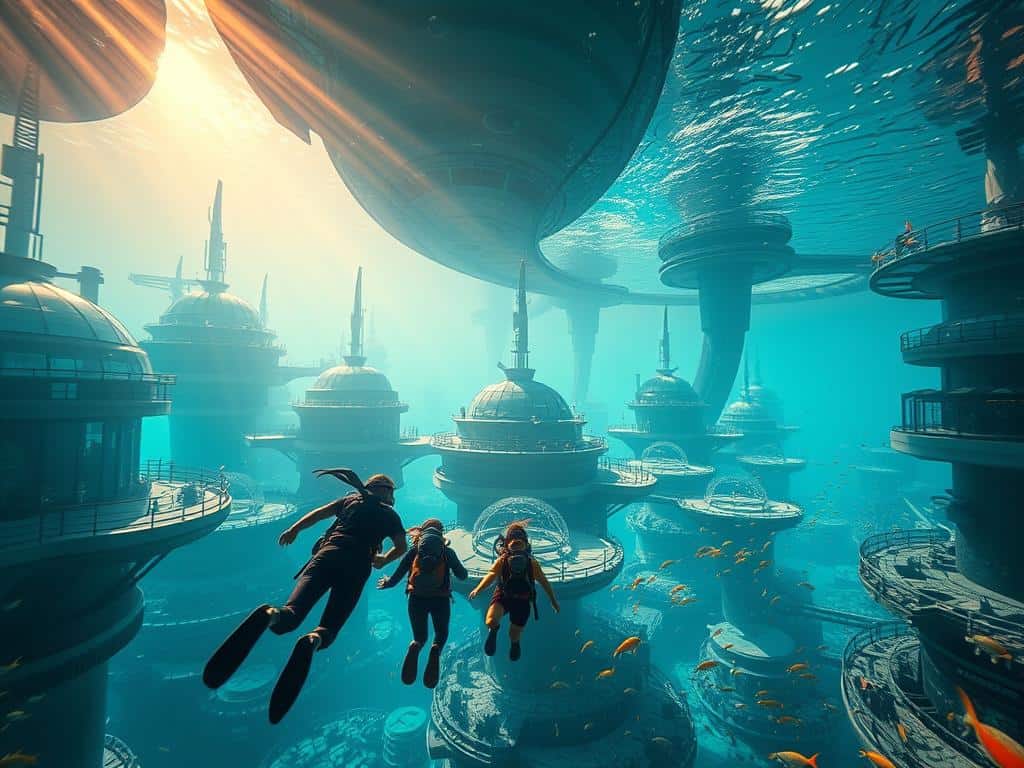
Underwater Cities: A Glimpse into the Future
Underwater cities could be the future of living. They offer a solution to climate change and overcrowding. These cities could change how we use our oceans, combining practicality with care for the environment.
Architectural Innovations and Designs
Architects are working on underwater homes that fit with the sea. Companies like Shimizu Corporation are making designs that are safe, comfortable, and green. These “bubble cities” use clean energy and could be built quickly with 3D printing.
Research and Exploration Opportunities
Underwater cities could also be research centers. They would help us understand how climate change affects the sea. These cities could also grow food, combining research with living.
Conclusion
The idea of building underwater cities is exciting and full of possibilities. It shows us where humanity might go next. With challenges like climate change and rising sea levels, underwater living is becoming more than just a dream.
These cities could be safe havens and places for new discoveries. They could help us learn more about the ocean. This is a chance to explore and research the sea like never before.
Thanks to new technologies, building underwater homes is getting closer to reality. We can use strong materials and new ways to clean water. This makes underwater living safe and possible.
These cities could run on clean energy from the sea. We could use wind and tides to power them. This would make them sustainable for the future.
But, making these cities is expensive and might harm the environment. We need to think carefully about this. Yet, with teamwork and research, we can make it work.
By using our oceans wisely, we could live sustainably. We could also learn a lot about marine life. This is a chance to explore and understand the sea better.
