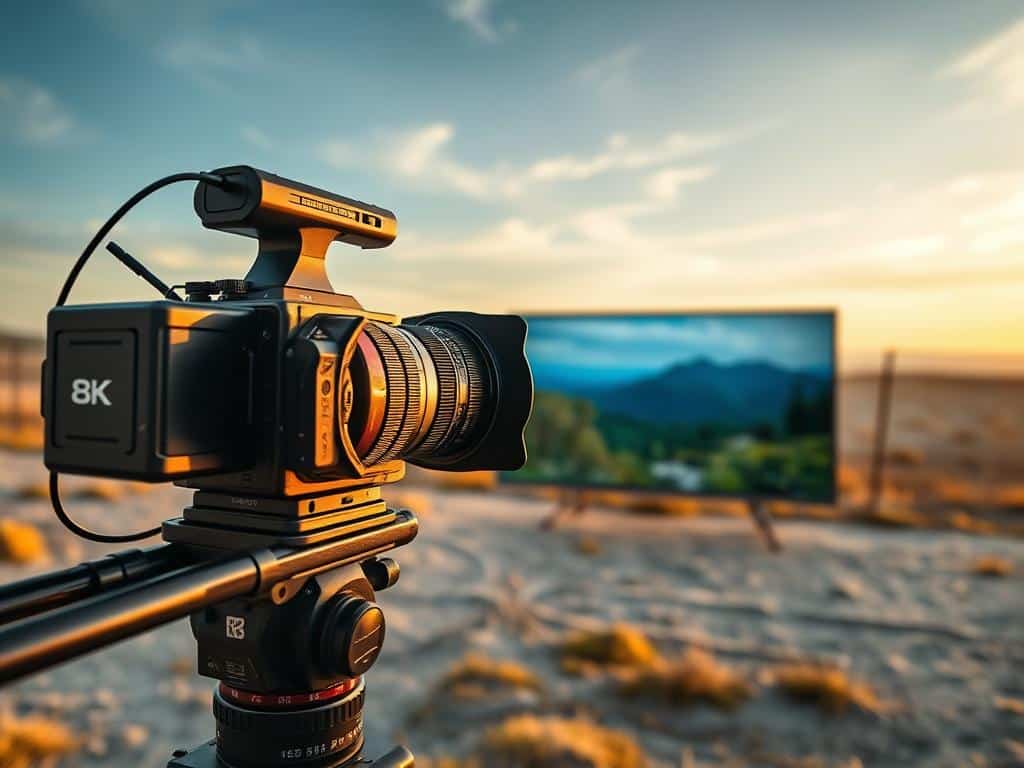
Did you know 8K resolution has 7680 x 4320 pixels? That’s about 33.2 million pixels. It’s a big jump from 4K’s 3840 x 2160 pixels. This change is making video production and cinema better.
Hollywood is now using 8K and even 16K footage. This means better image quality and more ways to tell stories. But, is this new tech worth the cost?
In this article, we’ll look at 8K cameras in filmmaking and photography. New tech could make streaming high-quality videos easier. But, there are costs and creative possibilities to think about. Let’s see if 8K cameras are worth it for telling stories through pictures.
Key Takeaways
- 8K resolution provides remarkable clarity with 33.2 million pixels.
- Hollywood’s use of 8K and 16K enhances visual storytelling.
- New encoding technologies can reduce data needs, facilitating streaming.
- Adoption of 8K cameras is growing but limited.
- 8K technology opens up extensive creative opportunities in filmmaking.
Understanding 8K Cameras and Their Significance
The world of video production is changing fast. 8K resolution is a big step forward in video technology. It’s making visuals better, which is great for filmmakers and content creators.
What is 8K Resolution?
8K resolution means images are much clearer, with about 8,000 pixels. It’s defined as 7680 × 4320 pixels in the Rec. 2020 (UHDTV) standard. This makes visuals look ultra-high definition, improving both movies and photos.
Compared to 4K, 8K has 33.2 million pixels. This means more detail and clarity. It’s perfect for telling stories with stunning visuals.
The Evolution from 4K to 8K
The move from 4K to 8K is a natural step in video technology’s growth. Just like 4K overtook 1080p, 8K is changing how we make content. Only a few cameras could record in 8K before, but now more are available.
NHK was a leader in this, launching BS8K, the first 8K broadcast channel in December 2018. This showed 8K’s possibilities. As more industries adopt it, 8K’s importance in the market is growing. It brings better detail, improved low-light shots, and more flexibility in editing.
Advantages of Using 8K Cameras
Exploring the 8K camera advantages shows they offer more than just more pixels. They provide image quality and detail that’s unmatched. This makes them a top choice for professionals in filmmaking and photography.
Exceptional Image Quality and Detail
In today’s world, clear visuals are key. 8K cameras lead the way with their ability to show about 8,000 pixels per image. This is double what 4K cameras offer.
This means images are not just clearer but also have more depth. They look sharper, which is great for watching on big screens. As screens get bigger, the need for high detail grows. This shows how 8K cameras outshine their predecessors.
Greater Flexibility in Post-Production
8K footage offers amazing flexibility in editing. Creators can crop, zoom, and reframe without losing image quality. This lets them try new things and perfect their work.
Also, 8K footage can be compressed better. Even when downscaled to 4K or 1080p, it stays high in quality. This is a big reason for creators to choose 8K technology and improve their work.
8K Cameras in Today’s Filmmaking and Photography
The world of filmmaking and photography is always changing. The 8K camera market is growing, with more people using these cameras. Canon, Sony, and Nikon are leading the way with their top-notch 8K models.
Current Popularity and Market Trends
More filmmakers are choosing 8K cameras for their stunning visuals. The market shows a clear trend towards 8K, even though 4K is common in some areas. Cameras like the Canon EOS R5 C and SONY VENICE 2 offer amazing features and performance.
These cameras can shoot in 7680 x 4320 pixels and handle high frame rates. They help create detailed and engaging content.
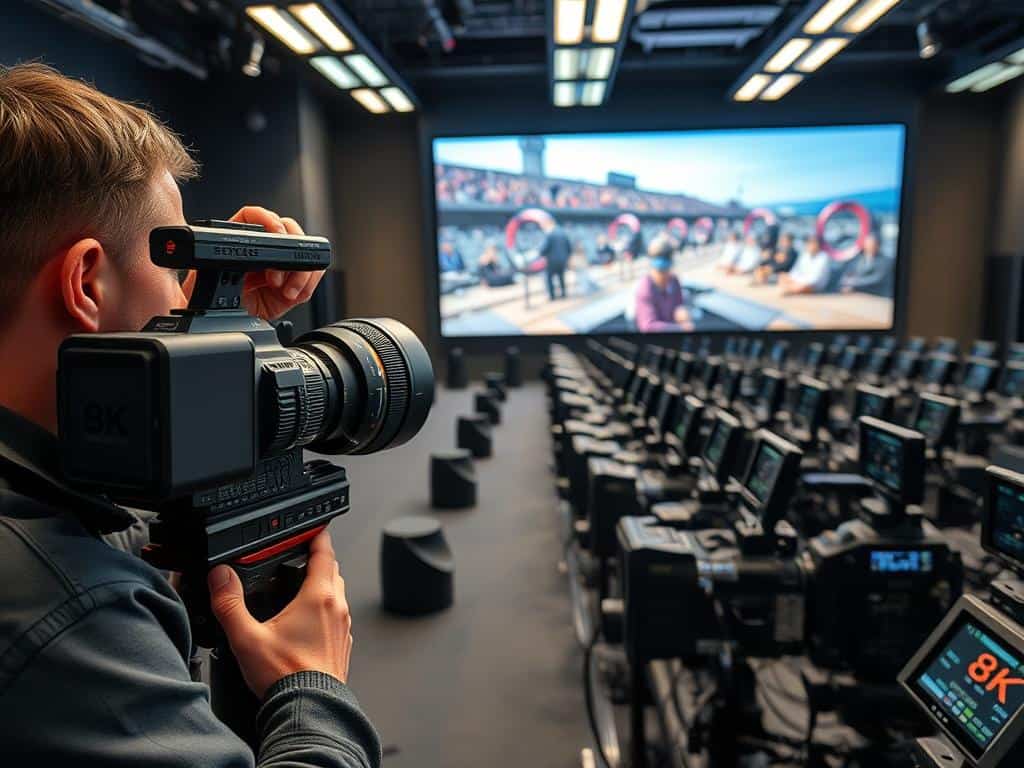
The Role of 8K in Future Content Creation
Looking ahead, 8K technology is key for staying ahead in the game. High-resolution content makes work better and draws in viewers. Cameras with advanced features like dynamic range and autofocus make creating immersive experiences easier.
The trend suggests 8K cameras will soon be used by more creators. This will open up new possibilities across different media.
Conclusion
Exploring 8K cameras opens up new possibilities for content creators. While some might not see the need for 8K right away, its benefits are clear. It offers better image quality and more editing options, making it a smart choice.
The world of video technology is changing fast. Keeping up with these changes is key for anyone wanting to stay ahead in their field.
Looking at 8K video, it’s amazing to see each frame has 33,177,600 pixels, four times more than 4K. This high detail means you need lots of storage, with a 10-second clip needing almost 3GB. High-capacity SSDs are a must for smooth work.
Understanding these needs helps me get ready for now and the future. As 8K content becomes more common, those who start using it now will lead the way. They’ll meet the growing demands of viewers.
In short, getting 8K cameras is more than just about better resolution. It’s about being ready for the future of video technology. With augmented and virtual reality changing how we make and watch content, 8K’s importance will grow. Making this move shows I’m thinking ahead and ready for the digital world’s changes.
