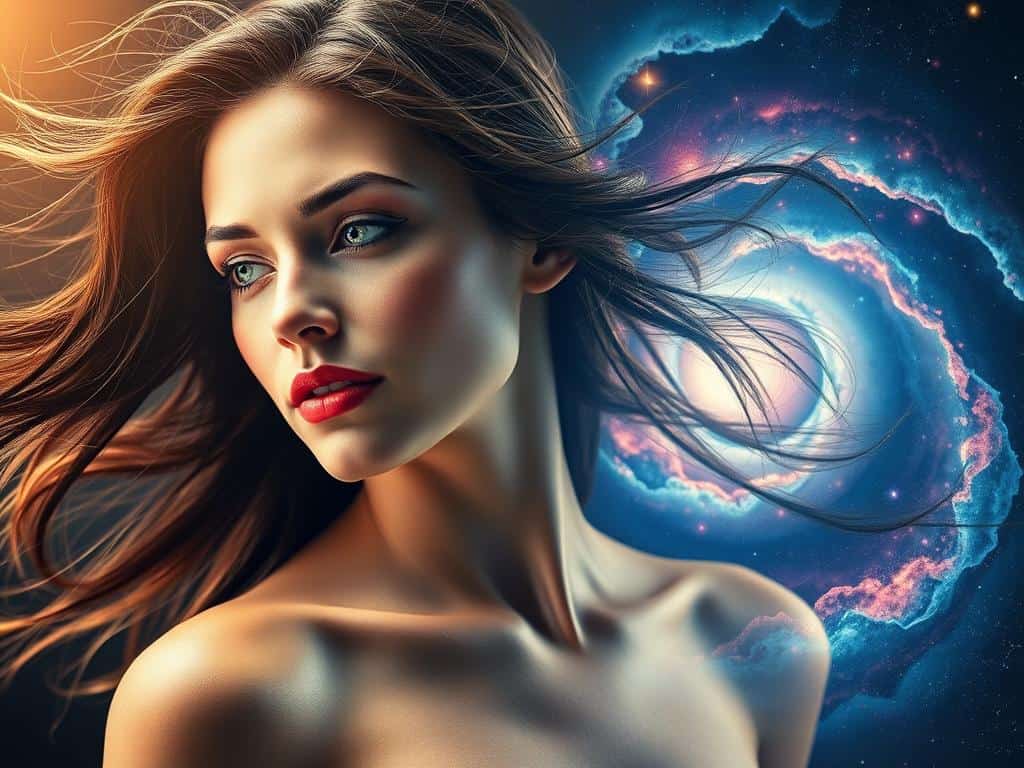
Did you know you can do double exposure edits with just photo editing software? You don’t need to spend a lot. Tools like Adobe Photoshop CS6 and free options like Gimp and Pixlr can help. This technique is a big deal in creative photography, letting artists mix images in a way that tells a story.
This guide will show you how to create stunning visual effects. You’ll learn about different artistic styles and techniques. By the end, you’ll know how to blend two images together smoothly. This will help you take your photography to new heights.
Key Takeaways
- Double exposure editing can be achieved with software like Adobe Photoshop CS6, and free tools like Gimp and Pixlr are also effective.
- Utilize a background photo with a single clean color and neutral tone for optimal blending results.
- Common themes for overlays include buildings, forests, clouds, and mountains, enriching the visual appeal.
- A typical opacity setting of 77% for the overlay layer is widely accepted for effective blending.
- Manual blending techniques allow for superior image quality, specially in complex lighting scenarios.
- Creativity is key; once you master the basics, your imagination is your only limit in double exposure editing.
The Art of Double Exposure Editing
Double exposure has fascinated photographers for a long time. It started with early film photography and has grown a lot. This technique lets you capture two scenes in one photo.
Definition and Historical Context
The double exposure technique began with film accidents. It shows how artists can tell stories with layered images. In the Victorian era, photographers started playing with overlapping images.
This led to ghostly figures in photos, a key part of early surreal photography. Later, Man Ray used it to add surreal effects, influencing many styles. It became key in advertising and commercial art, showing its power in telling stories.
Surreal Effects in Photography
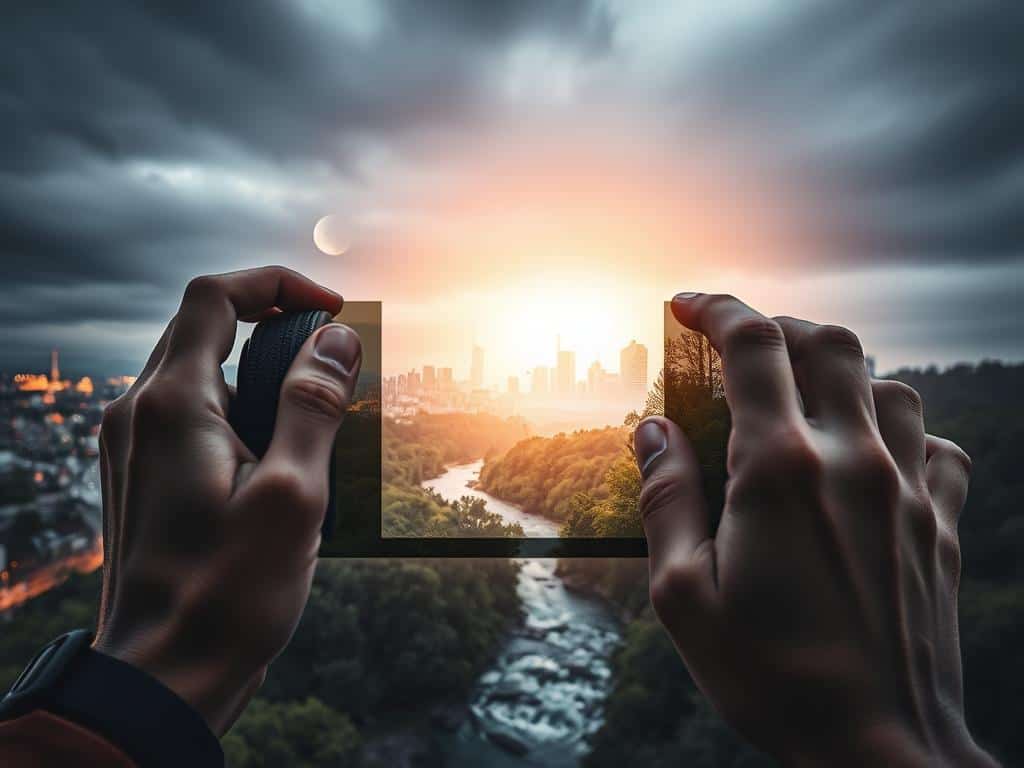
Double exposure can make photos feel deep and emotional. It lets photographers mix different scenes, creating stories that make you think. For example, a calm landscape with a busy city scene can show both peace and chaos.
This art form is all about creativity. It makes photos more engaging and sparks curiosity. Today, social media is a great place for photographers to share their double exposure work.
Techniques for Perfect Double Exposure Editing
The art of double exposure has grown from film to digital, blending creativity with technology. It has changed a lot, opening up new ways to express ourselves. I’ve tried different editing methods to make my photos tell a story.
In-Camera Double Exposure
Today’s cameras make double exposure easy with special settings. By choosing “Multiple Exposure” or “Overlay,” I can mix two photos live or from memory. This lets me play with different effects, like “Additive” and “Average,” to get unique looks.
Learning these camera tricks has made my photos stand out. It’s amazing how simple changes can make a big difference.
Post-Processing Software Methods
Photo editing software like Photoshop or GIMP gives me more control over double exposure. I can layer images and adjust how they blend. This lets me create interesting effects by changing the opacity and using different blending modes.
Using layer masks, I can focus on specific parts of each image. This gives me more control over the final look, letting my creativity shine.
Film Photography Approach
Film photography adds a fun surprise to double exposure. It’s exciting to not know exactly what you’ll get until the photos are developed. To avoid overexposure, I adjust the exposure settings carefully.
Film’s unique look is why many artists are coming back to it. It adds a special touch to double exposure, making it even more interesting.
Conclusion
Double exposure photography is a way to express art and explore creativity. It lets photographers blend two images together, creating stories that pull viewers in. I’ve learned it improves my skills in making pictures and telling stories.
Using cameras like the Canon EOS 5D Mark IV or Nikon D850, or software like Adobe Photoshop, makes creating double exposures rewarding. It makes me think deeply about the feelings and looks of my photos. This leads to images that really connect with people.
As I keep trying new things, I see double exposure photography as more than a method. It’s a way to express art that grows with technology. With hard work and imagination, anyone can discover the magic of this art form. It lets them make pictures that amaze and intrigue.
