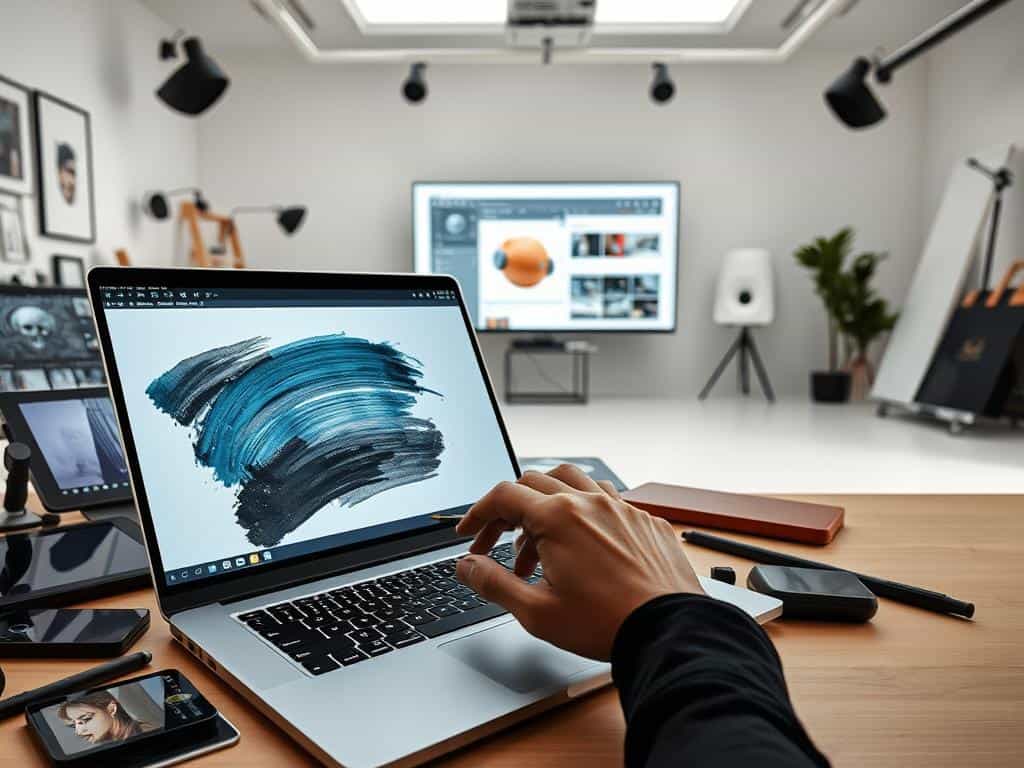
Did you know AI is used in filmmaking from start to finish? It helps analyze movies and suggest script changes. The debate is on: will AI replace human creativity or just enhance it?
In my research, I see AI doing tasks like video editing and even finding actors. But, it can’t match the emotional depth that humans add to their work. Will AI help artists, or will it take over their jobs? The big question is: can AI truly be as creative as humans, or is it just a tool?
Key Takeaways
- AI tools streamline various stages of filmmaking, making it more efficient.
- Automation in AI editing lets human creators focus on creative tasks.
- The use of AI in creative roles raises important ethical questions.
- AI could make stories more personal and engaging for viewers.
- The future of digital content creation will likely involve AI and human creativity working together.
The Rise of AI Auto-Editing in Photography
AI technology has changed photography a lot. It makes editing easier and opens up new creative possibilities. Thanks to AI, photographers can spend more time on their art and less on tedious editing tasks.
Understanding AI Technology in Editing
Editing used to take up to 90% of a photographer’s time. But AI has changed that. Now, tasks like removing backgrounds take just seconds.
Adobe and Photoroom lead the way with their AI tools. They make editing fast and efficient. For example, an e-commerce manager can handle 15,000 products online quickly, a task that used to take weeks.
Smart Photo Edits: Automation at Its Best
AI has made editing smarter and faster. Tools like Adobe Sensei can automatically fix colors and find subjects. This helps even beginners get professional-looking photos.
These tools learn from users and suggest edits based on feedback. This means anyone can make amazing photos without needing to be a pro. The results are clear, with users seeing big increases in sales after using AI edits.
How AI Auto-Editing Tools are Transforming Content Creation
AI Auto-Editing tools are changing content creation a lot. They make it easier and faster to do projects. This means creators can work better and make their work even better.
The Efficiency Factor in Content Production
AI Auto-Editing tools save a lot of time and effort. For example, editing videos used to take a long time. Now, it can be done in just a few minutes. This lets creators spend more time on the creative parts.
Brands using AI tools see better results. They can make campaigns that really speak to their audience. This leads to more people engaging with their content.
AI also makes video production easier for everyone. Even those who aren’t experts can make great videos. This is because AI tools are getting better and are free to use. It’s easier for more people to join in.
AI tools are great at making content fit for social media. They help turn old content into new things fast. This is super important in today’s fast world.
Future of Photography: A Blend of AI and Human Skills
The future of photography looks bright with AI. AI will help make editing faster and better. This means we can make more content in less time.
AI tools already help with many things, like planning and improving audio. This makes making content a better experience.
I think AI and human editors will work together well. This will lead to amazing content that people love. AI will keep getting better at making new things. This will change how we make content in photography and more.
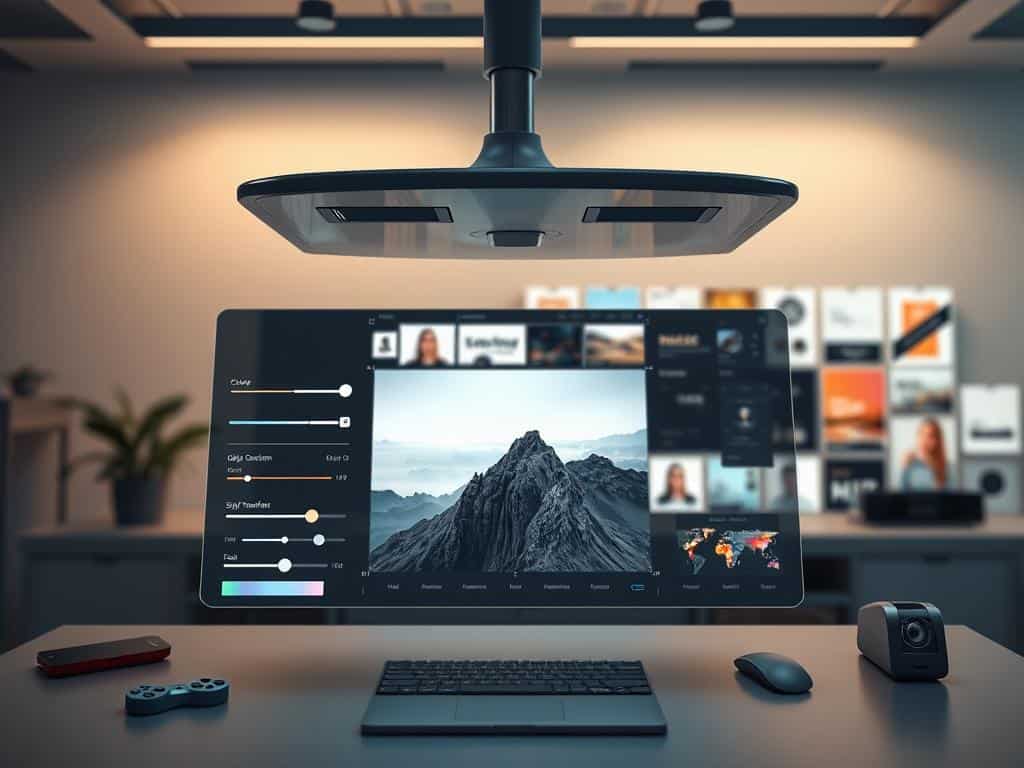
Challenges and Ethical Considerations of AI in Editing
AI in editing brings big challenges, like ethical issues that affect both creators and viewers. A key part of this is creative dependency. As more creators use AI, they might lose their originality and emotional storytelling. This makes us wonder if AI can really help create something new.
Creative Dependency: A Double-Edged Sword
Creators who rely too much on AI might lose their unique touch. AI makes things easier, but it can also make stories less personal. This creates a problem where the ease of AI might hide the deep stories that make a piece impactful.
Bias and Authenticity in AI Tools
AI in editing also raises concerns about AI bias and authenticity. If AI is trained on biased data, it can spread stereotypes. This shows that AI’s quality depends on the data it’s trained on. It’s important to be open about how AI works, as it affects what we believe and trust.
Conclusion
Looking back, AI auto-editing is changing the visual arts world. Tools like FireCut and Adobe Sensei make tasks like finding cuts and adjusting colors easier. But, they don’t replace human creativity. Instead, they help us focus on telling stories while AI takes care of the details.
The future looks bright for artists and creators. AI auto-editing opens up new ways to express ourselves. It combines technology with our creativity, allowing us to create stories that grab people’s attention without losing our artistic touch.
Using AI in our work is a chance to improve, not replace, our creativity. As we move forward with AI, I’m excited to see how it will change the visual arts. It will make our stories even more powerful and engaging.
