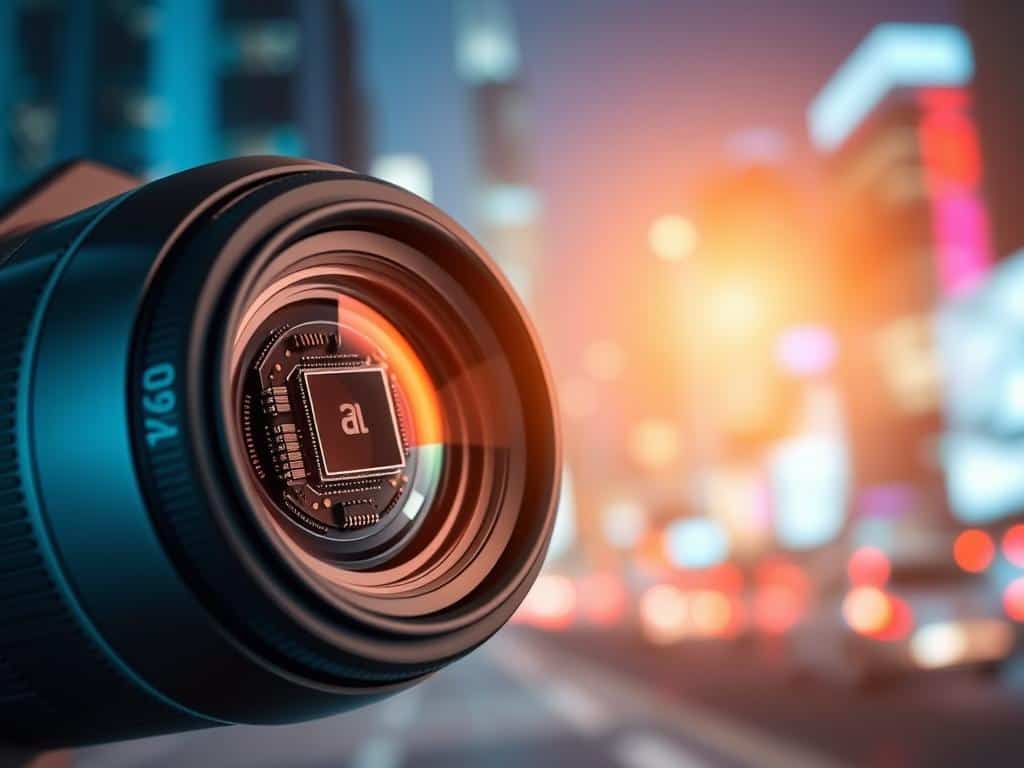
Did you know that by 2022, a big jump in AI use was seen? Artists started sharing their AI experiments more than ever. This change has made photography better, with tools that make editing images easy. As someone who loves photography, I see how new tech meets old skills.
AI in photography is not just about taking over. It’s a tool that makes our art better. Now, even beginners can get pro-looking photos with smart cameras and AI. In this article, I’ll look at how AI is changing photography. I’ll show that AI helps us, not replaces us. Sam Altman said, “AI is a tool, not a creature.” This view is key as we see how AI makes amazing photos and makes work easier for pros.
Key Takeaways
- AI in photography automates image processing, speeding up workflows.
- Amateur photographers can create professional-quality images with AI tools.
- Smart cameras are equipped with machine learning for enhanced photography.
- AI editing allows for more visually captivating and clearer images.
- The ethical implications of AI-generated images are a topic of ongoing debate.
The Evolution of AI in Photography
Exploring AI’s impact on photography, I saw how it has changed the game. AI tools like generative adversarial networks (GANs) create amazing visuals. They push the limits of what we thought was possible in art.
I’ll give you a rundown of these AI tools. And we’ll look at how AI has grown over time to reach today’s level.
Overview of AI Technology in Photography
AI has made photography easier and faster. It automates simple editing tasks, like making teeth whiter or removing unwanted backgrounds. This saves a lot of time.
Now, photographers can spend more time on creative work. AI also improves photos in different lighting and weather, making them look better.
The Historical Context of AI Developments
AI photography’s journey started in the 1950s with pioneers like John McCarthy and Marvin Minsky. The first Kodak camera in 1888 and color films in the mid-20th century paved the way for digital photography.
The 1970s introduced digital media, and by the 2000s, smartphones changed photography forever. This shift made capturing images easier and more accessible.
Current Applications of AI in Photography
AI’s role in photography today is huge. For instance, MarathonFoto now shares photos with event participants in just 24 hours, thanks to AI. AI also helps with image tagging and gives instant feedback on shot composition.
Machine learning has made editing faster. This lets photographers focus more on creativity and less on technical details.
Benefits of AI in Photography
As a photographer, I’ve seen how AI changes the game. It’s not just about making things easier; it makes my work better and faster. AI tools let me create amazing photos without losing my creative touch.
Streamlining the Editing Process with AI Editing Tools
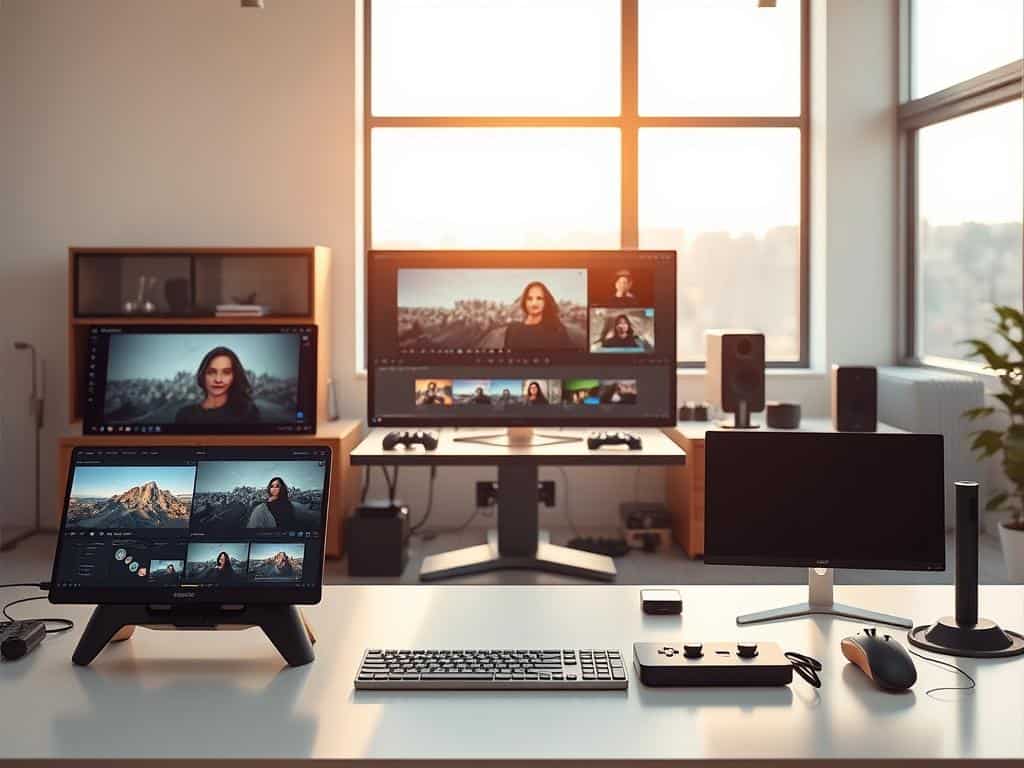
AI editing tools have changed how I edit photos. They help me sort and edit many photos quickly, making my work more efficient. I can now focus on the creative parts of my job, not just the technical stuff.
Enhancing Image Quality and Accuracy
AI tools are great at making photos look better. They’re perfect for fixing photos taken in low light, keeping them clear and bright. Studies show these tools can make photos look professional in less time than before.
AI-Powered Image Recognition and Automation
AI brings image recognition to the table, helping both pros and newbies. It can sort photos fast, saving me up to 70% of time. It also helps me take better photos by recognizing scenes and subjects accurately.
Debates Around AI in Photography
Artificial intelligence is changing photography, sparking debates on its impact on traditional methods and human creativity. Many worry about the effects of AI-generated images. This technology raises questions about authenticity and the ethics of image creation and manipulation.
The Impact of AI on Traditional Photography Techniques
AI has changed traditional photography. Many clients choose AI images because they’re cheaper. This has made it harder for professional photographers to find work.
This shift makes us think about what makes a photographer special. Just like how some photographers thrived after digital cameras came out, others are struggling now. The rise of AI-generated content is making the market more competitive, just like digital cameras did before.
AI versus Human Creativity – Should They be Compared?
There’s a big debate about AI’s role in creativity. Some say AI can make amazing images, but it lacks originality and intention. Creativity is something only humans can truly do, with our unique views and feelings.
Photographers need to think about their role in this new world. They must adapt while keeping their human touch. This is important for their work to stand out.
Concerns About Authenticity and Misleading Images
AI and traditional photography together raise big questions about authenticity. With so many photos online, it’s hard to tell what’s real and what’s not. This is a big issue for artists and viewers alike.
In journalism, the lead image can change how people see a story. The debate on photography ethics shows the industry is divided. Photographers must think about how their work affects others.
Conclusion
Looking back, AI in photography is changing how we create art. It brings both challenges and opportunities. For example, tools like Adobe’s Sensei and Topaz Labs’ Gigapixel AI make editing easier. They help everyone, not just pros, to make amazing photos.
AI is making it easier for photographers to focus on their vision. But, we must use it wisely. We don’t want to lose the special touch that only humans can add.
The path of using AI in photography is full of discovery. By working with AI, we can improve our art while staying true to our values. The future looks bright, with endless possibilities for combining human creativity and AI.
