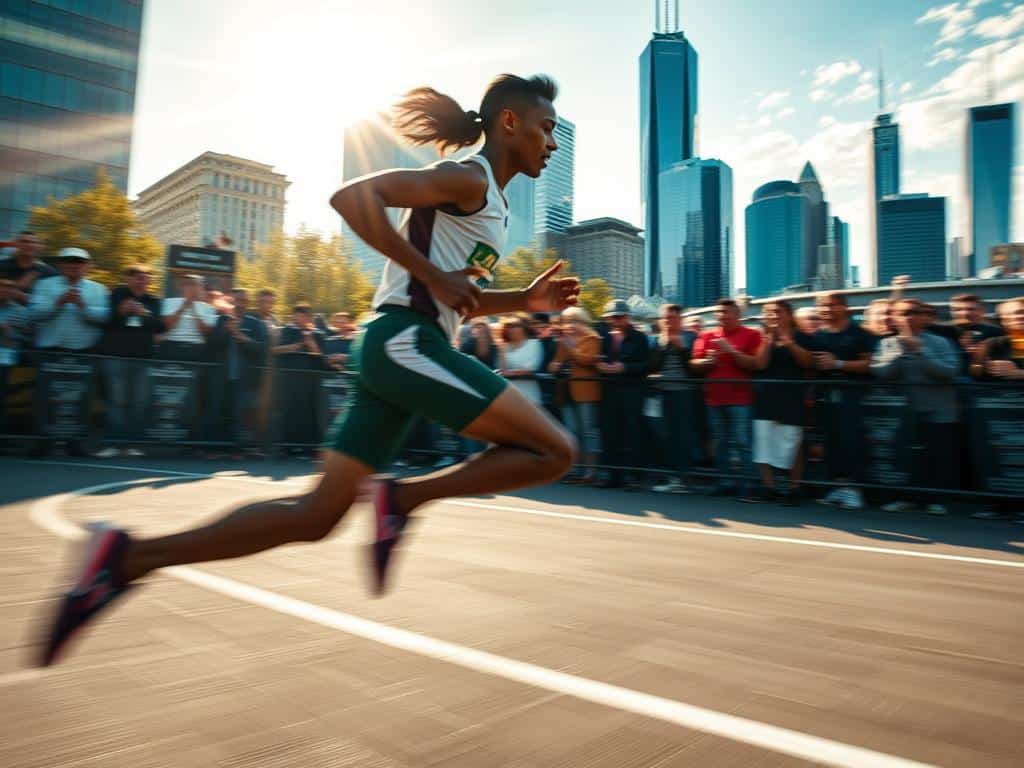
Did you know that in sports photography, a shutter speed of 1/30th of a second can make a big difference? This technique, called motion blur, helps photographers like me capture the excitement of fast-moving scenes. It can turn a simple photo into a stunning display of speed and action.
By blurring parts of the image, we can show energy and excitement. This is perfect for photos of cyclists, busy city scenes, and waterfalls. In this article, we’ll learn how to use motion blur to make our photos stand out. We’ll discover how to tell stories through action photography with this amazing technique.
Key Takeaways
- Motion blur is achieved through slow shutter speeds, typically around 1/30th to 1/15th of a second.
- This technique enhances the dynamic nature of images, making them visually captivating.
- Panning movements can create sharp subjects against a blurred background.
- Slow sync flash effectively combines motion blur with freeze-frame elements.
- It’s vital to experiment with various shutter speeds to capture different effects.
Understanding Motion Blur in Photography
Motion blur makes subjects in photos look blurry, showing movement and energy. It uses a slow shutter speed to capture motion over time. This creates images full of life and energy.
Finding the right amount of blur is key. It’s about making the blur look good and avoiding camera shake.
What is Motion Blur?
Motion blur adds life to photos. It makes images more engaging than static ones. We see it in movies, making scenes feel real and immersive.
Benefits of Using Motion Blur
Motion blur does more than look good. It makes action shots exciting, capturing the thrill of the moment. It turns ordinary scenes into stories that show movement and emotion.
It also helps the main subject stand out, making the photo more impactful. This technique connects with the viewer on a deeper level.
Methods to Create Motion Blur Effects
Motion blur effects can turn simple photos into stunning visuals. I use several methods to achieve these effects, each with its own way. Here are some top techniques in creative photography.
Panning Technique
The panning technique is a favorite of mine. It involves following a moving subject with the camera as I take the photo. I set my camera to slower shutter speeds, like 1/30th to 1/15th of a second. This makes the subject sharp and the background blurry, showing speed well.
With practice, I’ve gotten good at this. It works great for sports and action photos.
Utilizing Slow Shutter Speed
Slow shutter speeds help me capture movement in a scene. This method shows motion over time, not just a single moment. I choose speeds of 1/15th of a second or slower, depending on the effect I want.
It’s key to keep the camera steady to avoid blur from shake. This ensures a clean result.
Slow Sync Flash
Slow sync flash is another method I use for motion blur. It mixes flash with slow shutter speeds to freeze subjects and blur the background. I set my camera to slow sync flash mode for this.
This technique is great in low light or for fast-moving subjects. It makes photos dynamic and interesting.

Applications of Motion Blur Effects
Motion blur has many uses in photography, making images more engaging. I use it in sports and animal photography to add energy and movement. These techniques help capture the excitement and fluidity of the moment.
Sports and Action Photography
In sports photography, motion blur adds drama and intensity. I use panning and adjust shutter speeds to capture the action. Fast speeds freeze the action, while slow speeds show the excitement of the game.
Capturing Animals in Motion
In wildlife photography, motion blur captures the beauty of animals moving. Whether it’s a bird flying or a horse running, I aim to show their lively movements. Slow shutter speeds help show their energy and life, making the images come alive.
Conclusion
Mastering motion blur is key to better photography. It makes images more dynamic and engaging. By using techniques like panning and slow shutter speeds, I turn ordinary scenes into stunning visuals.
Understanding motion blur lets me capture moments in a real way. This makes my photos feel more authentic and relatable.
Exploring motion blur has many benefits. It boosts viewer interest, with static images seeing up to 60% less engagement. Tools like After Effects help me refine my blur, making my work stand out.
Motion blur is essential in photography and videography. It helps me capture fast action and emotions. This skill keeps improving my photography, driving my passion for dynamic images.
