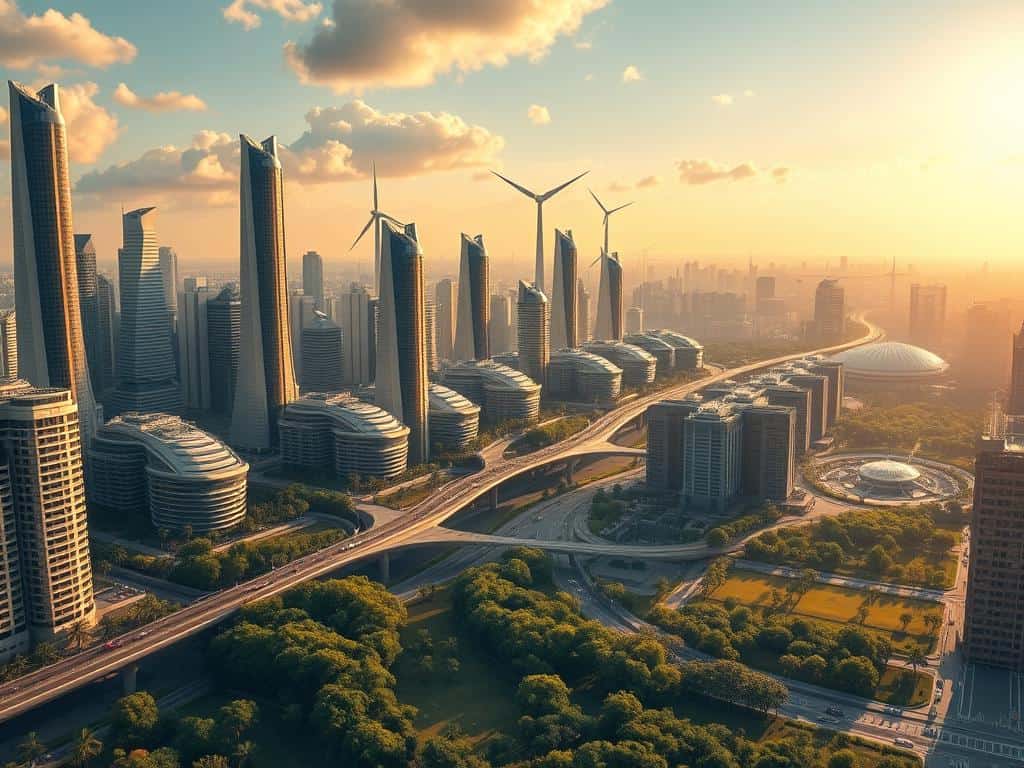
Did you know that about 70% of the world’s people will live in cities by 2050? This big change will make traffic jams and pollution worse. We need new ideas to solve these problems. Smart cities are a new way to build cities using advanced technology and care for the environment. They make sure resources are used well and people live better.
Smart cities are changing how we think about future living. They use the Internet of Things (IoT) and artificial intelligence (AI) to reduce harm to the environment. For example, in Pittsburgh, a smart traffic system cut emissions by 21%. In this article, we’ll look at what makes smart cities special. We’ll see how they solve city problems and make life better for everyone.
Key Takeaways
- Smart cities aim to merge advanced technology with urban sustainability.
- By 2050, urban areas will house 70% of the global population.
- Pittsburgh’s smart traffic system has proven effective in reducing emissions and wait times.
- Innovative solutions are critical to addressing urban challenges like pollution and traffic congestion.
- Smart technologies enhance the quality of life and promote efficient resource use in cities.
- Future cities will leverage IoT and AI for improved sustainability and urban living.
The Concept of Smart Cities
Urban areas are evolving into smart cities, marking a significant change in how we live. They use advanced tech to make infrastructure more efficient, manage energy better, and improve life for residents. It’s key to understand what makes a city smart to grasp its role in urban planning today.
By 2050, two-thirds of the world’s people will live in cities. This puts a lot of pressure on current infrastructure. Smart cities use technology to use resources wisely and reduce harm to the environment.
Defining Smart Cities and Their Importance
A smart city has systems that work together to improve public services and engage citizens. The U.S. Department of Transportation highlights three key features: sensors, connectivity, and open data. These help cities manage issues like traffic and waste better.
Using urban technology helps fight climate change. It promotes sustainable practices as the world’s population grows.
The Role of AI Infrastructure
AI infrastructure is vital in smart cities for analyzing data from IoT devices. This helps predict needs and manage resources well. For example, smart energy systems prevent power outages and save energy.
AI helps cities plan ahead, allocate resources, and govern better. Projects like electric vehicle charging stations in Zhejiang Province show AI’s role in making cities sustainable and better places to live.
Key Features of Smart Cities
Smart cities are a new way to build cities, focusing on making life better and protecting the environment. They use green urban planning to make cities more eco-friendly. This approach helps reduce harm to the planet.
Green Urban Planning and Sustainable Solutions
Green urban planning is key to making cities sustainable. Cities like Singapore show how to do this by improving energy use and cutting down on pollution. They use smart systems like the GLIDE System to make traffic flow better.
They also use green energy like solar benches and tiles. These show how cities can use renewable energy in their buildings and streets.
The Internet of Things in Urban Areas
The Internet of Things (IoT) is very important in today’s cities. It helps gather data from devices, so cities can manage things like traffic and energy use in real time. For example, Helsinki’s MaaS system makes it easy to use public transport.
Smart cities also use sensors for waste management. This makes waste collection more efficient and helps the environment.
Global Examples of Smart Cities
Many cities around the world are becoming smarter. Helsinki has an open data platform with over 3,000 datasets. This helps people understand public transport, air quality, and energy use.
In Barcelona, the Decidim platform lets citizens help decide how to spend the city’s budget. These examples show how technology can improve city life and involve citizens in planning.
Conclusion
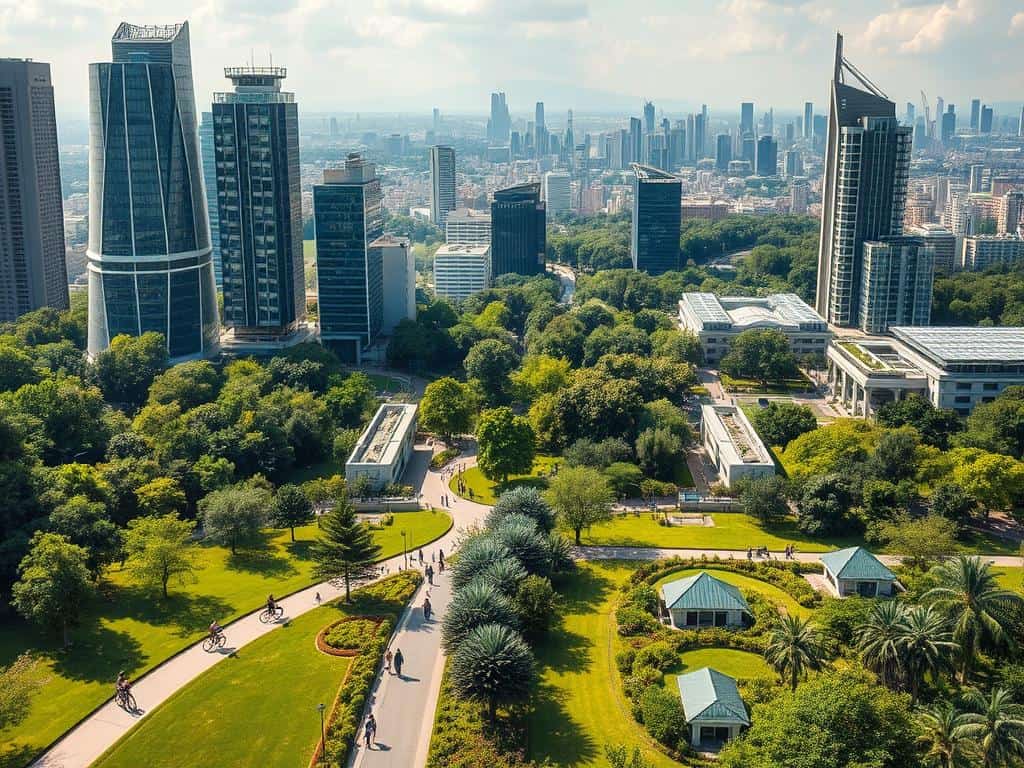
The future of smart cities is a big change in how we live in cities. It combines AI, IoT, and green practices to solve big city problems. This change could make cities better and healthier for everyone.
Local governments, tech companies, and communities are working together. This teamwork is key to making smart cities work for everyone. They focus on making sure everyone can use these new technologies and that they are open and fair.
Creating smarter cities is an ongoing effort that needs everyone’s help. By using technology wisely and listening to what people need, we can make cities better. We can make cities places where people can live without the stress of traffic and pollution.
