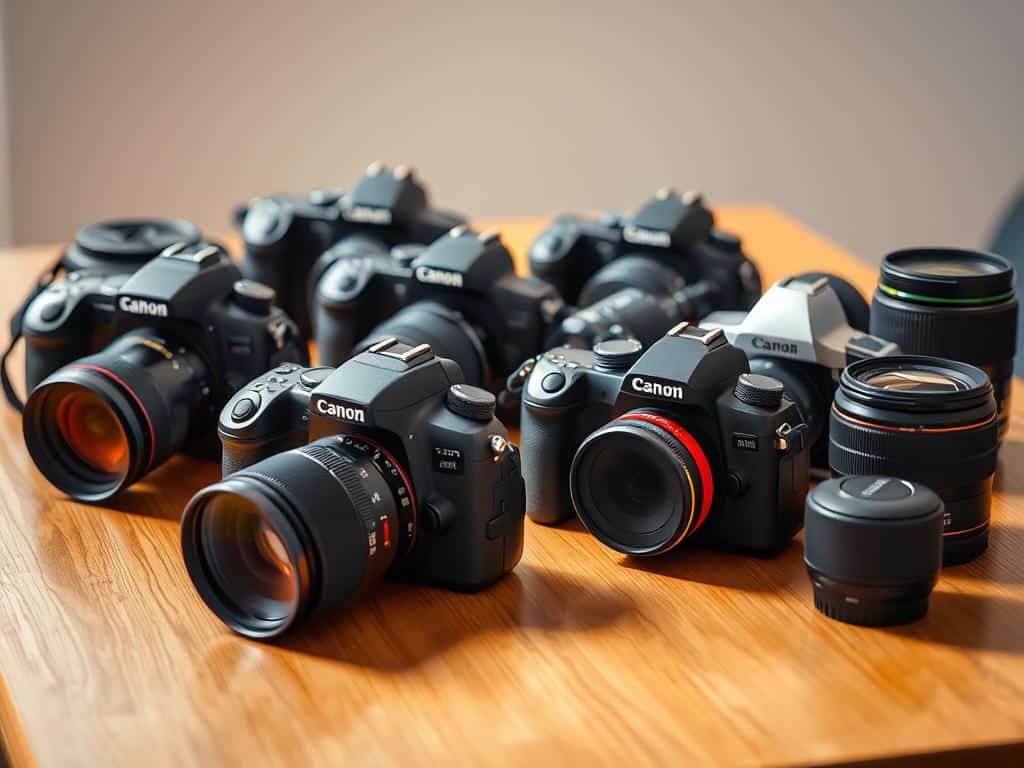
Did you know the average price for beginner camera bodies is between $479.00 and $999.00? This might seem like a lot, but knowing what you need can make it easier. Choosing the right camera gear doesn’t have to cost a lot. It’s about finding what fits your needs and dreams.
It’s normal to feel overwhelmed by all the options when starting out. But, a good starter kit can set you up for success. I’ll help you understand what you need for your first photography kit. Let’s get started on the tools that will bring your ideas to life!
Key Takeaways
- The average price range for beginner camera bodies is between $479.00 and $999.00.
- A greater understanding of camera gear will help you make informed choices.
- A properly curated starter kit is essential for building a strong foundation in photography.
- Choosing the right equipment doesn’t have to be expensive; it should cater to your specific needs.
- Feeling overwhelmed by choices is normal; knowledge is key to overcoming this.
Choosing the Right Camera for Beginners
Choosing a camera can be tough for beginners. In 2024, spending $800 to $1,000 is a good start. You’ll find many options, like DSLRs and mirrorless cameras. Both offer great image quality and performance.
It’s key to know what makes each type different. This helps you pick the right one for you.
Understanding Camera Types: DSLR vs. Mirrorless
DSLR cameras have an optical viewfinder. They offer a traditional feel that many photographers love. These cameras are sturdy and have lots of controls for fine-tuning.
Mirrorless cameras, on the other hand, are smaller and use electronic viewfinders. They’re light and easy to carry. This makes them great for those who want something portable.
Recommended Beginner Cameras
For beginners, the Canon EOS R10 and the Olympus OM-D E-M10 Mark IV are good choices. The Canon EOS R10 has a 24.2 megapixel APS-C sensor. It’s fast for photos and videos in 4K.
The Olympus OM-D E-M10 Mark IV has a Micro Four Thirds sensor with 20.3 megapixels. It’s small but powerful, perfect for beginners.
The Fujifilm X-T30 II is also worth considering. It has a 26.1 megapixel APS-C sensor and excellent autofocus. With these options, finding the right camera for your photography journey is easier.
Essential Photography Equipment for Your First Kit
Starting in photography means having the right gear is key. A good starter kit helps me create and grow. It includes lenses and accessories that are vital for my journey.
Key Lenses Every Beginner Should Consider
Looking into lenses, the 35mm and 50mm are great for beginners. A zoom lens, like the Canon EF-S 18-55mm, offers flexibility. A prime lens, like the Nikon AF FX NIKKOR 50mm f/1.8D, is perfect for low-light shots.
These lenses let me try out different styles. They help me learn and improve my skills.
Must-Have Accessories to Enhance Your Photography
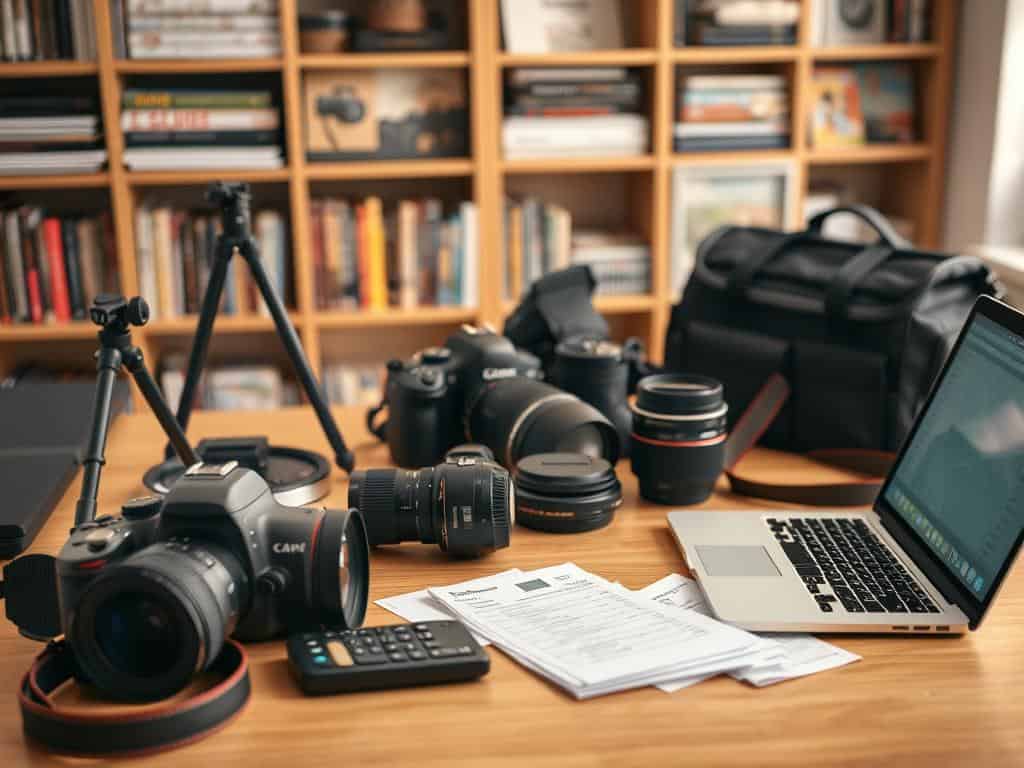
Accessories are just as important as lenses. A good tripod, like the Manfrotto BeFree, helps with sharp images. External flashes, like the YONGNUO YN560 IV, improve low-light shots.
A solid camera bag, like the Lowepro Fastpack 250, keeps my gear safe. These accessories make my kit complete, ready for any shoot.
Photography Equipment: Tips for Budgeting and Buying
Starting out in photography can be pricey. But, with smart budgeting, I can make choices that fit my wallet. Looking for deals and buying used gear are great ways to save. This way, I can invest in my photography without spending too much.
Finding Good Deals
Learning to find discounts is key. I watch for sales and use tools to compare prices. This helps me snag deals on cameras and lenses. Patience pays off when looking for the best deals.
Buying Used Photography Gear
Used gear can save a lot of money. The Nikon D3200 is a great find in the used market. Before buying, I make sure it works well. Quality used lenses, like TTArtisans, let me improve my shots without spending a lot.
Understanding the Importance of Investing in Equipment
Good photography gear is essential. While software subscriptions can add up, free options like darktable or Rawtherapee help keep costs down. It’s also important to practice and learn about lighting and camera settings. Knowing how to use ISO and shutter speed makes a big difference in my photos.
Conclusion
Starting your photography journey can feel overwhelming, with so many options. But, the key is to get the right gear to find your style. You don’t need to spend a lot to take amazing photos. Look for cameras and lenses that are good for real estate photography.
Practical experience is vital. Choose a camera system that’s easy to use and takes great photos. A good tripod and off-camera flash can make your photos even better. This guide shows how the right gear and practice can help you grow.
Photography is about telling stories with your photos. So, start taking pictures, try new things, and enjoy learning. Capture the beauty around you and let your creativity shine!
