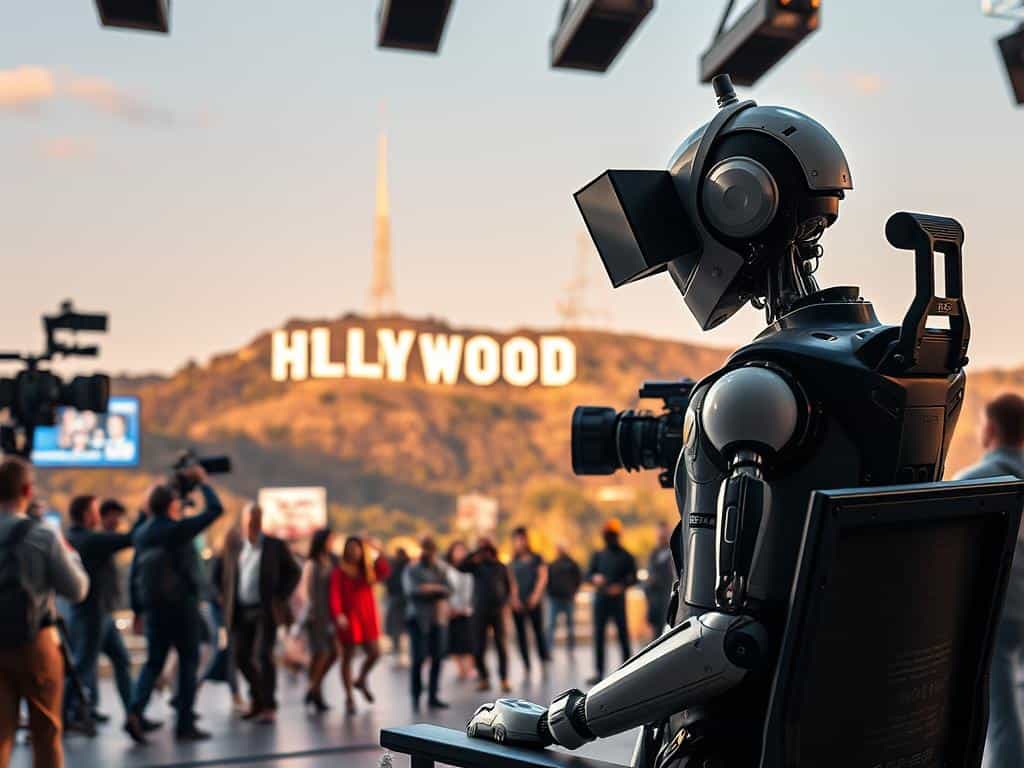
In 2023, Hollywood saw a big change as many in the industry went on strike. They were worried about how artificial intelligence was changing movies. This moment showed how AI movies are affecting Hollywood, making people talk about creativity and jobs.
As I explore AI in movies, I see how it’s changing stories and how people watch them. Films like “The Brutalist” use AI to create new things, like building designs. This shows how AI is becoming part of making movies.
Many in the film world see the good in AI but also worry about losing their jobs. The movie world is changing, and we need to figure out how AI helps and challenges old ways.
Now, we’re wondering what the future of movies with AI looks like. It’s about finding a balance between new tech and keeping everyone’s rights safe. Let’s dive into this important time that’s changing the film industry.
Key Takeaways
- The integration of AI in Hollywood’s filmmaking process is rapidly growing.
- Concerns about job security have prompted significant discussions in the industry.
- Film projects like “The Brutalist” showcase AI’s capabilities in production.
- Ethical implementations of AI are critical for protecting artists’ rights.
- The landscape of cinema is evolving as AI tools become more advanced.
The Rise of AI-Generated Movies and Their Impact on Hollywood
Artificial intelligence is changing Hollywood in big ways. Big names like Netflix, Disney, and Amazon Prime Video are using AI tools a lot. This change is making movies and how we watch them different, with new ways to write scripts and use deepfake technology.
Transforming Scriptwriting with AI
AI is making scriptwriting more data-based. Tools like ScriptBook and Largo.ai look at old scripts to guess how new ones will do. Netflix uses AI to see what people like and make movies that fit.
This new way of writing scripts is exciting but also raises questions. It’s about keeping stories original and avoiding the same old stories.
Deepfake Technology in Filmmaking
Deepfake technology is both new and debated in movies. It lets creators make digital copies of actors that look real. This tech is used to make actors look younger, like in “The Irishman.”
But it also makes people talk about actor rights and if it’s okay to trick viewers. The use of deepfakes is a big topic in the movie world.
The Changing Landscape of Audience Engagement
Streaming services are changing how movies are shown and talked about. Filmmakers now have to find new ways to connect with viewers. AI helps them understand what people want to see, making marketing better.
This change means movies have to be more interactive and personal. It’s a big shift for filmmakers to keep up with what viewers like.
The Role of AI in Film Innovation
AI is changing filmmaking in big ways. It’s affecting visual and sound effects, how films are made, and how they’re shared. Filmmakers use AI to make better movies and work more efficiently. This change helps make movies more creative and the making of them smoother.
AI Enhancing Visual and Sound Effects
AI is now key in making movies look and sound amazing. Disney’s FaceDirector software helps CGI scenes feel more real. AI also lets filmmakers de-age actors without using expensive CGI, like in “The Irishman.” These advancements make movies more engaging for viewers.
Streamlining Film Production Processes
AI makes making movies faster and cheaper. It quickly analyzes scripts, helping producers make quick decisions. For example, Warner Bros. and Cinelytic use AI to pick the right actors for a role. This helps studios save time and money.
AI’s Influence on Film Distribution
AI is also changing how movies are shared. It helps studios understand what viewers like, making marketing more effective. Netflix uses AI to suggest movies based on what you’ve watched. As AI gets better, it will help movies reach more people and make more money.
Conclusion
Hollywood is changing fast, marking a key moment in filmmaking’s future. AI movies are becoming more popular, bringing new tech and big questions. They make making movies faster and more creative, but also raise big ethical issues.
These changes mean the industry is growing. AI movies could make films cheaper and open up new ideas. For example, making a 60-minute AI movie could cost just $829, much less than old ways.
As we move forward, talking about AI’s ethics and keeping stories true is key. Mixing AI with human touch can lead to a bright future. The journey will be tough, but using new tech could change how we tell stories for everyone.
