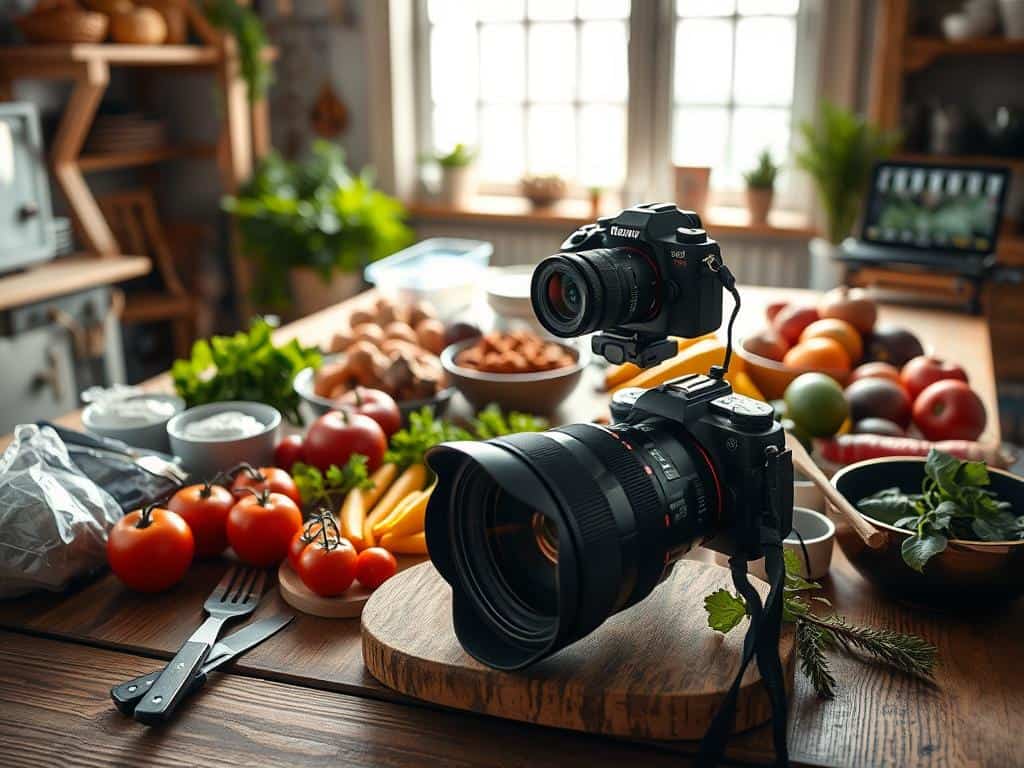
Did you know that 80% of consumers say food photos affect their dining choices? This shows how important good food photos are today. After years of practice, I’ve learned that editing can make food photos look amazing. It’s about making colors pop and details sharp, showing the food’s true beauty.
Editing food photos is more than fixing mistakes. It’s about making food look so good it makes you want to eat it. I use Adobe Lightroom to make food look fresh and inviting. Here, I’ll share how to edit food photos that grab your attention and make your mouth water.
Key Takeaways
- Edit food photos to enhance their appeal and influence dining choices.
- Natural lighting improves the quality of food images significantly.
- Cropping helps eliminate distractions, focusing the viewer’s attention on the dish.
- Adjustments like saturation and contrast can make food appear more appetizing.
- Using mobile editing software offers convenience and ease in the editing process.
Capturing Stunning Food Photography Basics
Mastering the basics of food photography can make your images stand out. Understanding background, lighting, and composition is key. These elements help create shots that not only look good but also make you hungry.
Choosing the Right Background
Choosing the right background is important for your food photos. Use neutral-colored plates and textured surfaces to complement the food’s colors. This helps focus attention on the dish.
Textured backgrounds add depth but shouldn’t compete with the food. Seamless papers or vintage cutlery are great choices. They enhance the visual appeal without overwhelming the viewer.
Getting the Lighting Just Right
Lighting is critical in food photography. Natural light is best as it creates a soft, inviting atmosphere. It helps avoid harsh shadows and highlights food details.
Backlighting can add an enticing glow to your shots. Keep your ISO settings low, below 500, to reduce noise. Aim for balanced lighting that showcases the dish beautifully.
Composing Your Shot Effectively
Food composition is key to stunning images. Use the rule of thirds to arrange elements in the frame. This creates a more dynamic shot.
Place the main dish at a rule of thirds intersection to engage viewers. Try different angles like a 45-degree shot for textures. Fill bowls to the brim for a more appealing dish. By arranging props and focusing on the right elements, you can create compelling food photography.
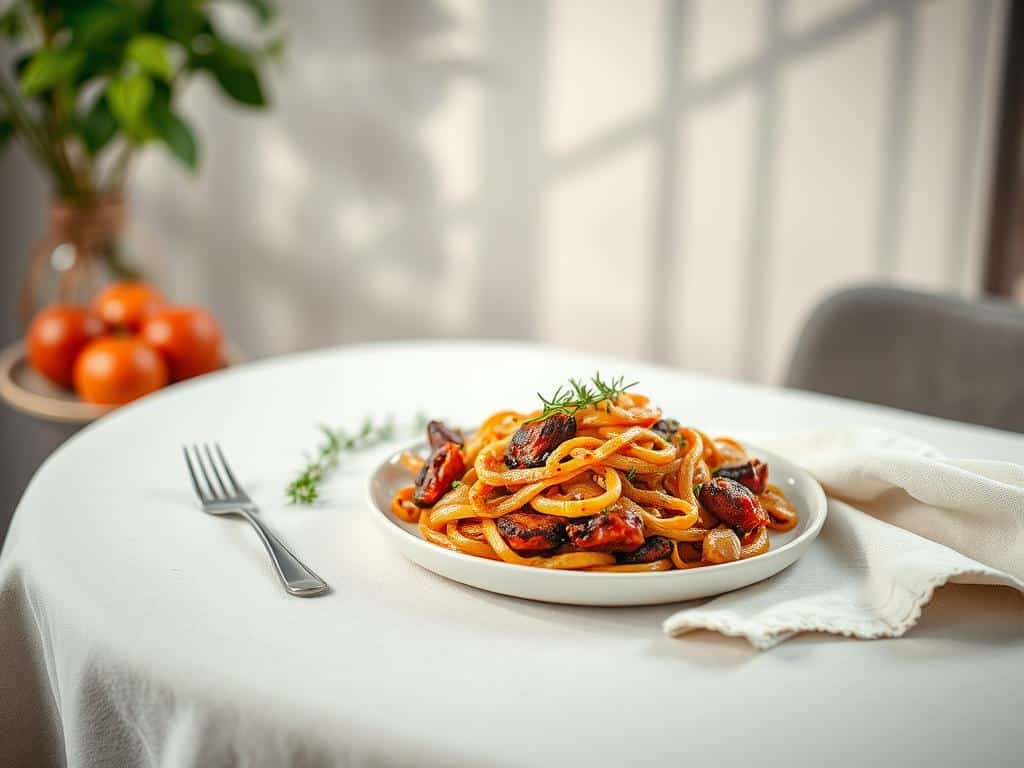
Editing Food Photography for Maximum Impact
Editing food photos is key to making them look irresistible. The right techniques can turn ordinary shots into stunning images. These images show off vibrant colors and delicious details.
Step-by-Step Editing Process
I start by cropping the photo to make it balanced and appealing. I also use lens corrections to remove any distortion. Adjusting the white balance is important, as it makes food look fresh.
I adjust the exposure and contrast sliders to get the brightness just right. This helps create a perfect balance in the image.
Enhancing Colors and Details
To make food colors pop, I use tools like Clarity and Vibrance. For example, I set Clarity to +42 to improve midtone contrast. I keep Saturation adjustments between +5 and +6 to avoid a cartoonish look.
Subtle changes to HSL sliders help balance colors without losing the natural look of the dish.
Utilizing Key Editing Tools
Tools for sharpening and noise reduction are precise. I set Luminance to around 20 to reduce noise while keeping the image clear. Adding a post-crop vignette at 20% helps draw attention to the food.
I use an “S” curve for tone adjustments to brighten highlights and darken shadows. This adds depth and enhances textures. Zooming in to 100% lets me check the effects of sharpening and noise reduction.
Conclusion
Capturing high-quality food images and having a good editing workflow are key. Using natural light and following the rule of thirds can make a big difference. These tips help my photos stand out on Instagram and Pinterest.
Advanced editing tricks like spot healing or cloning help perfect each photo. The final touches in post-production are vital. They can turn a simple shot into a stunning image. A good editing workflow saves time and keeps my brand’s look consistent.
Don’t be afraid to try new things and let your creativity shine. Experimenting with different settings and edits can lead to unique photos. Keep these tips in mind, and your food photography will attract more attention and interest.
