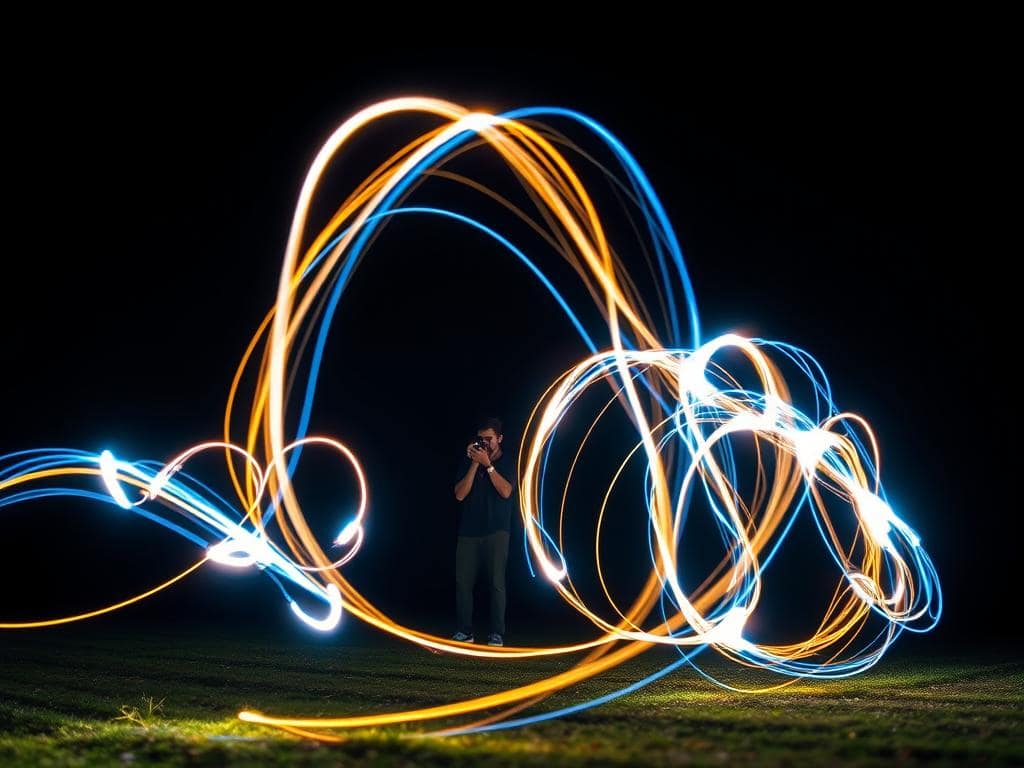
Did you know light painting photography can use exposure times from a few seconds to minutes? This creative technique lets photographers make amazing images by playing with light during long shots. It turns simple pictures into stunning art, using light trails from LED or halogen lights.
Light painting photography is getting more popular, opening up new artistic paths. In this article, I’ll share the basics of light painting photography. You’ll learn how to capture glowing neon lights or soft candlelight. It’s a skill anyone can master with a bit of practice!
Key Takeaways
- Light painting photography uses a moving light source during long exposure.
- Exposure times can range significantly, from 30 seconds to over 170 seconds.
- Using a low ISO setting (around 100) minimizes noise for better image quality.
- Aperture settings between f/8 to f/16 help achieve depth of field.
- Experimenting with various light sources can create unique and colorful effects.
- Using a tripod is essential to stabilize the camera for long exposures.
- Color gels can be applied to light sources to alter the tint of the lights.
Understanding the Basics of Light Painting Photography
Light painting photography is a fun way to make amazing images with long exposure. It lets you turn simple scenes into beautiful works of art. By moving lights, you can tell stories and share feelings through your photos.
What is Light Painting Photography?
Light painting photography is about taking pictures with moving lights during long exposures. You can use flashlights or LED lights to create cool trails in your photos. It’s more than just taking pictures; it’s about making art that shows your creativity.
Types of Light Painting Techniques
There are many light painting styles, each with its own way of using light. You can do Light Drawing to make shapes or words, Light Painting to light up subjects, or Kinetic Light Painting for moving lights. Each style lets you express your creativity in different ways. To get good at these, you need to practice and try new things.
The Equipment Needed for Light Painting Photography
To get into light painting photography, you need the right tools and gear. The equipment you choose greatly affects your photos’ quality and creativity. Knowing the essential tools and camera settings can improve your skills and create amazing photos.
Essential Tools and Gear
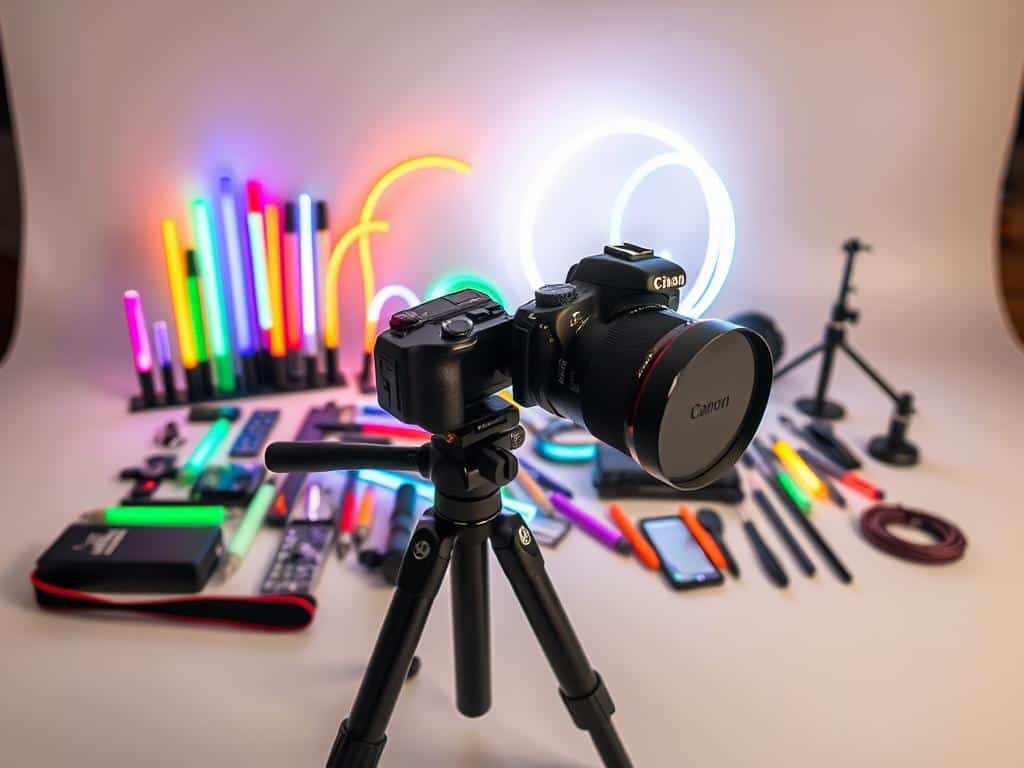
A good DSLR camera is key for light painting. It should have a BULB mode for long shutter speeds. This lets me capture detailed designs and movements.
I use a sturdy tripod to keep my camera steady during long exposures. A wireless shutter release helps avoid camera shake. This tool is affordable but essential for top-notch photos.
I have a few favorite light sources. The Soonfire MX Series flashlight is great for bright light trails with 1050 Lumens. The Nitecore SRT7 can dim from 0.5 to 1000 Lumens, giving me control over the light.
I also use LED and chemical glow sticks. LED sticks are rechargeable, while chemical ones are one-time use. Both are versatile for my creative projects.
For more variety, I use tools like the Digital Light Wand or Pixel Stick. They allow for complex animations and designs. EL Wire is another affordable choice, known for its soft, colorful glow.
Choosing the Right Camera Settings
Getting the right camera settings is key for light painting. I choose a low ISO to reduce noise and keep images clear. Slow shutter speeds capture the beauty of the light.
A wide aperture enhances light trails, showing more detail. In bright conditions, I use Neutral Density (ND) filters to control light. With the right gear and settings, I can create innovative and beautiful photos.
Conclusion
Light painting photography is a world where creativity and technique come together. It offers a chance to express your artistic vision in unique ways. By learning the basics, getting the right gear, and mastering camera settings, you can create amazing images.
Recently, more people have become interested in this art form. It’s now easier for everyone to share their stories through light-filled images. This shows how accessible and powerful light painting can be.
In my exploration, I found that the best exposure time is usually 20 to 30 minutes in complete darkness. This allows for stunning effects. To get sharp images, using a sturdy tripod and remote shutter release is key. Even small movements can blur your photos.
Using different light sources, like LEDs and flashlights, adds to the creativity. It also lets you try new things that were hard in the old days.
Light painting photography is full of possibilities. As I keep learning and improving, I invite others to join in. Let’s work together, try new things, and enjoy the journey. Light painting is a colorful path for artistic discovery that’s open to everyone.
