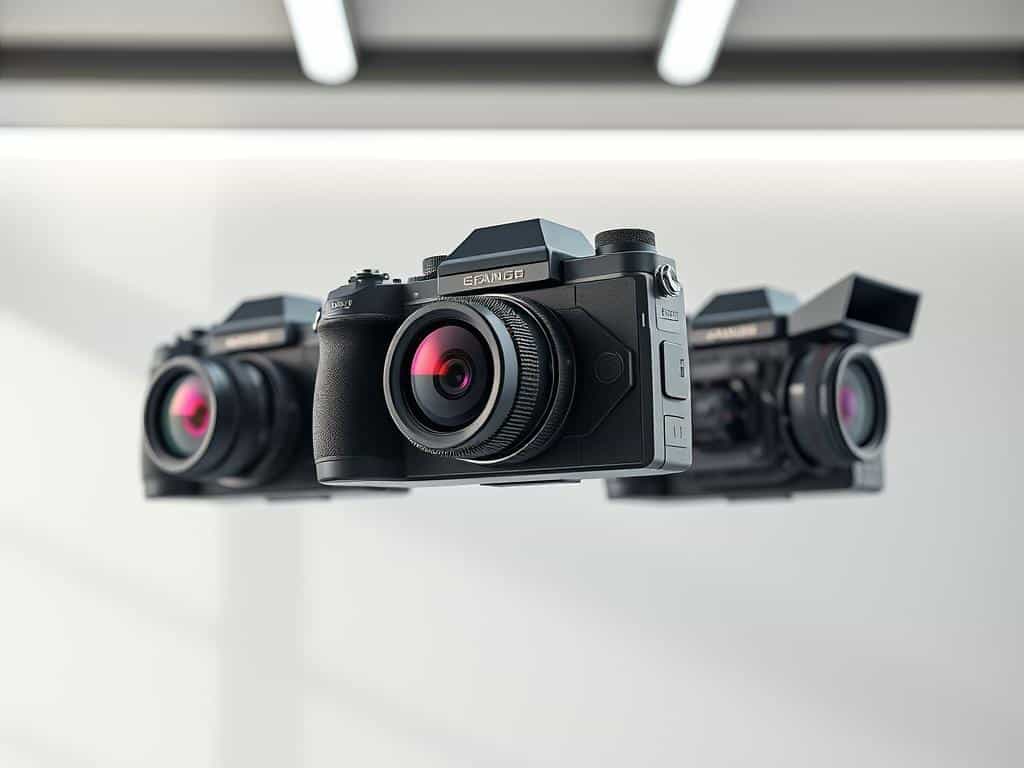
Did you know the photography market is growing fast? It’s expected to grow by 4.4% every year until the end of the decade. This growth is thanks to new tech like 3D imaging, which goes beyond regular photos.
3D cameras are changing how we see things. They add depth and dimension to images. This is a big deal for virtual and augmented reality. With AI getting involved, 3D cameras are set to change photography forever.
Key Takeaways
- 3D cameras capture depth information to create more dynamic images.
- Technologies like stereo vision and Time-of-Flight enhance imaging capabilities.
- Wide-ranging applications in VR, AR, and industrial uses showcase their versatility.
- Challenges include costs and complexity, but advancements are on the horizon.
- Consumer products are increasing accessibility, promoting wider adoption.
Understanding 3D Cameras
I want to explain what 3D cameras are and how they differ from regular cameras. 3D Cameras capture depth information, making images look more real. They use technologies like stereo vision and Time-of-Flight to show depth in images.
What are 3D Cameras?
3D Cameras aim to give us a more immersive view. They work like our eyes to show depth. This is why we see depth in movies and virtual reality.
How 3D Cameras Capture Depth Information
3D Cameras use different ways to capture depth. Time-of-Flight technology is a big one. It sends out infrared light and measures how long it takes to bounce back.
This helps create a depth map in real-time. It’s useful for things like robot obstacle detection. Stereo vision cameras also work by comparing two images to show depth. Structured light technology projects patterns to make detailed depth maps, important for healthcare and manufacturing.
Key Technologies Behind 3D Imaging
The world of 3D imaging is full of different technologies. Companies like e-con Systems have been key players. They offer cameras that work well in near-infrared light, perfect for many settings.
e-con Systems also makes stereo vision cameras, like the Tara series. These cameras have advanced features for many uses in embedded vision. These advancements show how 3D Cameras can change many industries and our daily lives.
Applications of 3D Cameras
3D Cameras have changed many industries, showing their wide range of uses. They bring a new level to how we tell stories and experience things. Their photography impact goes beyond just pictures, changing how we see and interact with the world.
Impact on Photography and Filmmaking
In photography and filmmaking, 3D cameras add a new layer to stories. They make scenes come alive, drawing viewers in like never before. This new depth makes stories more real and engaging, changing how we see art.
Utilization in VR and AR Environments
VR and AR are where 3D cameras really shine. They help create interactive worlds. By adding depth, they make digital and real worlds blend seamlessly. This lets users dive into virtual spaces in a more realistic way.
Industrial and Commercial Uses
Manufacturing and healthcare use 3D cameras to work better. For example, they help with remote health checks and self-driving cars. From finding ripe crops to spotting dangers, 3D cameras boost efficiency and accuracy in many fields.
3D Cameras in Emerging Technologies
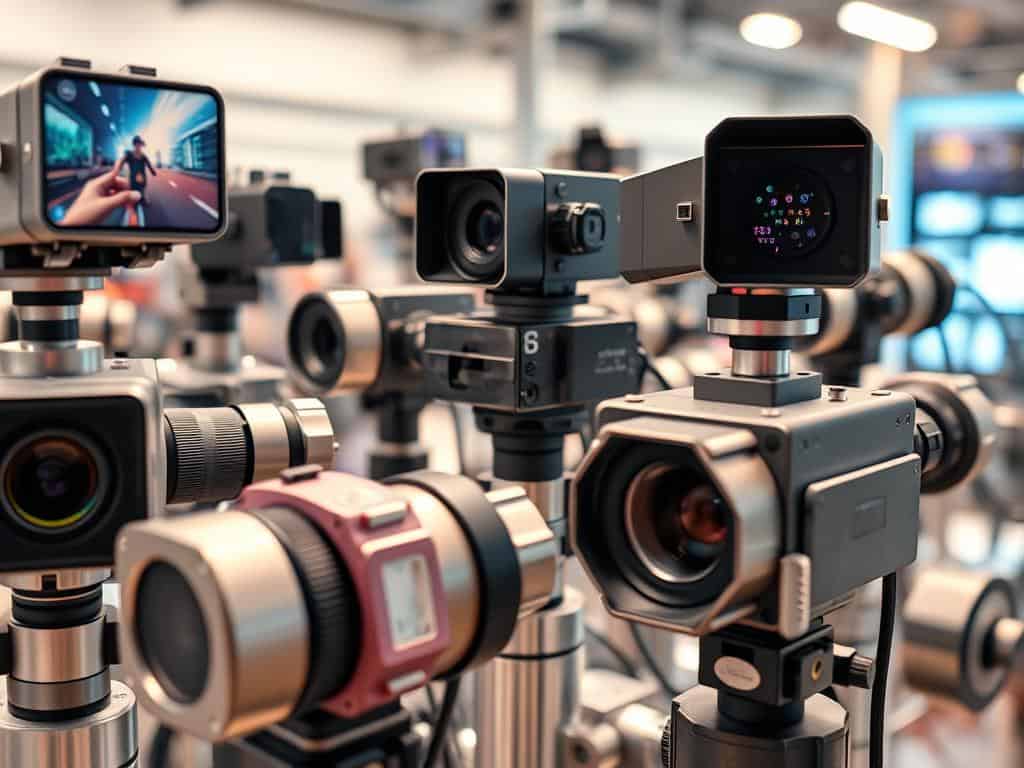
3D cameras are getting better and playing a big role in new technologies. They work with AI and advanced image processing. This makes them key tools in many areas.
Integration with AI and Image Processing
Artificial intelligence boosts 3D cameras’ abilities. AI helps with quick data analysis and recognizing objects. This opens up new uses in areas like logistics and entertainment.
Technologies like PxE’s Holographic RGB-IR-Depth Camera capture different data types at once. This includes color and depth. It makes smartphones and digital devices more versatile, making advanced image processing more accessible.
Challenges Facing 3D Camera Adoption
There are hurdles to overcome for 3D cameras to be widely used. Technical issues make it hard for people to use them. Privacy and security concerns with depth data add to the problem.
Compact lidar systems aim to improve 3D imaging. They could offer high-resolution depth maps. But, getting them into the market is a challenge. Overcoming these hurdles is key for 3D cameras to be widely accepted in new technologies.
Conclusion
3D cameras are a big step forward in photography and imaging. They can capture depth and dimension, opening new doors in many fields. This includes photography, filmmaking, virtual reality, augmented reality, and more. But, they can be tricky to set up and use, which is a challenge.
Looking at the latest in 3D camera tech, we see big changes ahead. For example, the True Depth Camera in the iPhone X makes things better for users. The car industry also uses 3D sensing for safer driving. These examples show how important 3D imaging is today.
Even though 3D cameras are not yet common, they have a promising future. As they become more popular in gadgets, we’ll see new uses for them. Keeping up with these advancements can help us create more and solve problems, shaping the future of photography.
