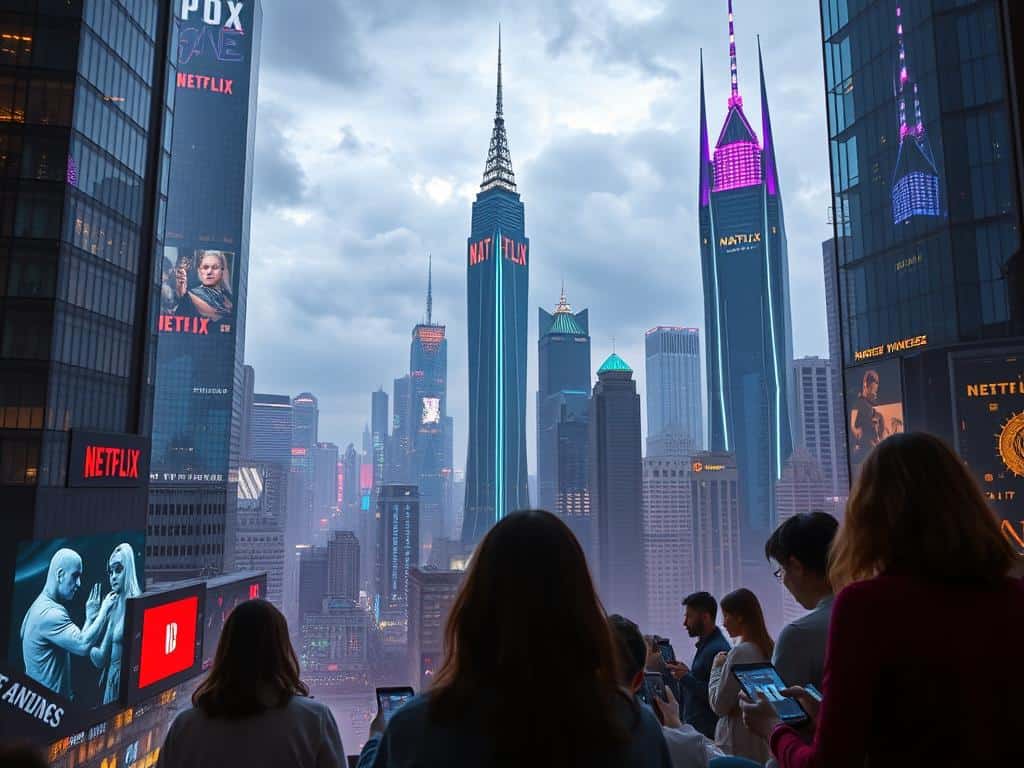
Did you know that over half (53%) of streaming users might cancel if they had to choose between entertainment and basic needs like utilities and rent? This shows how our digital landscape is changing as we near 2030. As I look into the future of streaming, it’s clear that big names like Netflix are facing tough competition. With new tech and changing tastes, it’s uncertain if old streaming platforms can keep up.
In this article, I’ll dive into how streaming services are evolving. We’ll see how AI and personalized shows are shaping the future of entertainment. With new players entering the scene, will Netflix and others stay on top? Let’s explore these trends and guess what’s next in streaming.
Key Takeaways
- The average person changes their TV every 6.5 years.
- Netflix’s additional fee for password sharing is set at $2.99.
- Streaming services accounted for 34% of television viewership in February.
- Only 1.2% of consumers intend to cut back on streaming channels.
- Free-to-air television faces uncertain future by 2030.
- The main channels have seen a 25% decline in primetime audience, down from 2008.
The Evolution of Streaming Services
The way we watch movies and shows has changed a lot. We moved from DVD rentals to on-demand streaming. This big change happened over the years. It started with Blockbuster and Netflix, changing how we watch movies.
From DVDs to On-Demand Streaming
Netflix started in 1997 by sending DVDs to people. This made watching movies at home easy. By 2023, Netflix stopped sending DVDs, having sent 5.2 billion discs.
In 2007, Netflix began streaming on-demand. This let people watch a huge library of content whenever they wanted.
Impact of Original Content on Subscriber Growth
Original shows have made streaming services grow. Netflix’s “House of Cards” and “Stranger Things” set a new standard. Other services started making their own shows too.
This competition has led to big budgets and costs. Services are trying to stand out and get more subscribers.
The Rise of Competitors and Alternatives
New streaming services have come up, giving us more choices. Cable TV is losing subscribers, with only 70 million by 2024. Free streaming with ads, like Pluto TV and Tubi, is becoming popular.
Now, getting multiple streaming services can cost as much as cable. Netflix and Disney+ have started ad-supported tiers. This change is making the streaming world more competitive and dynamic.
Future of Streaming: Predictions and Trends
The streaming world is changing fast, thanks to AI-generated content. This tech makes watching shows more personal. Soon, content will match what you like, thanks to AI analyzing your viewing habits.
AI-Generated Content and Personalization
AI-generated content is a big deal for streaming. It makes making shows easier, so creators can focus on being creative. This means you’ll see more shows that fit your taste, making you happier and more likely to keep watching.
Imagine streaming services that feel made just for you. That’s what’s coming. It will change how we enjoy our favorite movies and TV shows.
Virtual Cinema Experience and its Relevance
Virtual cinema is changing how we watch movies. With VR and AR, watching films will be like stepping into a new world. You’ll be able to interact with the story in ways you never thought possible.
As these experiences become common, they’ll attract viewers looking for more than just watching. It will create a new way to connect with movies and TV, making it more engaging for everyone.
Challenges Facing Traditional Streaming Platforms
The streaming world is changing fast, bringing big challenges for old platforms. People want more flexibility, better quality, and content that feels personal. With 46% of viewers choosing subscription video-on-demand (SVOD) first, traditional cable is losing viewers.
Many people use an average of 13 different entertainment sources. But only half of these are seen as essential. This makes it hard for streaming platforms to know what to focus on.
Changing Consumer Preferences
Today, people care more about quality and ease of use than sticking with old platforms. The rise of ad-supported tiers shows a big change in how people spend their money. 57% of users now prefer these options.
Younger viewers, who often get their news from social media influencers, are leading this change. Their love for diverse content makes it harder for old platforms to keep up.
Technical Limitations and Support Issues
Streaming services face tech problems that can make things hard for users. For example, Netflix stopping support for older devices can upset some viewers. With streaming taking 41.6% of TV time, any problems can upset customers.
Support issues make things even tougher. Providers struggle to keep up with the growing number of devices and platforms.
Impact of Blockchain TV on Content Delivery
Blockchain TV technology is both a chance and a challenge for old platforms. It could change how content is delivered, affecting how platforms make money. As people want more security and transparency, platforms must find ways to use blockchain.
The fast growth of blockchain in streaming adds to the complexity. It challenges the old ways of watching content.
Conclusion
In the future of streaming, innovation will be key for Netflix and others. The field is changing fast, thanks to new tech like 5G and AI. These advancements will make watching shows much better, with faster speeds and smarter suggestions.
The battle for viewers is getting fiercer, with the streaming market expected to grow to $184.3 billion by 2027. Live streaming and virtual reality will become more popular, meeting the need for more engaging content. Netflix and others must keep up, as more people prefer watching what they want, when they want.
By 2030, the streaming world will face both hurdles and chances. Blockchain could help fight piracy and change how we pay for content. The mix of new tech and changing viewer habits will shape the future of streaming. It will decide if big names like Netflix stay relevant in this fast-paced market.
