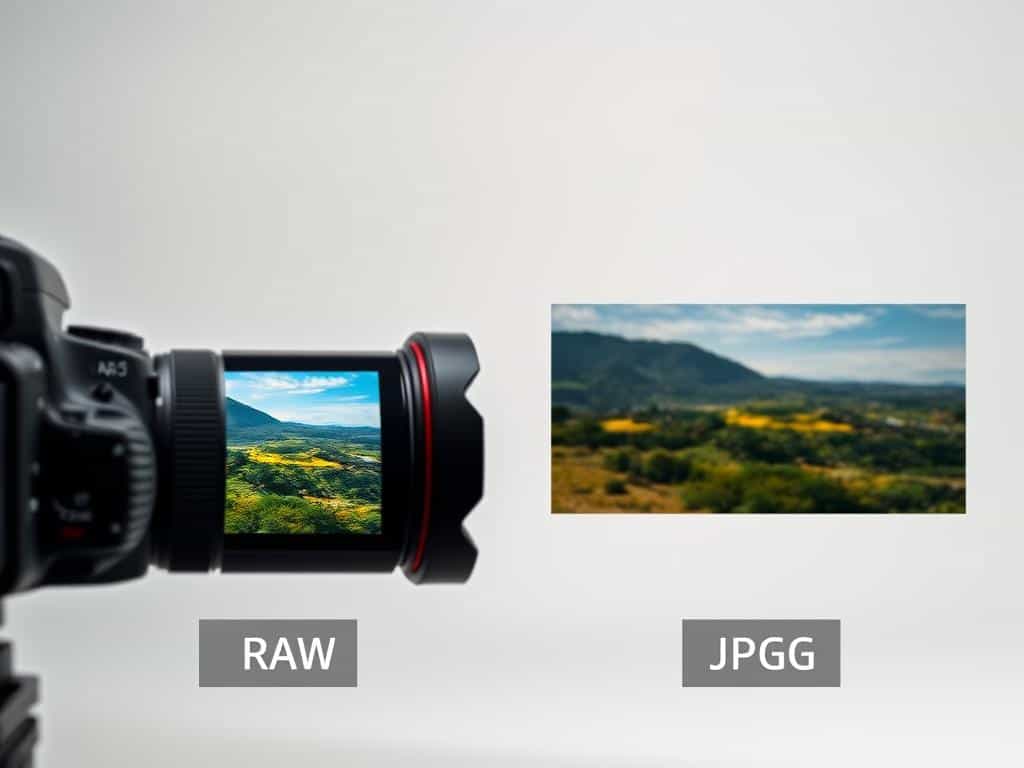
Did you know 60% of professional photographers shoot in RAW? This shows a big trend. They value editing flexibility and image quality a lot. But, JPEG is the most used image format, supported by almost all devices. Knowing the differences between RAW and JPEG is key.
RAW files give better results but take up more space. JPEGs are smaller and fast to upload, great for social media. Choosing between RAW and JPEG can really improve my photography workflow.
Key Takeaways
- RAW files provide higher image quality and greater dynamic range for editing.
- JPEG files are smaller in size and ready for immediate use.
- Professional photographers lean towards RAW for enhanced creative control.
- JPEG compression can lead to loss of detail in heavily edited images.
- Choosing between RAW and JPEG affects storage requirements and editing workflow.
Understanding RAW and JPEG Formats
When you start with photography, knowing the difference between RAW and JPEG images is key. Each has its own role and benefits, fitting different photography needs.
What is a RAW Image?
A RAW image is like a digital negative. It captures all the camera’s sensor data without any editing. This means you can make lots of changes later without losing quality.
RAW files can handle a huge range of brightness levels. This makes them great for scenes with lots of light and dark areas. They are big because they’re not compressed, but they give you more freedom to edit.
What is a JPEG Image?
A JPEG image is a compressed file that loses some data to be smaller. It captures fewer brightness levels than RAW images. JPEGs are edited by the camera, so they’re ready to use right away.
JPEGs are good for quick sharing or web use because they’re small. But, they lose quality every time you open or save them. They also have fixed white balance, which limits your creative options. Yet, for fast workflows or client slideshows, JPEGs might be the better choice.
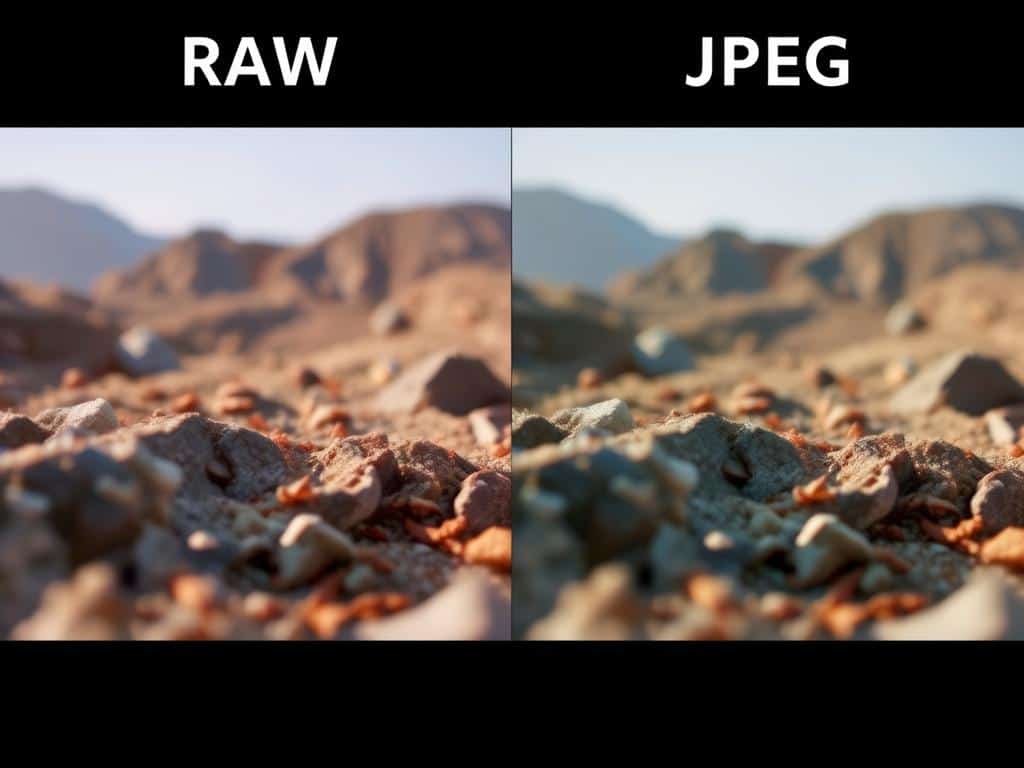
Advantages and Disadvantages of Each Format
Choosing between RAW and JPEG formats is a big decision. Each has its own strengths and weaknesses. I’ll look at what makes RAW and JPEG good, and what might hold them back.
Pros of Using RAW Format
RAW files are known for their top-notch quality and editing flexibility. They have a wider dynamic range, helping me bring out details in both bright and dark areas. This is super useful when adjusting photos later.
RAW files also keep all the camera’s data, so I can edit a lot without losing quality. Pros often choose RAW for its sharpness, perfect for prints.
Cons of Using RAW Format
But RAW files have downsides too. They’re much bigger, taking up to three times more space than JPEGs. This can fill up storage fast, which is a problem when shooting a lot.
Also, RAW files need special software to be usable, adding steps to my workflow. Some software might not work with RAW files, which can be a hassle.
Pros of Using JPEG Format
JPEGs have their own benefits. They’re smaller, making it easier to shoot and store photos. This is great for fast-paced photography.
JPEGs are also easy to share right away. They work with all photo editing software, making them hassle-free to use.
Cons of Using JPEG Format
But JPEGs have their own drawbacks. They have less dynamic range and color accuracy than RAWs. JPEGs can lose quality if edited too much, showing signs of pixelation.
Underexposed JPEGs often show signs of compression, limiting their editing flexibility. This might not be good enough for those who need the best quality.
