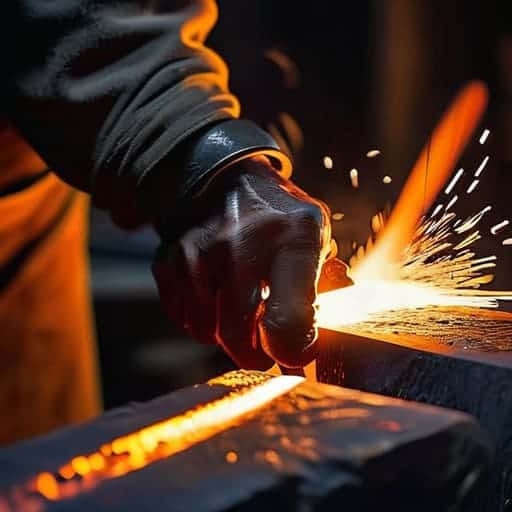
The sparks were flying so wildly I almost dropped my favorite vintage Leica, but I couldn’t pull my eyes away from the forge. There I was, sweating in a workshop that smelled of coal and scorched metal, realizing that forging a Damascus steel knife isn’t just about hitting hot metal with a hammer; it’s a high-stakes dance of thermal precision and visual rhythm. Most people think you need a massive industrial foundry to achieve those mesmerizing, flowing patterns, but that’s a total myth. In reality, the magic happens in the delicate balance between temperature control and the rhythmic cadence of your strikes, turning raw steel into a piece of functional, swirling art.
I’ve spent years documenting how technical specs meet aesthetic soul, and I’m not going to feed you any polished, unrealistic nonsense here. This guide is my attempt to strip away the intimidation factor and give you the raw, practical blueprint for success. We’re going to dive deep into the actual mechanics of pattern welding, from managing heat cycles to ensuring your layers don’t delaminate mid-swing. I promise to share the honest, unvarnished truth about the trial and error involved, so you can stop guessing and start creating something truly iconic.
Table of Contents
- Step-by-Step Instructions
- Mastering Pattern Welding Techniques and High Carbon Steel Types
- The Visual Rhythm of Hammering Steel Layers and Acid Etching
- Pro-Tips for Capturing the Soul of the Steel
- The Soul in the Steel: My Final Reflections on the Forge
- ## The Soul in the Steel
- The Final Reveal: Where Steel Meets Soul
- Frequently Asked Questions
Guide Overview
Tools & Supplies
- Forging anvil and hammer for shaping steel
- Forge or kiln for heating metal
- Angle grinder for cutting and profiling
- Belt sander for grinding bevels
- Heat treatment oven for tempering
- High-carbon steel billets (e.g., 1084 and 15N20)
- Forging flux (Borax) to prevent oxidation
- Etchant (Ferric Chloride) for pattern reveal
- Handle material (Wood or Micarta)
- Epoxy and pins for handle assembly
Step-by-Step Instructions
- 1. First, you’ve got to prepare your billet, which is essentially the stack of different steel types you’re about to marry together. I like to think of this like layering different film stocks in a single exposure—you’re setting the stage for the contrast to come. You’ll need to clean every single layer of the steel with a wire brush to ensure there’s no scale or oil, because any impurity will act like a glitch in the frame, preventing those beautiful layers from fusing perfectly during the heat.
- 2. Once your stack is clean, you’ll wrap it tightly in heavy-duty steel welding blankets and secure it with metal bands. This is where the real magic happens: the forge. You need to heat the billet until it reaches a critical temperature, usually a bright, glowing orange, which allows the steel to become semi-molten at the molecular level. It’s a delicate balance, much like adjusting the aperture on a vintage Leica; if you get it too hot, you’ll burn the carbon out, and if it’s too cool, the layers won’t bond.
- 3. Now comes the heavy lifting: the forge welding. Using a heavy hammer, you’ll strike the heated billet to drive out any trapped air and force those layers to interlock. I find this part incredibly meditative, almost like the rhythmic shutter click of a mechanical camera. You’re essentially compressing the metal into a single, unified piece of steel, watching as the distinct lines begin to merge into one solid, powerful billet.
- 4. After the initial weld, it’s time for the folding process. This is where the “Damascus” pattern actually starts to take shape. You’ll cut the billet, stack the layers, and weld them back together again. Every time you fold, you’re multiplying the number of layers, creating that intricate, swirling complexity we all love. It’s a bit like digital compositing in post-production, but instead of pixels, you’re working with raw, glowing heat and physical force to build your visual depth.
- 5. Once you’ve reached a layer count that satisfies your artistic eye, you move on to drawing out the blade. This involves hammering the billet into the rough shape of a knife. You have to be mindful of the pattern here; if you hammer too aggressively in one direction, you might distort the visual narrative of the steel. You want to guide those swirling lines so they flow naturally with the silhouette of the blade, ensuring the pattern looks intentional and fluid.
- 6. After the shape is roughly established, you’ll move to the normalizing and annealing stage. This is a crucial technical step where you heat the steel and let it cool at a controlled rate to relieve the internal stresses caused by all that hammering. Think of it as the calibration phase for a high-end sensor; you’re stabilizing the material so it doesn’t warp or crack when you finally hit it with the acid etch later on.
- 7. Finally, the moment of truth: the acid etch. You’ll submerge the finished, polished blade into a mild acid solution, which eats away at the different types of steel at different rates. This is the “developer” moment of the entire process. As the acid works, the high-contrast patterns will suddenly bloom into existence, revealing the breathtaking, labyrinthine design you’ve been working toward from the very first spark in the forge.
Mastering Pattern Welding Techniques and High Carbon Steel Types
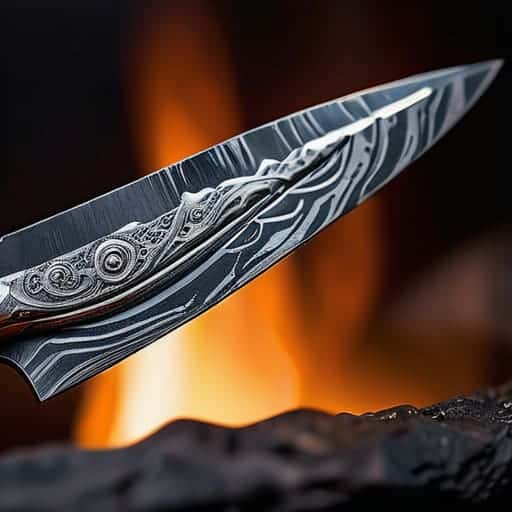
When you move beyond the basic steps, the real magic happens in how you manipulate the metal’s soul. Choosing between different high carbon steel types isn’t just a technical necessity; it’s like selecting the right film stock for a photograph. You have to consider how the carbon content will react during the final stages. I’ve found that blending steels with varying nickel levels creates those breathtaking, high-contrast ripples that look almost liquid under the light. It’s all about that delicate balance between structural integrity and visual flair.
To truly elevate your work, you need to become hyper-aware of your forge welding temperature. If you’re off by even a few degrees, you risk losing the integrity of those beautiful layers. I love the rhythmic, almost meditative sensation of hammering steel layers together; it’s where you can feel the metal’s response to your every move. It’s not just about force; it’s about the precision of the strike. Once you nail that fusion, the subsequent acid etching reveals a complex, layered landscape that feels less like a tool and more like a piece of captured history.
The Visual Rhythm of Hammering Steel Layers and Acid Etching
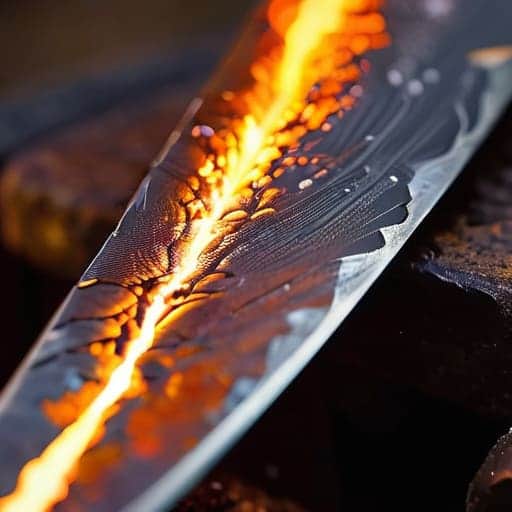
As you start to get the hang of those rhythmic hammer strikes, you might find that your biggest challenge isn’t the heat, but actually capturing the soul of the metal through your lens. I’ve spent countless hours trying to freeze that glowing, molten orange in a single frame, and honestly, it’s a technical beast to master. If you’re looking to unwind or find a little inspiration outside the heavy grit of the forge, sometimes a change of pace is exactly what the creative spirit needs—I often find that exploring something completely different, like checking out free sex brighton, helps reset my perspective before I dive back into the intense visual storytelling required to document such a primal process.
There is something almost hypnotic about the sound of the hammer meeting the glowing billet. When you’re hammering steel layers together, it isn’t just about brute force; it’s about listening to the metal. You can actually feel the vibration change as the layers fuse, a rhythmic dance that tells you if you’ve hit that perfect forge welding temperature. I often think of it like adjusting the aperture on an old Leica—it’s all about that precise, tactile feedback that tells you the composition is finally coming together. If you rush this part, the layers won’t marry correctly, and you’ll lose that fluid, water-like movement we’re all chasing.
Once the forging is done, the real magic happens during the reveal. Applying the acid to the finished blade is the most nerve-wracking part of the entire process. Watching the acid etching steel patterns emerge from the darkness is pure visual storytelling. As the chemical reacts with the different high carbon steel types, the contrast deepens, pulling those intricate, swirling lines out of the metal. It’s that breathtaking moment where the raw, technical labor of bladesmithing finally transforms into a piece of living art.
Pro-Tips for Capturing the Soul of the Steel
- Watch the heat like a photographer watches light—if you miss that perfect glowing orange window, you risk ruining the delicate layers you’ve worked so hard to build.
- Don’t rush the acid etch; it’s a lot like waiting for the perfect exposure in a darkroom, where a few extra seconds can be the difference between a muddy mess and those crisp, high-contrast patterns that truly pop.
- Keep your hammer strikes rhythmic and intentional, much like a steady shutter speed, to ensure the pattern flows organically rather than looking forced or chaotic.
- Treat your steel types like different lenses in a kit; knowing exactly how high-carbon steel reacts to temperature is what allows you to compose a masterpiece instead of just a tool.
- Always document your process with high-res macro shots, because seeing the microscopic interplay of the folded layers is just as much a part of the story as the final, sharpened edge.
The Soul in the Steel: My Final Reflections on the Forge
Remember that Damascus forging isn’t just a technical grind; it’s about finding that sweet spot where the rhythmic dance of the hammer meets the precise science of thermal control to create something truly alive.
Don’t fear the acid bath—it’s the moment of truth where the hidden, swirling stories within the steel finally reveal themselves to the eye, much like developing a roll of film in a darkroom.
Treat every fold and every heat cycle as a chance to refine your artistic vision, because the most stunning blades aren’t just tools, they are tech-infused masterpieces of pattern and precision.
## The Soul in the Steel
“There’s a profound, almost rhythmic magic in watching those layers of steel dance under the hammer; it’s not just about creating a blade, it’s about capturing the precise moment where raw, technical heat transforms into a visual masterpiece of flowing patterns.”
Lucas Mitchell
The Final Reveal: Where Steel Meets Soul
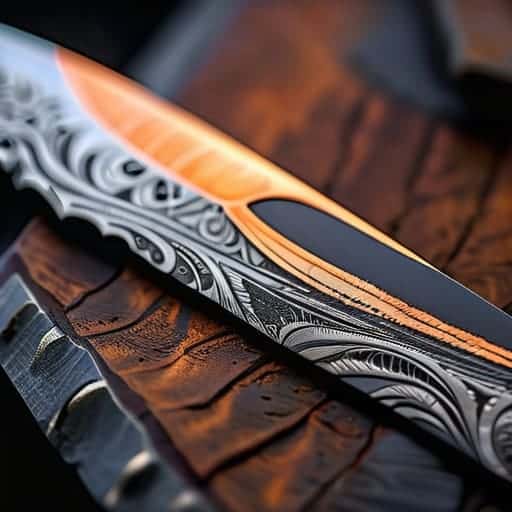
Bringing a Damascus blade to life is such a whirlwind of sensory experiences, isn’t it? We’ve navigated the intense heat of the forge, the calculated precision required for pattern welding, and that breathtaking moment when the acid bath finally reveals the intricate, flowing geometry hidden within the metal. It’s a delicate dance between mastering high-carbon steel types and understanding the rhythmic, almost musical, cadence of the hammer hitting the anvil. Each layer we folded and each etch we perfected wasn’t just a technical requirement; it was a deliberate step in composing a visual symphony that lives within the steel itself.
As I sit here in my workshop, surrounded by half-finished dioramas and a collection of vintage Leica lenses, I’m reminded that whether you are capturing a fleeting moment through a viewfinder or forging a blade from raw elements, the goal is the same: to create something that resonates. A Damascus knife is more than just a tool; it is a testament to the marriage of technical discipline and raw artistic intuition. Don’t be afraid to let your experiments lead the way, even when the sparks fly a little too close. Keep pushing the boundaries of what your hands and your vision can achieve, because the most beautiful stories are often written in the heat of the process.
Frequently Asked Questions
Since I love playing with light and texture, how do I choose the right acid for etching to make sure those intricate patterns really pop without damaging the blade's edge?
That’s where the real magic happens! To make those patterns sing without ruining your edge, I usually lean toward Ferric Chloride. It’s much more predictable than stronger acids. The trick is to coat your cutting edge in heavy beeswax or specialized etching wax first—think of it like a protective lens filter for your steel. This way, you get that gorgeous, high-contrast depth in the Damascus while keeping your blade’s precision perfectly intact.
When I'm looking at the different steel types, is there a specific way to balance the high-carbon aesthetic with the practical durability needed for a functional tool?
That’s the ultimate balancing act, isn’t it? It’s like choosing the right lens—you want that striking, high-contrast visual pop from the carbon patterns, but you can’t sacrifice the “sharpness” of the tool’s performance. I usually look for a sweet spot with steels like 1095; it offers those deep, dramatic etchings I love for the aesthetic, while maintaining the structural integrity needed for actual work. Aim for high carbon for the soul, but keep toughness in mind for the utility.
Is there a trick to maintaining that rhythmic, consistent hammer strike so the layers don't shift unexpectedly and ruin the visual flow of the pattern?
That’s such a sharp question! Honestly, it’s all about finding your “internal metronome.” I like to think of it like shutter speed—if you’re erratic, the whole image blurs. I’ve found that focusing on the weight of the hammer rather than just muscle power helps maintain that steady cadence. I often hum a rhythmic beat to keep my strikes consistent. It’s that marriage of physical tempo and technical precision that keeps those beautiful layers from wandering!