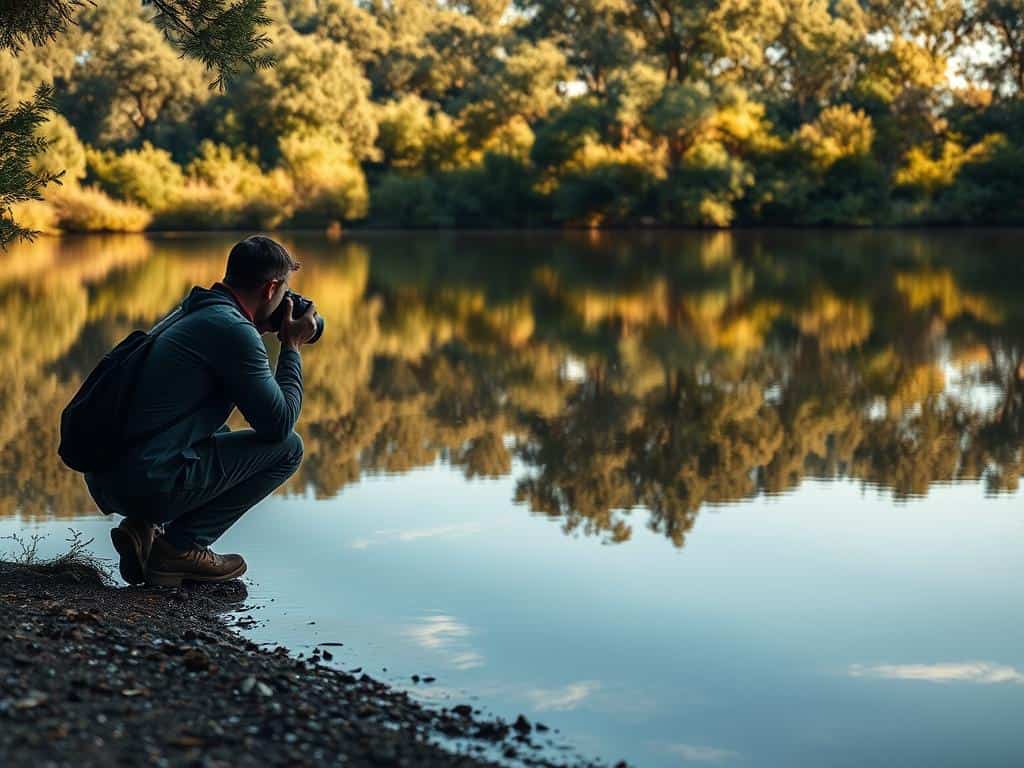
Did you know that lakes are calm in the early morning? This makes them perfect for taking amazing reflection photos. Late evenings are also great, with sunset colors adding to the beauty. Reflection photography turns everyday scenes into stunning images.
It uses surfaces like water, glass, and wet pavement. I’ll share top tips for taking great reflection photos. We’ll cover important techniques, the best times to shoot, and how to be creative. Emil Pakarklis says the first step is to see the reflective surfaces around us.
Key Takeaways
- Early mornings and late evenings provide optimal conditions for reflection photography.
- Utilizing a tripod is essential for longer exposure times to prevent camera shake.
- Experimenting with various reflective surfaces can enhance your photos’ visual interest.
- Long exposure can create dreamy effects, making reflections more ethereal.
- Symmetry plays a critical role in creating impactful reflection images.
- Capturing spontaneity by taking numerous photos increases your chances of securing the perfect shot.
- Using filters like polarizing and neutral density can improve color vibrancy and control exposure.
Finding the Perfect Reflective Surface
Mastering reflection photography starts with picking the right surfaces. Water reflections are a top choice because they are smooth and mirror-like. Lakes, rivers, and even puddles can become amazing backgrounds for city photos.
A calm setting is best for these shots. Early morning or late evening is perfect because the water is usually calm.
In cities, reflective surfaces are everywhere. Glossy buildings and shiny metals in modern architecture make great mirror shots. Even wet pavements after rain can show interesting reflections, blending city life with nature.
Keep an eye out for unexpected reflective surfaces. They can add depth and interest to your photos. Whether in a bustling city or a peaceful lakeside, the right surface can turn any shot into art.
Techniques for Successful Reflection Photography
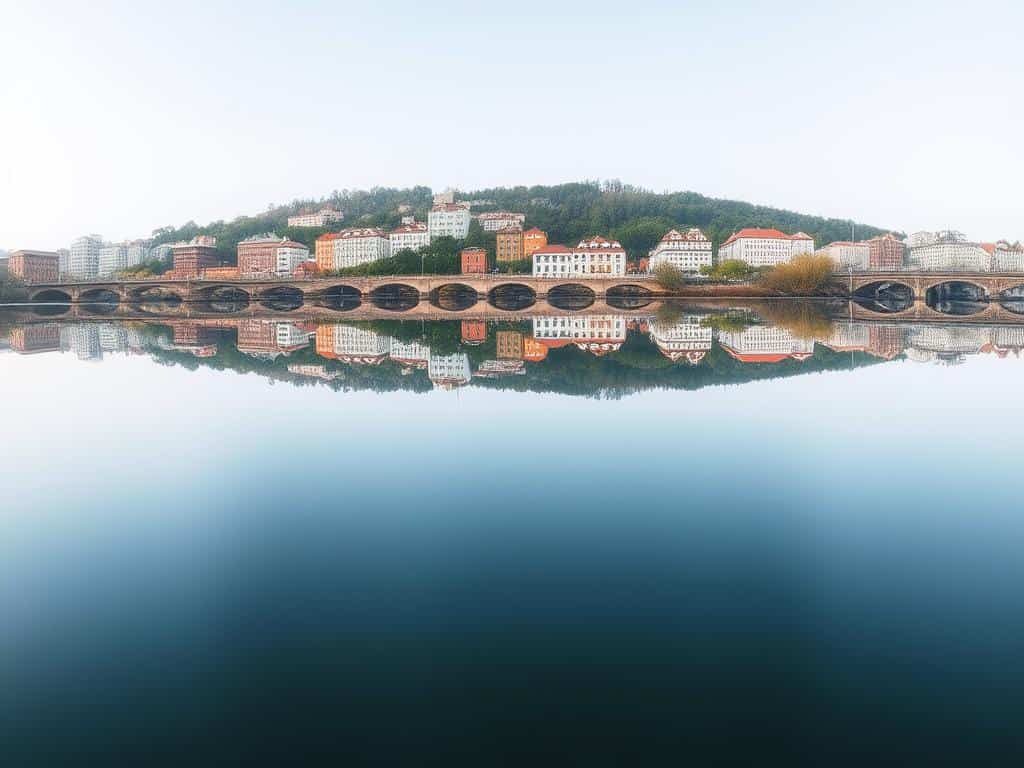
Reflection photography offers many chances to make stunning images. Using certain techniques can make your photos stand out. It’s key to focus on symmetry, as reflections naturally create balanced images.
I try to place the horizon line right in the middle. This makes both the subject and its reflection look great.
Creating Symmetry and Balance
When I take reflection photos, I aim for perfect symmetry. Rain puddles are perfect for this, showing off amazing scenes. Using an aperture of f/16 keeps everything sharp.
A wide-angle lens is great for capturing the whole scene. It lets me show off the full beauty of landscape reflections.
Manipulating Light and Exposure
Lighting is key to making reflection photos pop. I use different exposure techniques to balance light and dark. A polarizing filter helps reduce glare, making colors bright and clear.
Shooting just before dawn with slow shutter speeds creates magical water effects. It turns simple scenes into something magical.
Embracing Ambient Conditions
Understanding the weather adds excitement to my photos. Shooting after rain makes surfaces reflect better. City lights on wet pavement make for amazing night shots.
Playing with glass bottles or shiny objects can reveal cool reflections. It adds a creative twist to my photos.
Conclusion
Mastering reflection photography takes a smart plan. It involves finding the right surfaces, using the right techniques, and knowing your surroundings. I’ve learned that trying different angles and conditions is key to capturing the *perfect moment*.
Learning about light, exposure, and color can make your photos better. Whether it’s a peaceful lake at dawn or city puddles, these tips help you take amazing pictures. I suggest you take your camera outside to find the beauty in reflections.
Being dedicated to trying new things, like changing aperture and ISO, makes you a better photographer. You can use different cameras and lenses to get great shots. So, start exploring reflection photography and let your own style shine through!
