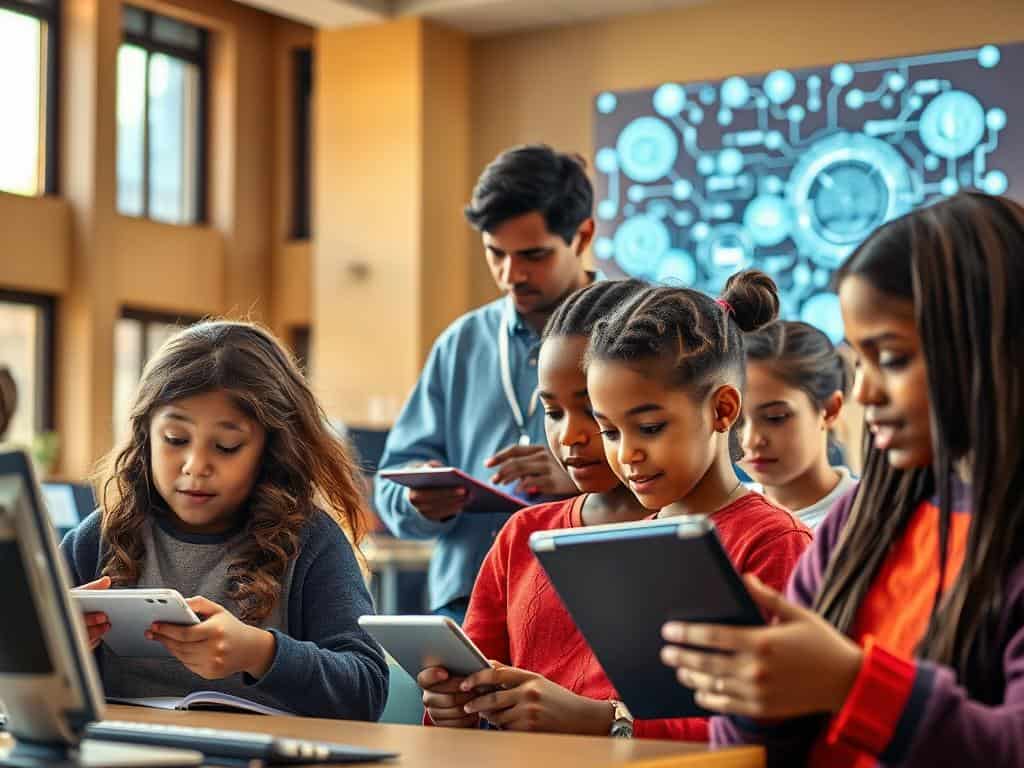
Did you know over 58% of K-12 teachers in the U.S. haven’t had AI training? The education world is changing fast with AI. It’s changing how we learn, making education more personal than ever before.
Platforms like Khan Academy now adjust to each student’s learning speed. AI tutors offer affordable help, changing the learning scene. This shift raises big questions about the role of technology and old teaching ways.
Some worry that old skills like programming might become useless. But leaders like Jensen Huang say we need better communication and thinking skills. These are essential for the digital world we’re moving into.
Key Takeaways
- AI promises personalized learning, adapting to each student’s pace.
- AI tutors can provide low-cost educational support.
- AI analytics predict student performance and dropout risks.
- Teachers report a decrease in administrative tasks thanks to AI tools.
- AI-driven platforms can boost student engagement significantly.
- The demand for skills may overshadow traditional degrees in the future.
Transforming Learning with AI
The world of education is changing fast, thanks to artificial intelligence. This change brings personalized learning that meets each student’s needs. It’s a big shift in how we learn today. Personalized AI tutors play a key role, helping students understand better and stay engaged with lessons tailored just for them.
Personalized Learning Experiences
Customized education changes how we learn. Sites like Khan Academy use smart algorithms to adjust lessons for each student. This makes learning more personal and effective.
In virtual classrooms, I’ve seen how this tech helps every student get the help they need. It makes learning more enjoyable and less frustrating than old teaching methods.
Enhanced Accessibility
AI makes learning available to more people, overcoming learning barriers. Projects like the AI bird feeder in Maine middle schools show how tech can connect us to nature and improve problem-solving. These projects highlight AI’s role in supporting students with disabilities or different learning styles.
As more schools go online, AI tools like instant feedback make learning better for everyone. This is a big step forward in education.
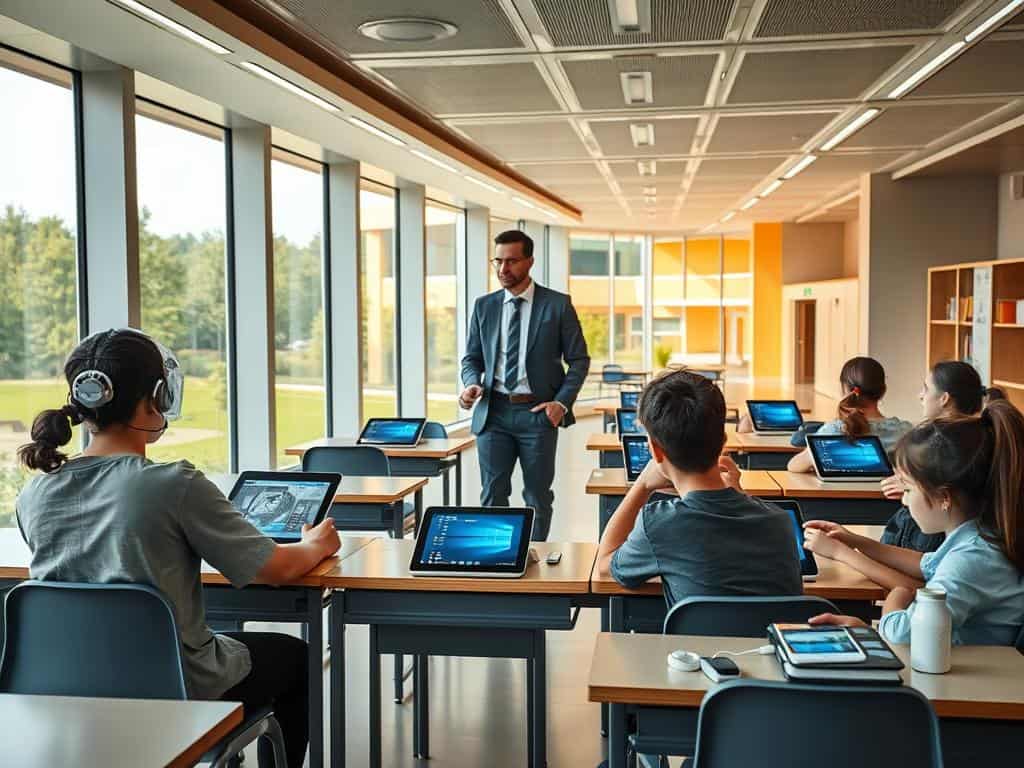
The Future of Education
The way we learn is changing fast. Schools are now focusing more on skills needed for the future. This means teaching digital literacy is key. We’re moving away from old teaching methods and embracing new ways to learn.
Shifting Skills and Knowledge Acquisition
AI is changing what we need to learn. Skills like programming might not be as important soon. But, skills like creativity and critical thinking are becoming more valuable.
These skills are essential for the jobs of tomorrow. AI can make learning more personal and engaging. It helps tailor lessons to what each student needs.
Online Learning Dominance
Online learning is becoming more popular. Many places are starting online courses for a digital world. For example, Ontario will offer online classes in entrepreneurship and Canadian law starting in 2023-24.
China is also leading the way. They mix digital lessons with hands-on projects. This shows how online and traditional learning can work together well.
Conclusion
AI is set to change education a lot, moving away from old ways of learning. This change is not just a trend; it’s a big shift in how we see learning and getting knowledge. As I explore this new world, I see how important it is to use AI in schools to teach skills for the future.
Our education is moving towards more personal and flexible learning. This makes learning available to more people. More students can reach their goals, helping America grow economically. Educated people also get involved more in their communities.
As we move forward, we must keep a balance between tech and human touch. Using AI helps us keep our creative and critical thinking sharp. This will lead to new ideas in many areas. Understanding and adapting to these changes will be key for success in our fast-changing world.
