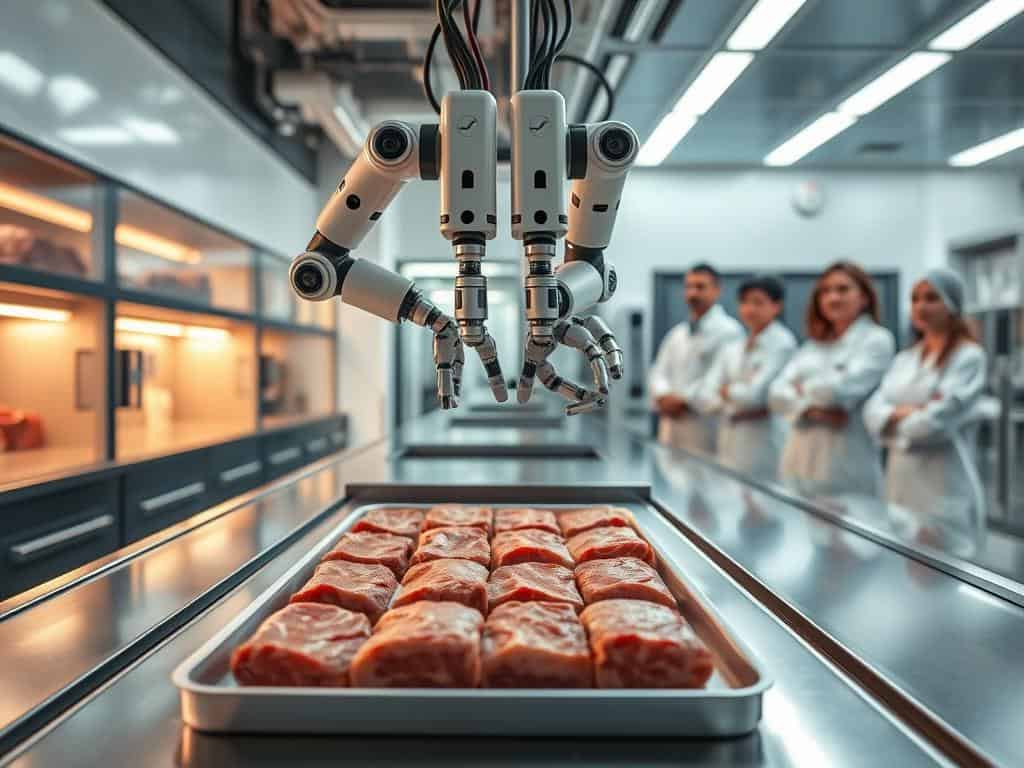
Did you know 86 percent of U.S. chefs want to serve lab-grown meat or poultry? This shows a big change in the food world. It’s where new ideas meet green living to shape our future meals. With over 70 companies working on lab-grown meat globally, we’re on the edge of a big food change.
In this article, I’ll look at how lab-grown meat and AI chefs will change our food and dining. We’ll dive into cultured meat and AI’s role in cooking. I’ll share how these techs could make food better for our planet and what we might like more.
Key Takeaways
- 86% of U.S. chefs are interested in incorporating lab-grown meat into their menus.
- The global market for cultivated meat is expanding rapidly, with over 70 companies involved.
- Food safety and environmental benefits are significant motivators for chefs to adopt cultivated meat.
- AI chefs are set to personalize culinary experiences, enhance consumer engagement.
- Collaboration between chefs and cultivated meat companies is essential for market success.
The Rise of Lab-Grown Meat and Sustainable Food
Lab-grown meat is changing how we see and eat protein. It lets us enjoy meat tastes without harming animals or the planet. This new food way helps us eat better and care for our world.
Understanding Cultured Meat
Cultured meat comes from animal cells grown in labs, not from animals. It’s good for those who care about animal welfare. Over 70 companies worldwide are working on this, making it a strong meat alternative.
Benefits of Lab-Grown Meat for Sustainability
Lab-grown meat is great for the planet too. It uses much less water than raising animals, helping with water shortages. It also cuts down greenhouse gas emissions by up to 96%, helping fight climate change. With meat needs set to grow by 70% by 2050, lab-grown meat is key to saving forests and resources.
Market Trends in the Cultured Meat Industry
More people want to try lab-grown meat, even if it costs a bit more. About 60% of consumers are interested in it because of its environmental benefits. The market is expected to hit $25 billion by 2030, showing it’s growing fast.
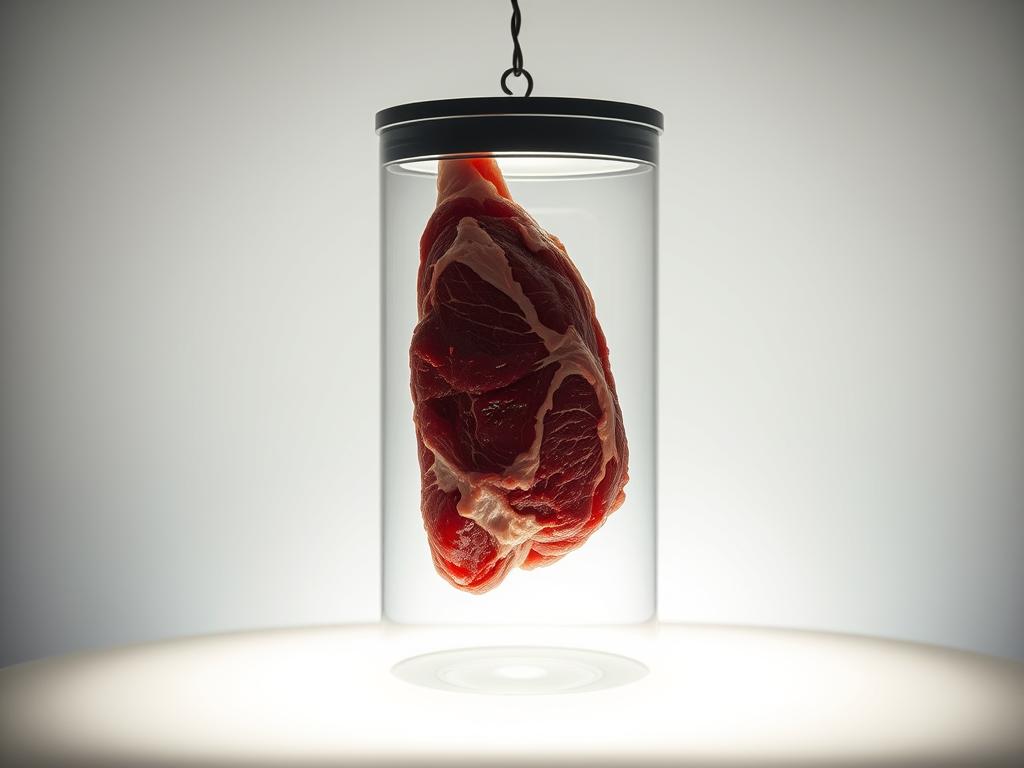
AI Chefs: Shaping the Future of Food
The world of cooking is changing fast, thanks to AI chefs and new food tech. It’s amazing how kitchens are becoming more automated. AI helps with everything from making recipes to picking ingredients.
How AI is Transforming Culinary Arts
AI chefs are changing cooking forever. They make meals faster, with some predictions saying up to 50% quicker than before. They also keep food fresh and cook it just right, with over 90% accuracy.
These smart chefs can even learn new recipes and get better at making dishes. This means food tastes more consistent over time. It’s a big win for both chefs and diners.
Future Innovations in Food Tech and AI
The future of food tech looks bright. Kitchens could cut food waste by 30% with better ingredient control. The food tech market is expected to grow 25% each year for the next five years.
But, there are challenges too. Half of old recipes might get lost in the new tech. Yet, places like Atelier Crenn are finding ways to keep traditions alive while using new tech.
Consumer Engagement and Personalization through AI
AI does more than just make food faster. It also makes food more personal. A big 70% of people want to try AI-made meals. This shows people are open to tech in cooking.
AI uses data to make food just right for each person. It’s all about making food that fits what you like and need. This makes our food culture more aware and caring about the planet.
Conclusion
The Future of Food is changing fast, thanks to lab-grown innovations and AI in cooking. We’re at a key moment where these technologies could change how we eat and make food more sustainable. With the world needing to feed nearly 10 billion people by 2050, these advancements could help a lot.
Lab-grown meat could make our food better and more eco-friendly. If richer people eat less meat, we could use less land and be healthier. Just a 30% change could make a big difference.
I’m excited for the future of food, where tech meets sustainability. We need everyone to work together to make this happen. By staying open to change, we can help create a food system that’s good for the planet and fair to all.
