
Did you know that over 2.2 million Americans live with limb loss? This number is expected to double by 2050. Bionic tech is changing the game with wearable enhancements, improving lives in big ways. It’s not just about fixing what’s broken; it’s about making things better.
Imagine smart prosthetic limbs and neural implants that boost our brains. These advancements are changing how we see human enhancement. Soon, cyborgs might be a reality for those seeking new possibilities.
Key Takeaways
- Over 2.2 million Americans face limb loss, revealing an urgent need for advanced bionic solutions.
- Prosthetics can cost between $1.4 million to $2.8 million over a patient’s lifetime.
- Bone-anchored bionic prostheses improve quality of life by roughly 17% compared to traditional options.
- Digital twin technology could reduce healthcare costs by optimizing intervention strategies for prosthetic users.
- New neuroprosthetics aim to allow users to control devices through brain signals, vastly improving user experience.
The Evolution of Bionic Tech
The journey of bionic enhancements is rich and complex. It has evolved a lot over time. From ancient prosthetics to today’s neuroprosthetics, the progress is amazing. Each step forward has opened new doors, showing our drive to blend biology and tech.
Historical Background of Bionic Enhancements
Way back, bionic enhancements started with simple prosthetics. These were made of wood and metal. The first big leap was the cochlear implant, known as the bionic ear. By 2004, we had artificial hearts that changed medical care.
Breakthroughs in Prosthetic Technology
New prosthetics have changed lives for those without limbs. The Hero Arm is a great example, being light and easy to use. By 2020, Darren Fuller got a bionic arm, showing how accessible these enhancements are now. The Ability Hand by PSYONIC is a top example, using soft robotics for a durable, adaptable hand.
Current Trends in Human Augmentation
Today, human augmentation is changing fast. We’re seeing more neuroprosthetics and brain-machine interfaces. These advancements go beyond just moving around. They’re improving senses like vision and balance. The Utah Bionic Leg is a great example, using soft materials for better comfort and function. These new technologies are pushing what humans can do to new heights.
The Impact of Bionic Tech on Quality of Life
Bionic technology greatly improves the lives of people with mobility issues. It goes beyond old prosthetics, giving new chances for independence and fun in daily life. The growth of bionic tech changes how we see and deal with disabilities, showing its power to bring back function and make life better.
Improving Mobility and Independence
Many people see big gains in mobility and freedom with bionic limbs and devices. The i-limb quantum is a great example, with its titanium fingers and app control. It lets people do many things more easily, making life better.
As bionic tech gets better, it gives more feedback to users. This helps them move around with more confidence and control.
Real-Life Examples and Case Studies
Real stories show how bionic tech changes lives. A person with a new prosthetic might walk faster and more smoothly. These changes let them join in more with friends and community.
These stories show that bionic tech does more than just fix bodies. It helps people feel like themselves again and find their place in the world.
Enhancing the Lives of Individuals with Disabilities
Bionic tech has a huge impact on people with disabilities. New prosthetics and neural interfaces are changing the game. They help people with spinal cord injuries do things like type fast.
These advances meet the need for independence and connection. They change what we think is possible for those facing big physical challenges.
Challenges and Innovations in Wearable Enhancements
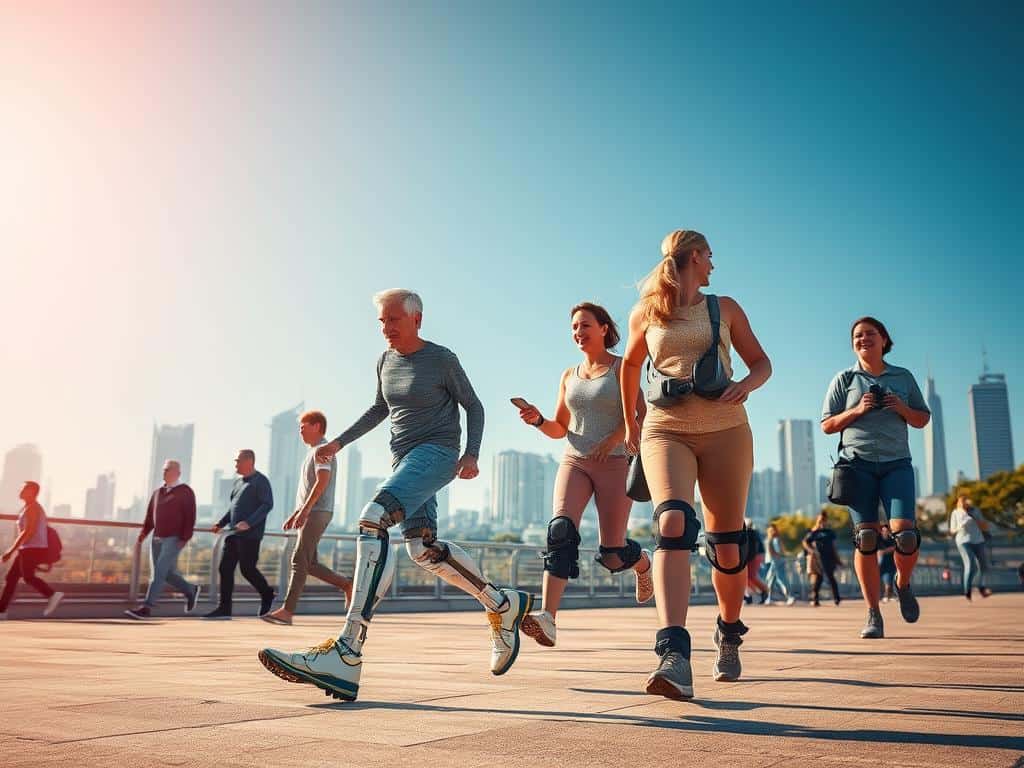
Wearable enhancements have changed how we deal with physical limits and disabilities. Yet, there are many challenges. Issues like infections, implant failures, and discomfort with bionic devices are common. It’s important to solve these problems to make wearable tech more accepted.
Addressing Adverse Events in Bionic Devices
Advances in prosthetic design have greatly helped people with disabilities. But, safety issues need more focus. Making prosthetics more compatible and durable is key.
Using materials like titanium and carbon fiber helps prevent problems. New manufacturing methods, like 3D printing, make prosthetics more affordable and tailored. These steps can help more people use wearable enhancements.
The Role of Neural Implants in Human Augmentation
Neural implants are opening up new possibilities in human enhancement. They connect technology directly with our nervous system. This can improve how we move and feel.
Research is ongoing to better link our brains with robotic devices. This could make prosthetics work better and feel more natural. Soft robots and assistive clothes are also being developed. They could help reduce pain and improve movement.
Future Prospects and Possible Solutions
The future for wearable tech looks bright. Wearable robots will become more important as artificial intelligence improves. Smart prosthetics can learn from how we move, making them more comfortable and effective.
But, we need to make these devices more affordable and reliable. This will help them become part of our daily lives. Healthcare will greatly benefit from these advancements, helping in rehabilitation. Making these devices more comfortable and fitting well is essential for their widespread use.
Conclusion
As we move closer to the future of bionic tech, we see big changes in wearable tech. These changes will change what we can do in amazing ways. Bionic prosthetics now use robotics to help people who have lost limbs.
These prosthetics have sensors that let people move like they used to. They are not just tools; they are part of the body. This lets users do things they thought they’d never do again.
People using these prosthetics say their lives have gotten better. They can do things they couldn’t before. They even feel less pain from phantom limbs. But, we must watch out for the risks of this new tech.
The future of bionic enhancements is full of possibilities and challenges. We need to make sure we’re using this tech wisely. By doing so, we can make the world a better place for everyone.
