
Did you know the Global Human Augmentation Market was worth USD 135.1 billion in 2022? It’s expected to hit USD 357.13 billion by 2027. This growth, with a CAGR of 21.46%, shows a big change towards better human abilities. We’re seeing more in biotechnology, artificial intelligence, and robotics, leading to amazing physical and mental boosts.
In this journey, we’ll look at the start of superhumans, what these changes mean, and the tech that’s changing our view of human limits. We’ll explore brain-computer interfaces and wearable tech that’s making a real difference in our lives today.
Key Takeaways
- The Global Human Augmentation Market is projected to grow significantly, reflecting increased demand for enhanced abilities.
- Innovations like exoskeletons and brain-computer interfaces are shaping the concept of superhumans.
- Ethical concerns about enhancements highlight societal inequalities in access and availability.
- Technological advancements are expected to fundamentally enhance human capabilities in the future.
- The rise of superhumans exemplifies an intersection of technology, healthcare, and ethics that requires careful consideration.
- Organizations must prepare for the implications of enhanced individuals in various sectors, from education to the workforce.
Understanding Superhumans and Their Origins
Exploring superhumans makes us think about what makes abilities extraordinary. Superhumans are people with powers beyond what humans usually have. These powers come from different places, like being born with them or gaining them from outside forces.
Definition of Superhumans
Superhumans are where biology, tech, and old stories meet. They show us what humans can do when pushed to the limit. With new science and tech, what’s real and what’s not gets mixed up, sparking talks about making humans better.
Historical Context
The idea of superhumans has been around for thousands of years. It shows how long humans have been interested in getting better. Stories about superhumans have changed over time, influenced by myths and science.
As our world changes, so do the stories about superhumans. They reflect our values and worries about making humans stronger.
The Role of Biotech in Human Enhancement
Biotechnology is key in the quest to enhance humans. It brings new ways to better our lives. From treating diseases to boosting physical abilities, biotech is making science fiction a reality.
Breakthroughs in Biotechnology
Biotech has changed what we can do. Gene therapy is a big leap, aiming to cure genetic diseases. It’s not perfect yet, but trials are getting better.
Also, nootropic substances are gaining attention. They’re thought to improve focus, learning, and mood. This is great for those wanting to boost their brain power.
Examples of Biotech Applications
Biotech has many uses that show its power. Cochlear implants help people hear again. Exoskeletons, like the Sarcos Guardian, make lifting heavy easy.
Brain-computer interfaces (BCIs) let us talk to machines with our minds. This is a big step in merging tech with biology. But, it raises big questions about fairness and the future.
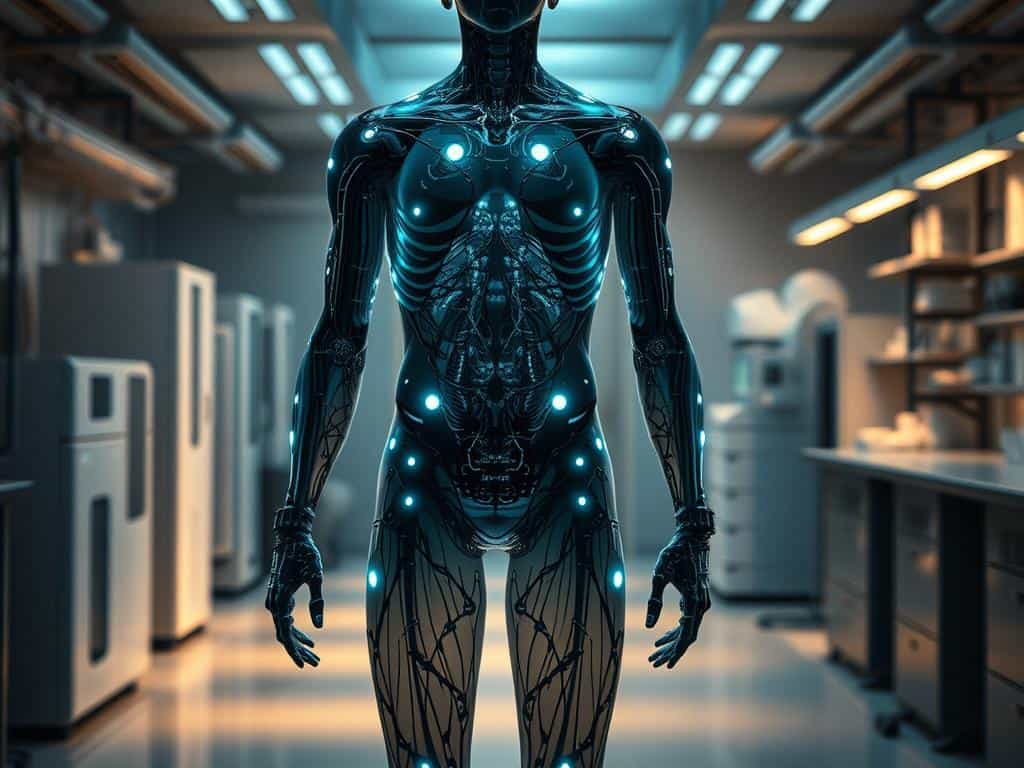
Human Augmentation Through Technology
Technology has greatly improved human abilities in many areas. Exoskeletons are a key example, helping those with physical challenges and boosting strength for everyone. These advanced robots make hard tasks easier for users.
Advancements in Exoskeletons
Recently, there’s been a lot of research on exoskeletons. Over 1,300 papers have been written about them, focusing on better movement. They help reduce physical strain, which is vital for rehab, like for the 50,000 Ukrainians who lost limbs in conflict.
The market for exoskeletons is expected to hit $1.9 billion by 2025. This shows how much people want these technologies.
AI-Powered Enhancements
Artificial intelligence is changing how we think and learn. New tech in neural engineering is improving memory and decision-making. Tools like Transcranial Magnetic Stimulation (TMS) help with memory, making learning better.
The DARPA’s Cognitive Technology Threat Warning System (CT2WS) shows the military’s interest in brain tech. It aims to enhance soldiers’ awareness by monitoring brain signals. As more industries use AI, the possibilities for brain enhancements grow.
Conclusion
Looking back at our journey in biotechnology and tech shows us a lot about our future. We’ve seen how human upgrades, from old times to today’s tech, are changing us. It’s making us think about what it means to be human in a new way.
Talking about the right and wrong of these upgrades is key. Studies show people want to work in new ways, thanks to tech. This change will shape our society in big ways.
We’re on the edge of a new era, full of possibilities for humanity. We need to think carefully about these changes. This way, we can make sure our progress makes life better for everyone.
