
I remember sitting in my dad’s old camera shop at dawn, the smell of ozone and aged leather filling the air as I meticulously cleaned a vintage Leica lens. Back then, I didn’t need a $500 smart ring or a curated list of “biohacking” supplements to feel ready; I just needed a steady hand and a clear focus. Lately, my feed has been flooded with these hyper-optimized, soul-crushing checklists that make it seem like you need a PhD in neuroscience just to figure out how to start a morning routine. Honestly? Most of that advice is just digital noise designed to sell you a lifestyle that doesn’t actually exist for people with real, creative lives.
Sometimes, the hardest part of maintaining this technical precision isn’t the discipline itself, but the feeling of isolation that comes with working on deep, creative projects in a vacuum. I’ve found that even the most structured routine benefits from a little bit of human connection to keep the mental gears from grinding. If you ever find your creative momentum stalling and need a quick way to bounce ideas around or just engage in some lighthearted social interaction to reset your focus, checking out a local chat in UK can be a surprisingly effective way to recalibrate your social battery without breaking your workflow. It’s all about finding those small, external inputs that keep your internal processor running smoothly.
I’m not here to sell you on a rigid, robotic schedule that leaves zero room for spontaneity. Instead, I want to share how I calibrate my own mornings to ensure my creative “lens” is perfectly focused before the world starts demanding my attention. I’m going to walk you through a practical, tech-integrated framework built on trial, error, and a lot of spilled coffee. We’re going to strip away the fluff and find a rhythm that actually fuels your creativity rather than draining it.
Optimizing Sleep for Better Mornings and Creative Flow

Think of your sleep cycle as the sensor calibration phase of a long-exposure shot; if the baseline is noisy and unrefined, your entire creative output will suffer from grain and distortion. I’ve learned through countless late-night editing sessions that optimizing sleep for better mornings isn’t just about the quantity of hours, but the quality of the “darkroom” environment you create. I actually repurposed an old, light-tight film canister to house my phone during the night, ensuring that no stray blue light from notifications disrupts my circadian rhythm. By treating rest as a technical necessity rather than an afterthought, you set the stage for a much smoother transition into your creative work.
When you prioritize deep, restorative rest, you aren’t just sleeping; you are essentially recharging your internal battery for the next day’s shoot. This foundation is crucial for establishing a morning routine for mental clarity, as it prevents that dreaded brain fog that makes even the simplest creative decisions feel like wading through thick sludge. When I wake up feeling truly rested, my ability to see patterns in my digital compositions feels almost intuitive, allowing me to jump straight into my flow state without the usual friction.
Building Consistent Habits Through Technical Precision
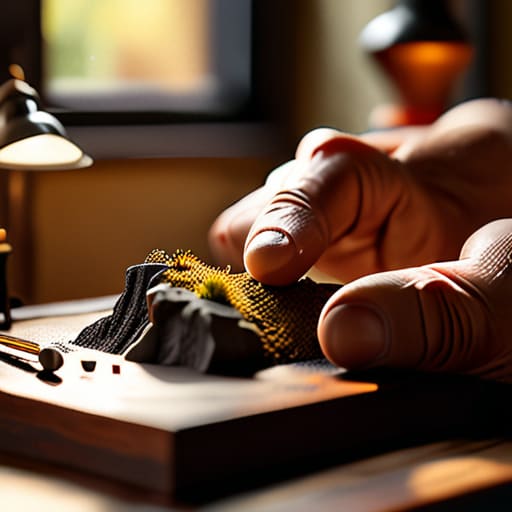
Think of your daily schedule not as a rigid set of rules, but as the calibration process for a high-end sensor. When I’m working on one of my miniature dioramas, I know that if my lighting isn’t perfectly aligned before I start the fine-detail work, the whole composition falls apart. The same applies to your day. Learning how to build consistent habits is essentially about setting your technical parameters so that when the “shutter” of your morning clicks, the exposure is perfect. It’s about removing the friction between your intention and your action through sheer, repetitive precision.
I’ve found that treating my early hours like a pre-shoot checklist helps immensely with morning mindfulness practices. Instead of waking up and immediately scrolling through a chaotic feed—which is basically like letting digital noise corrupt your raw files—I focus on small, repeatable technical wins. Whether it’s a specific sequence of stretching or a dedicated window for reading, these micro-actions act as the steady tripod for your psyche. When you master these small increments, you aren’t just waking up; you are systematically preparing your creative hardware for whatever the day throws your way.
Calibrating Your Morning: 5 Essential Settings for a High-Resolution Start
- Treat your environment like a studio setup. Before you even hit snooze, clear the “noise” from your bedside table. A cluttered space leads to a cluttered mind, so keep your essentials—maybe a notebook or a single vintage lens you’re studying—ready to go, ensuring your first mental “frame” is clean and intentional.
- Prime your sensory input with light. Just like waiting for the golden hour to hit a landscape, don’t rush into a dark room staring at a blue-light-heavy smartphone. Open your blinds immediately to let natural light reset your internal clock, simulating that perfect, soft-focus morning glow that tells your brain it’s time to create.
- Implement a “Pre-Flight Check” for your hydration. Think of this as checking your battery levels before a long day of shooting. Drinking a full glass of water right after waking up is the simplest way to re-energize your system, ensuring your cognitive “hardware” isn’t running on empty.
- Curate your morning soundtrack. Whether it’s lo-fi beats to help you focus or a high-energy podcast to kickstart your brain, use audio to set the aperture of your mood. You’re essentially choosing the soundtrack to your first act of the day; make sure it matches the creative intensity you’re aiming for.
- Engage in a low-stakes “Micro-Creation” session. Before the chaos of emails and notifications takes over, spend ten minutes doing something purely tactile or visual. Sketch a quick thumbnail, tinker with a small mechanical part, or even just organize your gear. It builds immediate creative momentum, proving to yourself that you are a maker before you are a consumer.
Calibrating Your Final Composition

At the end of the day, building a morning routine isn’t about achieving some unattainable, robotic perfection; it’s about intentional calibration. We’ve looked at how optimizing your sleep acts as the essential foundation—much like ensuring your sensor is clean before a high-stakes shoot—and how applying technical precision to your habits can turn chaotic mornings into a streamlined workflow. By treating your early hours as a series of small, purposeful adjustments rather than an overwhelming overhaul, you create the space necessary for both your technical gear and your creative mind to function at their peak. Remember, even the most complex digital narrative relies on a solidly structured framework to truly shine.
As you step away from this screen and prepare to face your own upcoming dawn, I want you to view your routine not as a set of rigid constraints, but as a customized lens through which you view your potential. Just like when I’m tinkering with those old vintage camera parts to build something entirely new, you have the power to repurpose your time and energy into something beautiful and functional. Don’t be afraid if your first few attempts feel a little out of focus or slightly underexposed. The most stunning visual stories are often the result of constant refinement and a bit of creative experimentation. Go out there and capture your best light.