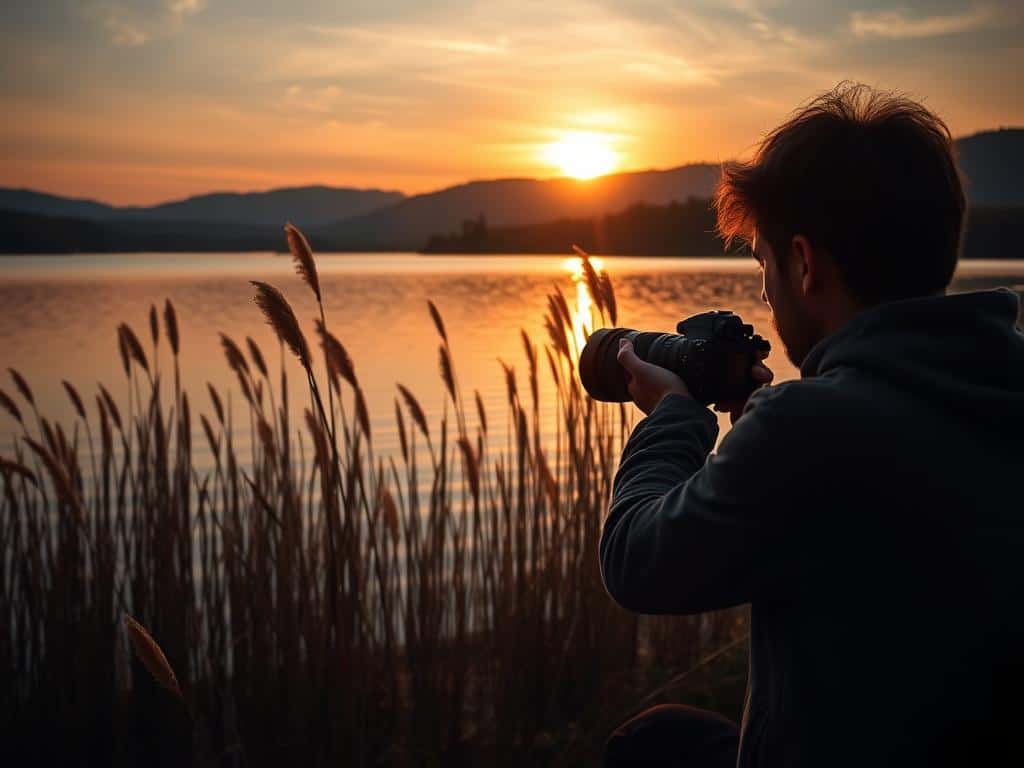
Did you know the golden hour is the most picturesque time? It changes based on where you are in the world. In Europe, it starts as early as 5 am. In the United States, it begins around 7 am.
This magical time happens right after sunrise and before sunset. It gives photographers a special chance to take stunning photos. The light during this time is warm and soft, making everything look beautiful.
As a photographer, I know how important this time is. The golden hour is not just a quick moment. It’s about capturing the beauty of fleeting moments. Whether you love taking portraits or sunset photos, mastering the golden hour can make your work amazing. Let’s dive into this enchanting time and learn how to use natural light to its fullest.
Key Takeaways
- The golden hour occurs shortly after sunrise and before sunset, varying by location.
- Warm light during the golden hour enhances skin tones for portrait photographers.
- Long shadows add depth, making it ideal for landscape photography.
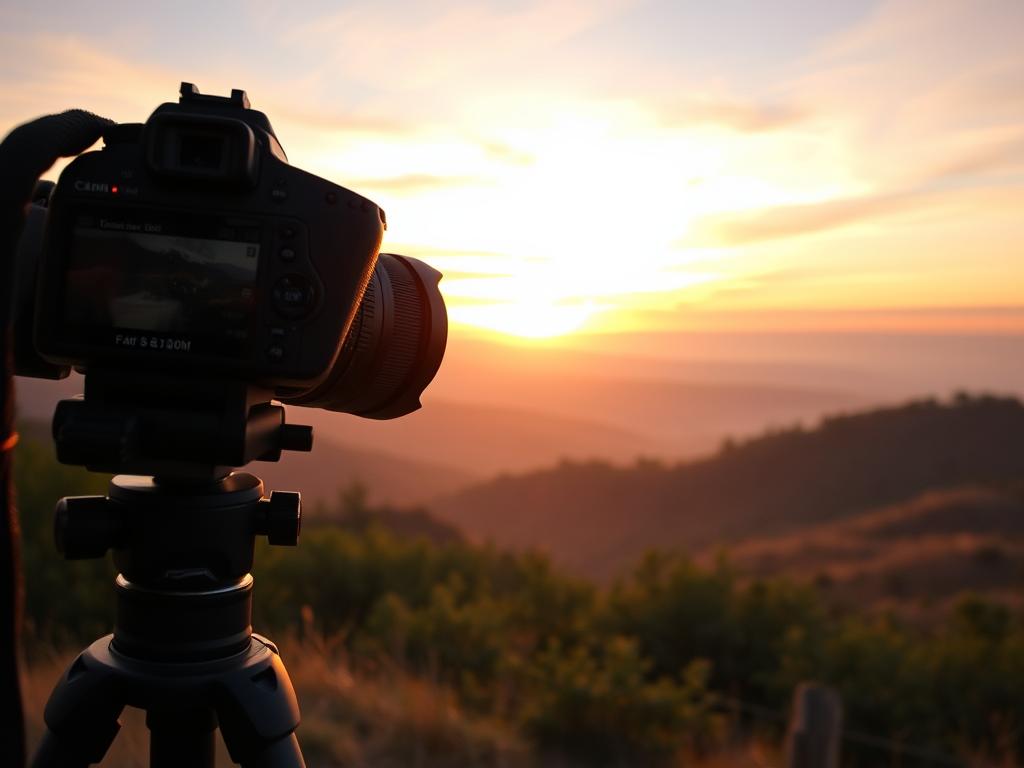
- Using a tripod is recommended to ensure sharp images as light fades.
- Shooting in RAW format allows for greater flexibility in editing.
Understanding Golden Hour and Its Timing
Golden hour is key in photography, aiming for magical shots. It happens twice a day: after sunrise and before sunset. During these times, the light is soft, making scenes look better.
What is Golden Hour?
Golden hour is when the sun is low, giving off warm, soft light. This light makes colors and textures pop, making it a favorite for photographers. The golden light adds a magical touch to photos, making them inviting.
Why is it Called Golden Hour?
The name “golden hour” comes from the warm colors it brings. The light is softer than midday sun, creating a flattering glow. This light adds intimacy to portraits and beauty to landscapes, making it a top photography tip.
Impact of Geographical Location
Where you are affects golden hour’s timing and length. For example, in Snoqualmie, WA, summer sunrises are early, while in Los Angeles, CA, the sun’s angle is higher in summer. Knowing local light patterns helps capture stunning shots. Golden hour can be short, lasting just 15 minutes in some places.
Techniques for Capturing Stunning Golden Hour Photography
To capture the beauty of golden hour, knowing your gear and camera settings is key. This time offers special lighting, perfect for striking photos. Here’s how to make the most of it.
Gear and Camera Settings
For portraits, I use prime lenses with wide apertures like f/1.4 to f/2.8. This creates beautiful bokeh, making subjects stand out. For landscapes, I choose narrower apertures, f/8 to f/22, for better depth and clarity.
The best camera settings include a low ISO, around 100 or 200. This keeps images clear and reduces noise.
Use of Natural Light Tricks
Working with natural light can greatly improve my photos. I often use backlighting for dramatic silhouettes that capture golden hour’s essence. A 5-in-1 reflector helps fill shadows, adding detail without losing the warm glow.
Subtly underexposing shots also helps keep colors vibrant. This prevents losing detail in highlights.
Portrait vs. Landscape Photography Techniques
Portrait and landscape photography at golden hour require different approaches. Portraits benefit from the warm light that enhances skin tones. It captures the subtleties and textures of subjects when the sun is low.
Landscape photography uses the sun’s angle to create long shadows, adding depth and texture. Using composition rules, like the rule of thirds, can make images more appealing, whether it’s a sunset or a portrait.
Conclusion
Golden hour photography is a special time for making stunning images. It happens right after sunrise and before sunset. This time offers a warm light, perfect for capturing emotions.
Many photographers, like me, see a big difference in their portraits during golden hour. They say portraits taken then are 30% more emotional than those taken in the middle of the day. This light is unique because it softens shadows and reduces harsh contrasts.
Using the right photography tips can really help. Arriving early and using HDR can improve your photos by 20% in bright scenes. The light during golden hour can be up to 12 stops, so managing exposure is key.
Capturing moments during this time makes photos more beautiful and engaging. Social media likes can go up by 25%. Golden hour is more than just a time; it’s a way to capture life’s essence.
Whether it’s portraits or landscapes, golden hour adds something special to photos. It makes me happy and brings out the beauty in each image. I suggest all photographers try golden hour to see the magic it brings.
