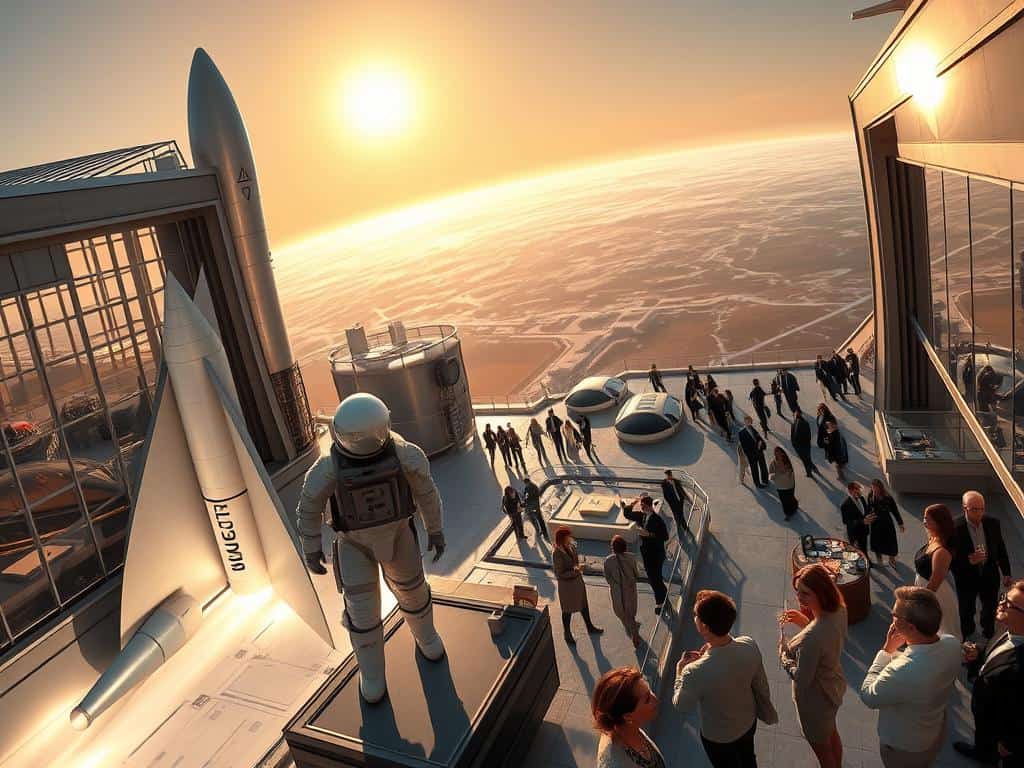
Did you know Virgin Galactic’s ticket for a space flight now costs $450,000? Just over a decade ago, it was $250,000. This big jump shows how much people want to travel in space.
Companies like Blue Origin and SpaceX are making space travel possible for more people. They’re changing the game. I’ll look into the money side of space tourism, who’s involved, and what the future might hold for ticket prices.
Right now, only the rich can go to space. But the big question is: will it ever be affordable for everyone?
Key Takeaways
- Space tourism is evolving with companies like Virgin Galactic, Blue Origin, and SpaceX.
- The current price of a ticket for a Virgin Galactic flight is $450,000.
- Commercial space tourism has the potential to generate billions in revenue in the coming years.
- The industry aims to achieve substantial ticket price reductions through increased passenger capacity.
- Current carbon emissions from space tourism are minimal compared to traditional air travel.
- Future projections suggest a growth of the space tourism industry to $2.7 trillion in 30 years.
The Rise of Space Tourism
Commercial space travel is growing fast, catching the eye of fans and investors. Companies like Virgin Galactic, SpaceX, and Blue Origin are leading the way. They are building a strong base for space tourism’s future.
The Players in Commercial Space Travel
Virgin Galactic, started by Richard Branson in 2004, is a key player. Their Galactic 02 flight was a big step towards making space travel common. Blue Origin, founded by Jeff Bezos in 2000, made headlines with its first passenger flight in July 2021.
SpaceX, led by Elon Musk, has taken people beyond Earth’s atmosphere. They even sent a private crew to the International Space Station. This shows SpaceX’s commitment to making space travel available to everyone.
Recent Developments and Milestones
Space travel is changing fast. Virgin Galactic’s suborbital flights start at $450,000, showing the industry’s growth. SpaceX’s orbital trips cost around $55 million, appealing to those willing to spend big on space.
Blue Origin’s New Shepard spacecraft reached over 62 miles high, a historic achievement. With the global space tourism market set to hit $3 billion by 2030, the competition is heating up.
The Economics Behind Space Tourism
The economics of space tourism are complex, with high costs to enter. A Virgin Galactic suborbital ticket is a big investment. Despite these costs, interest and investment are pouring in, promising a bright future.
The suborbital market is expected to grow fast, with a CAGR of over 44.4% by 2030. As more companies join, the industry is set to thrive and become very profitable.
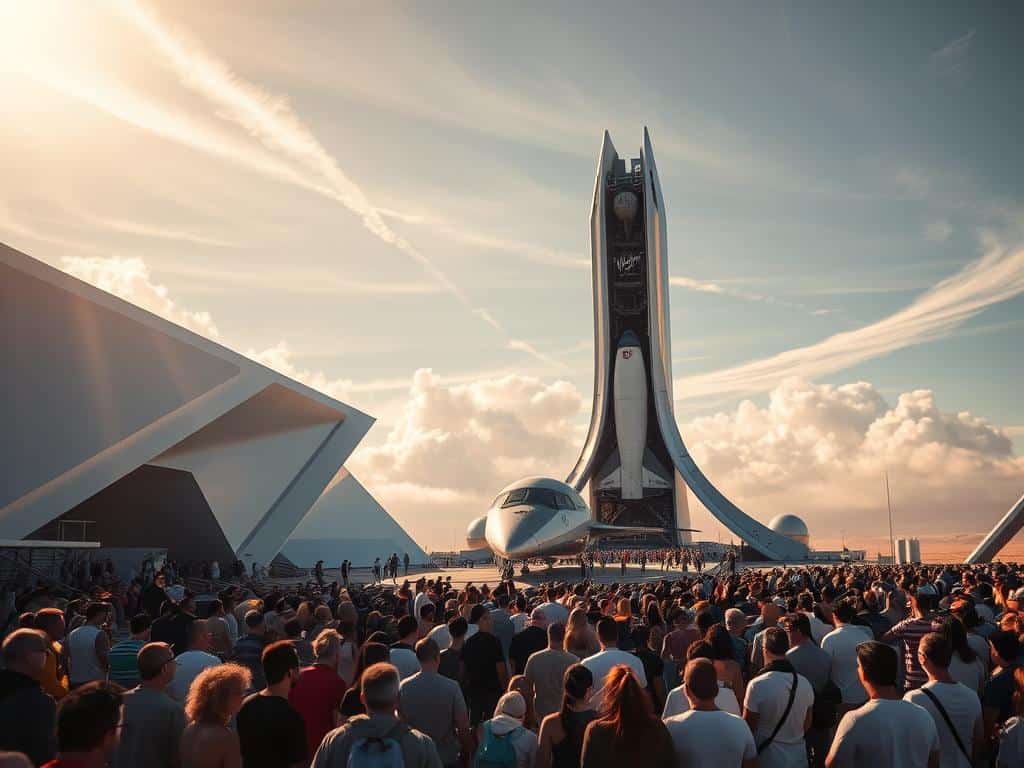
Costs Associated with Space Tourism
Space tourism is exciting and comes with different price tags. As more people want to explore space, knowing the costs is key.
Ticket Prices for Suborbital Flights
Tickets for suborbital flights cost between $250,000 and $500,000. Virgin Galactic has started selling tickets again, sparking interest. Blue Origin also offers a suborbital trip on its New Shepard capsule, perfect for a short space adventure.
Expensive Orbital Flights
Orbital flights are much pricier, with costs reaching up to $55 million. Axiom Space organizes these trips, including ones to the International Space Station (ISS). These high prices make orbital tourism a luxury for the few.
Future Projections for Costs
Experts think ticket prices will fall as technology gets better and competition grows. By 2035, a trip might cost under $50,000. This could make space travel more accessible. But, there are challenges to making space travel safer and cheaper.
Conclusion
Space tourism is on the rise, and it could change our world. Companies like Virgin Galactic and SpaceX are making it happen. But, the cost is high, over $1 million, making it only for the rich.
Over 700 people are waiting to go to space with Virgin Galactic. Yet, there are risks and setbacks. These remind us of the dangers in this new field. I hope for better safety and lower prices soon.
Adventure tourism has 100 million fans, but space travel is expensive. As it grows, we must think about its impact. We need to make it affordable for more people.
