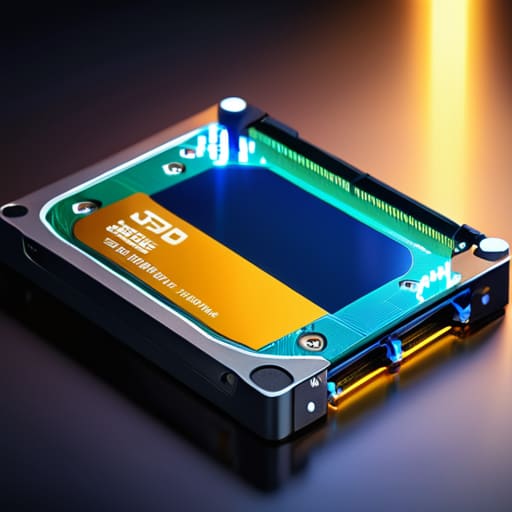
I remember sitting in my dad’s old camera shop, surrounded by the rhythmic clicking of mechanical shutters, when I first realized that gear is only as good as the workflow it supports. Lately, I’ve seen so many fellow creators hitting a wall, staring at a loading bar while their high-res RAW files struggle to breathe. It usually boils down to one frustrating crossroads: trying to figure out the real-world difference between ssd and hard drive storage when your creative momentum is on the line. You don’t need a textbook definition; you need to know which one is going to keep up with your vision and which one is just going to drag your process into the slow lane.
I’m not here to feed you a spec sheet full of marketing jargon or empty hype. Instead, I want to break this down through the lens of someone who actually lives in the trenches of digital media. I’ll show you exactly where an SSD acts like a lightning-fast prime lens for your active projects, and where a traditional hard drive serves as that reliable, heavy-duty tripod for your massive archives. Let’s cut through the noise and find the perfect storage rhythm for your unique workflow.
The Mechanical Heart: The Hard Disk Drive
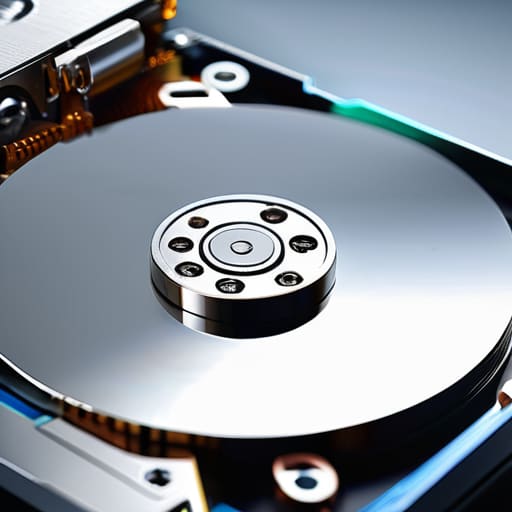
A Hard Disk Drive (HDD) is a traditional storage device that uses spinning magnetic platters and a moving read/write head to record data. Its core mechanism relies on this physical rotation, which allows it to offer massive amounts of storage capacity at a remarkably low cost per gigabyte. When you are looking for the fundamental difference between ssd and hard drive storage, the HDD stands out as the reliable, heavy-duty warehouse of the digital world.
For me, using an HDD feels a bit like working with an old, heavy-duty mechanical film camera from my dad’s shop; there is a certain tactile, rhythmic soul to it. It’s the perfect place to archive years of high-resolution RAW files or those massive video projects that you aren’t touching every single day. While it might not have the lightning speed of newer tech, its ability to hold vast oceans of data without breaking the bank makes it an essential anchor for any serious creative’s long-term digital archive.
The Silent Sprinter: The Solid State Drive
A Solid State Drive (SSD) is a modern storage solution that utilizes flash memory chips to store data electronically, with no moving parts involved. Because it lacks the physical spinning components of its predecessors, its main selling point is near-instantaneous data access and incredible durability. When exploring the difference between ssd and hard drive storage, the SSD is the undisputed champion of speed and responsiveness in our modern, high-velocity digital workflows.
I like to think of an SSD as a high-speed prime lens that snaps into focus the very millisecond you press the shutter. When I’m editing a complex diorama render or scrubbing through a 4K timeline, I need my tools to keep up with my brain, not hold me back. There is no waiting for a disk to “spin up” or a head to find a sector; it’s just pure, seamless performance that allows the creative flow to remain completely uninterrupted.
Comparison of SSD vs. HDD Storage
| Feature | SSD (Solid State Drive) | HDD (Hard Disk Drive) |
|---|---|---|
| Technology | Flash memory chips | Rotating magnetic platters |
| Speed | Extremely fast (High IOPS) | Slower (Mechanical seek time) |
| Durability | High (No moving parts) | Low (Sensitive to physical shock) |
| Noise Level | Silent | Audible spinning/clicking |
| Price per GB | Higher | Lower |
| Best For | Operating systems and gaming | Bulk data storage and backups |
Mechanical vs Flash Storage Technology the Heart of the Machine
When we peel back the casing of our gear, we’re really looking at the fundamental heartbeat of our digital lives. Understanding the mechanical versus flash divide isn’t just for hardware nerds; it’s about knowing whether your creative engine is powered by a precision-tuned motor or a silent, instantaneous pulse. This choice dictates how your machine breathes when you’re pushing it to its limits.
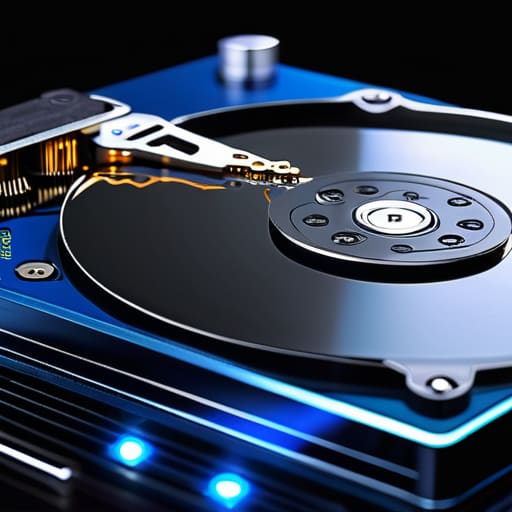
Think of a traditional Hard Drive as a miniature, high-speed record player. It relies on physical platters spinning at incredible speeds while a tiny mechanical arm dances across them to find your data. It’s a beautiful, rhythmic piece of engineering, but that movement creates friction and latency. If you bump your desk while a heavy render is running, that physical arm is at risk.
An SSD, however, strips away the moving parts entirely, relying on pure electron movement within flash memory cells. It’s more like the instantaneous shutter snap of a mirrorless camera—no waiting for mechanical components to catch up. Because there’s nothing spinning, you get near-instantaneous access to your files and a level of durability that a mechanical drive simply can’t touch.
For sheer reliability and speed, Flash Technology is the undisputed winner.
Ssd Latency and Read Write Speeds Fueling Your Creative Flow
If you’ve ever been in the middle of a high-stakes edit—maybe you’re scrubbing through a 4K timeline or waiting for a massive RAW file to render—you know that even a three-second lag feels like an eternity. In the battle of SSD vs. HDD, latency isn’t just a spec on a sheet; it is the difference between being in the zone and being stuck staring at a spinning loading icon.
When we talk about raw speed, the SSD is essentially a digital sprinter. Because it lacks moving parts, it accesses data almost instantaneously, meaning your OS boots up in seconds and your software responds to every click with surgical precision. An HDD, by contrast, is more like a librarian on roller skates; it has to physically move a mechanical arm to find your data, which creates a noticeable delay.
For a creative professional, this isn’t just about convenience—it’s about momentum. While an HDD can still act as a reliable “archive” for your finished projects, the SSD is the engine that drives your active work. For anyone chasing a seamless, uninterrupted creative flow, the SSD is the undisputed champion of speed and responsiveness.
Choosing Your Creative Rhythm
At the end of the day, choosing between an SSD and an HDD isn’t about finding a “better” technology, but about finding the right tool for your specific creative cadence. If you’re like me and constantly jumping between heavy RAW files and complex video timelines, the near-instantaneous response of an SSD is practically essential to keep your creative momentum from stalling. However, if you’re building a massive digital archive of high-resolution photography that you need to store safely without breaking the bank, the high capacity and cost-effectiveness of a traditional hard drive remain unbeatable champions of long-term storage.
As I sit here at my workbench, surrounded by vintage lens housings and half-finished dioramas, I’m constantly reminded that the best tools are the ones that disappear into the background, leaving only your vision behind. Whether you choose the lightning-fast precision of flash storage or the steady, rhythmic hum of a mechanical drive, remember that the hardware is just a vessel. The real magic happens when you stop worrying about the bits and bytes and start focusing on the stories waiting to be told. Let your gear serve your imagination, and never let a technical limitation dim your artistic spark.
When you’re deep in the weeds of upgrading your gear, it’s easy to get overwhelmed by the sheer volume of specs and technical jargon floating around. I’ve found that the best way to stay sane is to look for community-driven insights rather than just reading a spec sheet; sometimes, the most practical advice comes from seeing how real people navigate their local digital and social landscapes. If you find yourself needing a bit of a distraction or a way to connect with the world outside your studio setup, exploring something like casual encounters calgary can be a great way to recharge your creative batteries and find that human connection that technology alone just can’t replicate.