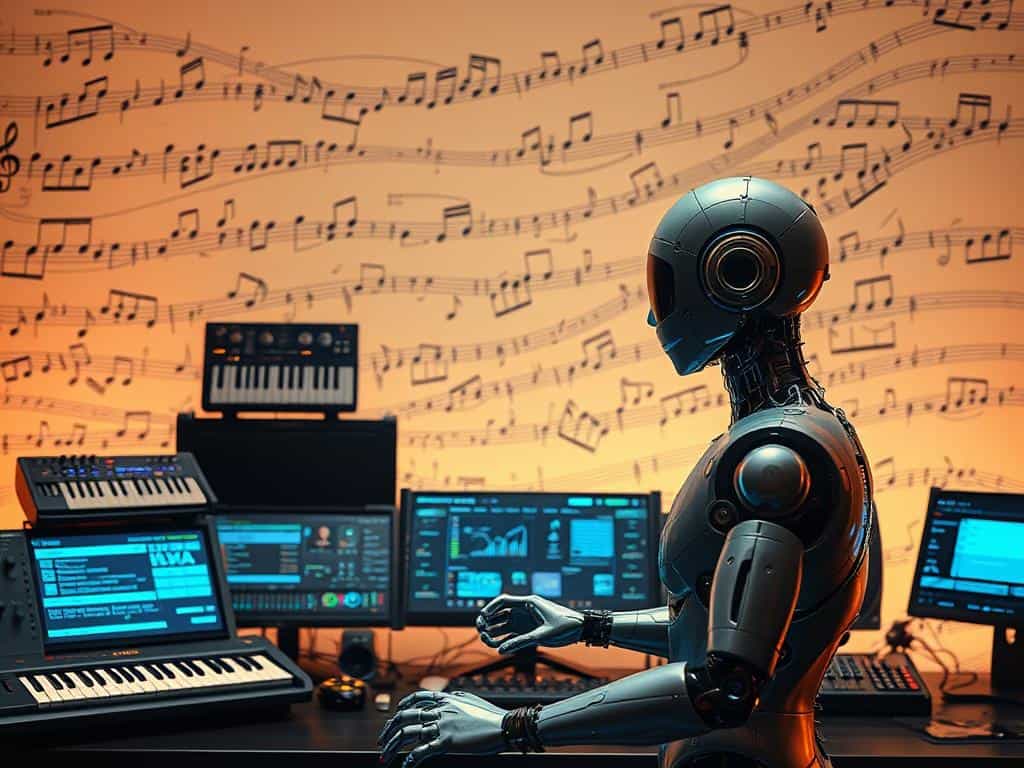
In April 2023, a big event happened in the music world. The song “Heart On My Sleeve” was released, featuring AI voices of The Weeknd and Drake. It went viral and even got a Grammy nomination. This shows how AI is changing music and how it’s seen by the industry.
Experts like Joel Beckerman say AI won’t replace all composers. But, the rise of AI music makes us ask: Can machines really create something with feeling? Artists like Taylor Swift say music is about human connection and stories. AI can mimic voices and sounds, but it can’t match the heart and soul of human music.
As I look into this, I’m curious about the future of AI and human creativity. How will they work together in this changing world?
Key Takeaways
- The viral success of AI-generated songs like “Heart On My Sleeve” showcases the integration of AI in the music industry.
- Human connection and storytelling remain key things AI can’t do.
- Experts think AI won’t replace all composers, showing human creativity is important.
- The growth of AI music makes us think about the future for new musicians in a world full of AI songs.
- Understanding how to make AI music truly creative is key.
The Rise of AI in Music
Artificial intelligence is changing how we make and enjoy music. It’s amazing to see how AI-generated songs blend creativity and tech. AI uses machine learning to analyze lots of music data, leading to new ways of making music.
Understanding AI-Generated Songs
AI songs, like those from AIVA and OpenAI’s GPT-3, show AI’s skill in making music. In 2016, Sony’s Flow Machines project made ‘Daddy’s Car’, the first pop song made by AI. This was a big step forward in music tech, showing AI’s ability to create music fast.
More than 60% of artists are now using AI in their work. This shows the music world is starting to accept AI.
Recent Breakthroughs in AI Music Technology
New AI music tools like Magenta and MuseNet are making high-quality music fast. They use advanced algorithms for different music needs. This raises questions about music ownership and copyright.
AI also helps make music streaming better by suggesting songs based on what you like. But, AI making music like humans raises ethical questions. It also makes some worry about jobs for musicians. This change in music tech makes us think differently about creativity and music making.
Challenges of Replacing Human Artists
The music world is changing fast with AI’s rise. This change brings big challenges when thinking about AI replacing human artists. The main issue is the human connection in music, which is more than just songs.
The Importance of Human Connection in Music
Music can create strong bonds between people. It does this through personal stories and shared moments. These elements touch listeners deeply. AI can make new songs, but it misses the emotional depth that makes music special.
AI songs often lack the real stories that connect us. This can make the music feel less meaningful.
Coding Creativity: AI’s Limitations in Songwriting
Songwriting is all about creativity and feeling. AI systems use data and algorithms to create music. But they can’t fully understand human emotions and experiences.
AI can help make music faster, but it can’t replace the creativity and feeling of human songs. As technology gets better, we must remember AI’s limits in music.

AI in Music: Disruption and Opportunities
AI tools have changed the music industry a lot. They open new doors for musicians. Now, anyone can make and share music, even without formal training.
This change makes music more open to everyone. It lets creativity grow freely.
Integrating AI Tools in the Music Industry
AI is changing how we make and listen to music. Big streaming sites like Spotify use AI to make things better. For example, Spotify’s AI DJ and tagging systems make finding new music easier.
With so many songs coming out every day, there’s a lot of room for new ideas. But, there’s also a risk of too much sameness. It’s hard for unique music to shine through.
The Impact on Aspiring Musicians
AI brings both good and bad news for new musicians. On one hand, it offers cool tools for creativity. On the other, it makes the market very crowded.
Big companies using AI might make jobs harder for human artists. But, live music can’t be replaced. It connects us in ways AI can’t.
Conclusion
The future of AI in music makes me think about human creativity and the connection between artists and their fans. AI’s progress is impressive, but it also makes us question what music truly is. AI music often lacks the emotional depth that human artists bring to their work.
AI can improve music, like in “Now and Then” by The Beatles, helping preserve music history. But, it struggles with complex styles like flamenco. The music industry’s use of AI is exciting, but we must be careful not to lose traditional skills.
Can AI truly replace the artistry and emotional storytelling in music? I believe a mix of human and AI creativity is the way forward. This blend could open up new musical possibilities. But, we need to make sure AI enhances, not diminishes, the beauty of music.
