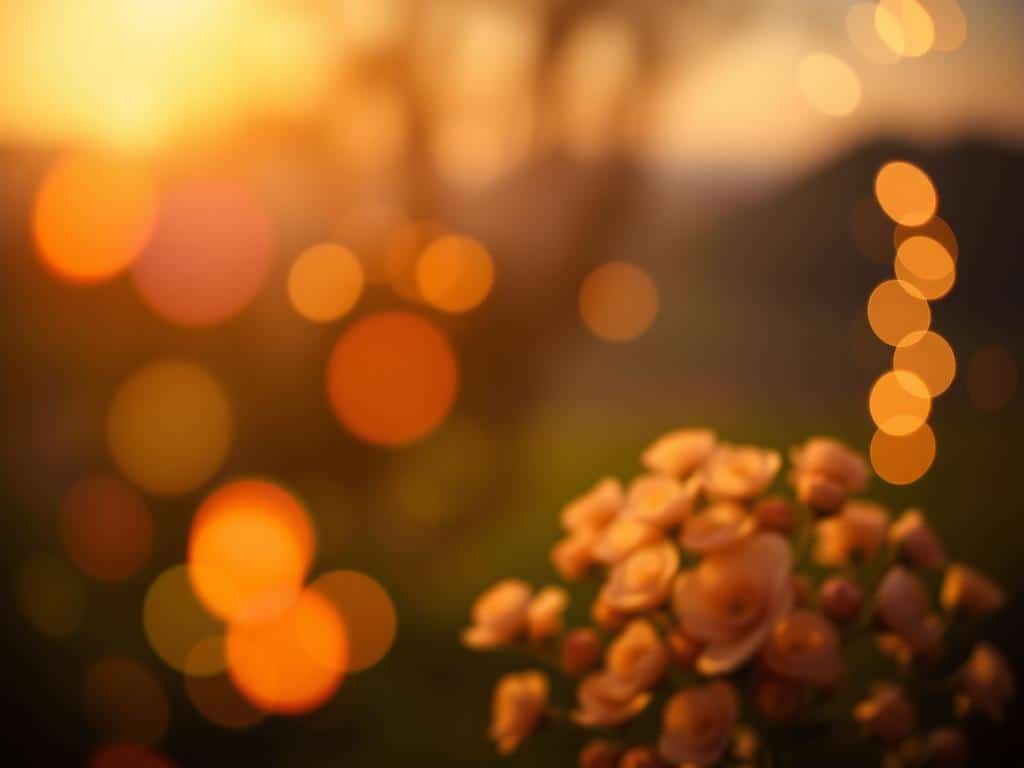
Did you know “bokeh,” the Japanese term for “blur,” can change how we see images? In photography, blurred backgrounds are key for focusing on subjects. It’s not just clear photos; it’s about creating depth with focus. I’m excited to share secrets of Creative Bokeh Photography and stunning blurred backgrounds.
Understanding bokeh means knowing about depth of field. The right bokeh effect comes from aperture size, camera distance, and lens length. A big aperture, like f/2.8, makes the background blur more. This turns it into a creamy canvas that highlights the subject. Bokeh isn’t just for expensive gear; the Canon 50mm f/1.8 lens is affordable and works great. Whether you’re into macro or different focal lengths, I’ll teach you to master background blur.
Key Takeaways
- Bokeh refers to the aesthetic quality of the blur in photography.
- Using a larger aperture can significantly enhance background blur.
- The Canon 50mm f/1.8 is a cost-effective lens for achieving bokeh.
- Depth of field is influenced by aperture size, focal length, and subject distance.
- Effective bokeh can even be created at smaller apertures with the right techniques.
- Incorporating elements like twinkle lights can further enhance bokeh effects.
- Many vintage lenses also produce beautiful bokeh at affordable prices.
Understanding Bokeh and Its Aesthetic Appeal
Bokeh is a key part of photography that deals with the blur in images. It’s not just about blur; it’s about the aesthetic quality of that blur. Bokeh makes a subject stand out by creating a pleasing background blur that removes distractions.
What is Bokeh?
The word “boke” in Japanese means blur or haze. It became popular in the late 1990s with camera tech improvements. Photographers see bokeh as a way to make simple shots look amazing. Good bokeh turns blurry areas into beautiful parts of the image, with shapes and smooth light.
The Science Behind Bokeh
To understand bokeh, you need to know about lens design and settings. The shape of the lens’s aperture and the number of blades affect the aesthetic quality of the blur. Lenses with more blades make smoother circles, creating a nicer blur.
Using fast prime lenses, like f/1.8 or f/1.4, helps get deep bokeh. These lenses let in more light, making the subject pop against the background. This is key for photographers who want to focus attention on their subject.
Creative Bokeh Photography Techniques
Mastering bokeh photography takes skill and creativity. It’s about making blurred backgrounds look amazing. By playing with aperture, focal length, and lighting, you can create stunning images.
Using Aperture to Achieve Powerful Bokeh
Choosing the right aperture is key in bokeh photography. Wide apertures like f/1.8 or f/1.4 create deep background blur. This makes your subject pop out more.
While f/2.8 can work, it’s harder to get great bokeh at smaller apertures like f/5.6. You need a close subject and a far background for the best effect.
The Importance of Focal Length and Subject Distance
The lens’s focal length is critical for bokeh. Longer lenses compress the background, making blur more pronounced. I prefer prime lenses for their wide apertures and control over depth of field.
Keeping your subject close to the background also boosts bokeh. This makes the blur more intense and your subject more prominent.
Enhancing Bokeh with Lighting and Background Choices
Lighting can make a bokeh photo truly stand out. Using points of light, like fairy lights, can add magic. The distance of these lights from your subject affects the blur.
Choosing the right background, like textured surfaces or colors, adds drama. Even water droplets can make a macro shot more interesting.

Conclusion
Mastering bokeh photography opens up a world of creative possibilities. It lets photographers make their images stand out. By focusing on main subjects and improving composition, we can create photos that grab people’s attention.
Knowing about aperture settings, subject distance, and lighting is key. These help achieve that beautiful bokeh effect we all love.
Using wide apertures like f/1.4 or f/2.8 with telephoto lenses is great. It isolates subjects and makes backgrounds blur beautifully. The Canon EOS 5D Mark III and the Canon EF 200-400mm f/4L IS USM lens are great examples.
Also, trying different compositions can make your photos even better. Adding dynamic points of light can really elevate your work.
I suggest you dive into this exciting world and try new things. With the right techniques, patience, and creativity, you can take amazing photos. Let bokeh photography inspire you to keep improving and growing as an artist.
