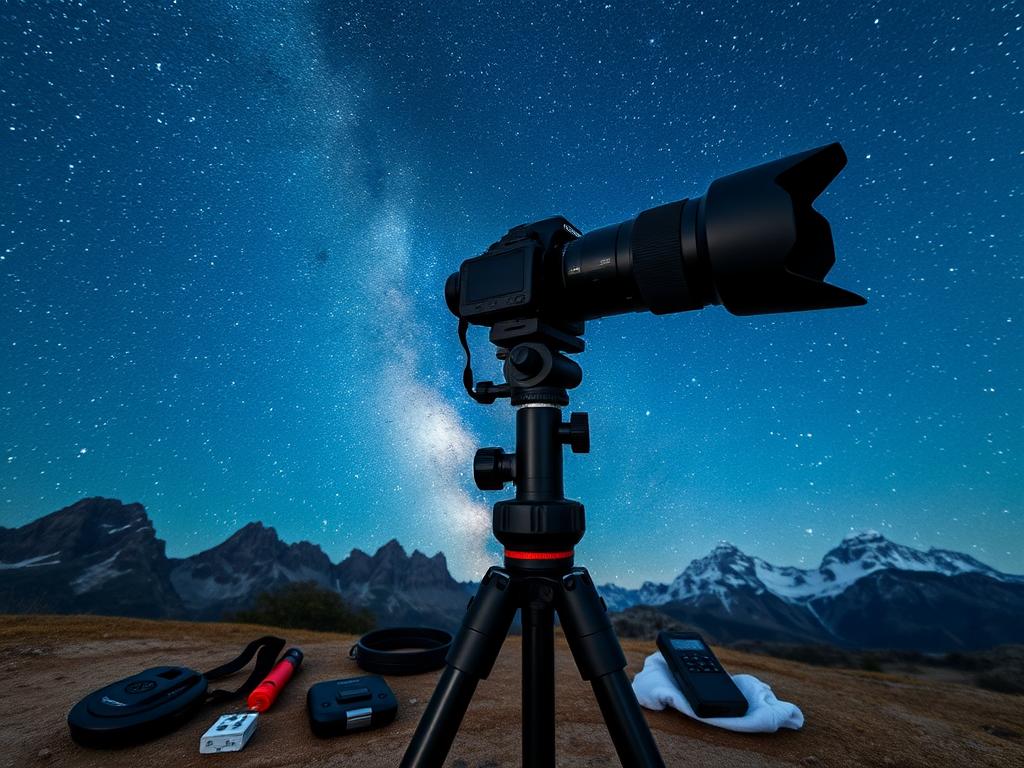
Did you know full-frame cameras are best for night sky photos? They handle high ISOs better. This is just the start of exploring astrophotography. Many want to capture the universe’s beauty and vastness.
As I started, I learned about the right gear and techniques. I tried different cameras, lenses, and settings. This improved my skills.
Whether you’re new or experienced, knowing key techniques is important. In this article, I’ll share my experiences and tips. We’ll cover the gear, settings, and techniques for amazing star photos.
Key Takeaways
- Full-frame cameras are recommended for better high-ISO capabilities.
- The ideal shutter speed for capturing stars is generally 25 to 30 seconds.
- Keen attention to light pollution locations enhances star visibility.
- Utilizing apps can assist in determining star positions and visibility.
- Editing software like Lightroom helps enhance star visibility in your images.
Essential Gear for Night Sky Photography
To capture the night sky, you need the right camera gear. The right setup can make a big difference. I choose a full-frame camera for its top-notch high ISO performance, key for night shots. An APS-C camera can work too, but it must handle noise well at high ISOs.
Camera Type and Sensor Recommendations
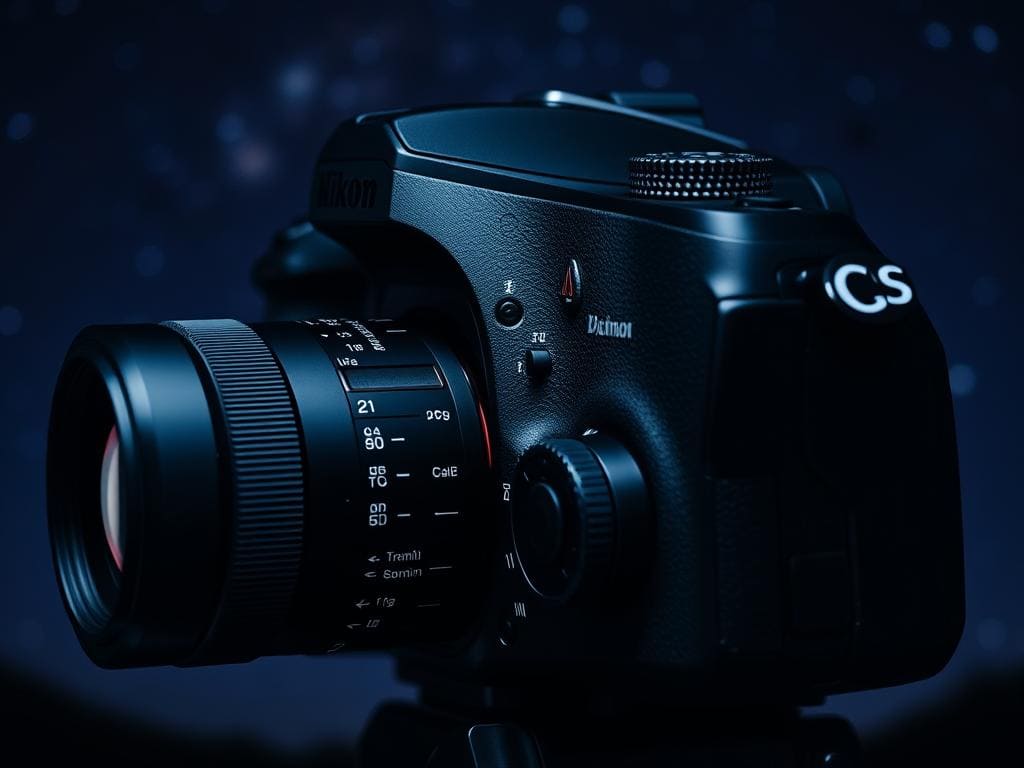
I prefer full-frame cameras, like the Nikon D850, for night photography. They shine in high ISO situations and offer more lens options. They’re better for capturing the Milky Way and other stars than APS-C cameras, which can also produce great results with the right settings.
Lenses to Consider
For wide views of the starry sky, a fisheye or ultra-wide-angle lens with f/2.8 is best. It lets in more light and helps avoid star blur. Focal lengths like 17mm and 24mm on a full-frame camera are great for striking night sky shots.
The Importance of a Sturdy Tripod
A sturdy tripod is key for night photography. It keeps the camera steady during long exposures, from 10 seconds to minutes. The right tripod ensures sharp images and lets you focus on composition without camera shake. I like lightweight tripods, like the MeFOTO Roadtrip, for easy backpacking.
The Ideal Camera Settings for Capturing Stars
To get amazing night sky photos, picking the right camera settings is key. Every photographer has their own style, but knowing the basics of the exposure triangle is vital. Mastering shutter speed, ISO settings, and aperture lets you control your night shots better.
Shutter Speed and ISO Settings
I suggest starting with a shutter speed of about 25 seconds for star photos. This time avoids motion blur and captures the stars’ sparkle. For most cases, an ISO of 1600 to 3200 is best. If your lens is f/2.8, use this aperture to let in enough light. With f/4 lenses, you might need to go up to 30 seconds for a good shot.
Understanding Exposure Triangle
The exposure triangle includes shutter speed, aperture, and ISO. Each part affects the others to get the right exposure. For instance, a longer shutter speed might mean lowering ISO to avoid overexposure. Getting to know these relationships helps fine-tune your settings, even when trying new night photography tricks. It’s smart to practice in different light conditions to find the best settings for your gear.
Techniques and Tips for Night Sky Photography
Night sky photography is both thrilling and tough. Success depends on good planning, sharp focus, and smart post-processing. With the right prep, I can capture the stars’ beauty with precision and creativity.
Planning Your Shoot
Planning is key for amazing photos. I check the moon phase to find the best night. Apps help me plan by showing where stars will be.
Adding foregrounds to my shots makes them deeper. It adds context to the stunning view of the stars.
Getting the Right Focus
Focus at night can be hard. I switch to manual focus and zoom in on a bright star. This method makes sure the stars are sharp in my photos.
Spending time to get everything right is important. It helps avoid disappointment later.
Post-Processing Techniques
Post-processing brings my night sky photos to life. I use software to adjust exposure and reduce noise. This makes the stars stand out.
Color grading is also important. It sets the mood of the night sky. Thoughtful changes can turn a dull image into a vibrant one. Trying new techniques helps me find my style.
Conclusion
Exploring night sky photography has been an exciting adventure. It’s not just about technical skills; it’s a journey into the cosmos. Everyone can enjoy it. Getting the right gear, like a sturdy tripod and good lenses, is key. It helps capture those amazing starry images.
Playing with camera settings like ISO and shutter speed has been enlightening. For example, the 500 rule helps avoid star trails. And using a high ISO lets me get bright nightscapes without losing quality. These tips have changed how I see light and composition in night photography.
As I keep exploring, I urge others to try new things. Using apps for planning and learning post-processing is important. Each time you go out, you get a chance to improve your night sky photography skills. So, go outside, look at the stars, and enjoy the journey!
